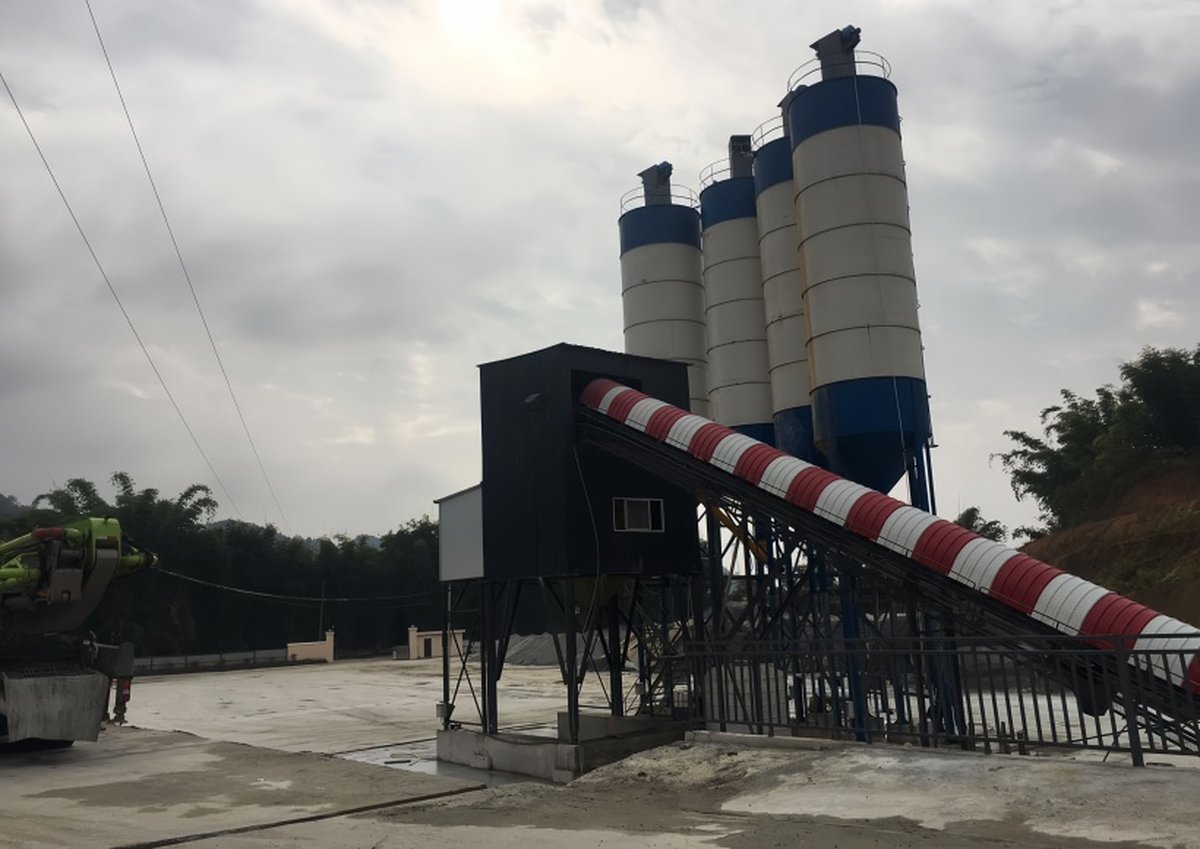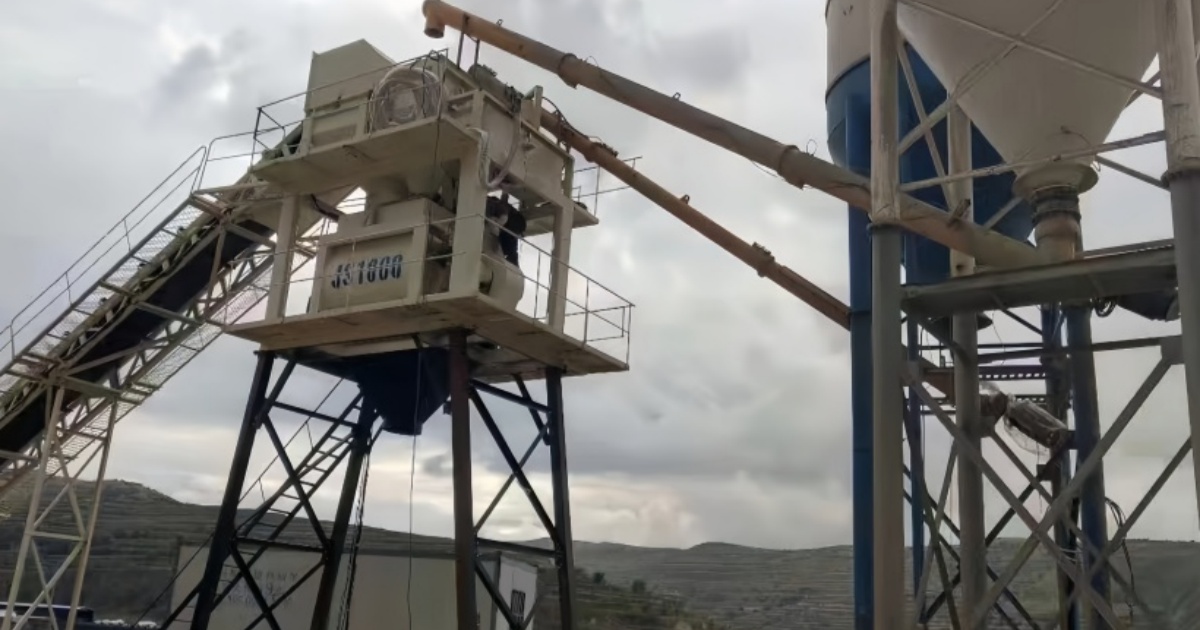




An HZS120 concrete mixing plant carries a theoretical rating of 120 m³/h. On a real job site, expect roughly 84–96 m³/h — about 70–80% of the nameplate figure. This article explains how that theoretical number is calculated, why actual output always falls short, the six factors that create the gap, and five strategies that narrow it. It is written for contractors and ready-mix operators comparing concrete batching plants before they request a quote.
HZS120 Concrete Mixing Plant: Key Capacity Numbers
- Theoretical capacity: 120 m³/h (60 batches of 2 m³ per hour at a 60-second cycle)
- Actual output: 84–96 m³/h in normal production — 70–80% of theoretical
- Best case: 90–100 m³/h in fully automatic, non-stop operation
- Cycle time: 60 s standard; 52 s with pre-feeding technology
- Biggest loss factor: transport vehicle turnaround — every 2-minute delay costs roughly 4 m³/h of output
HZS60 vs HZS120 vs HZS180: Capacity at a Glance
| Model | Theoretical Capacity | Actual Output | Daily Output (8–10 h) | Best Fit |
|---|---|---|---|---|
| HZS60 concrete mixing plant | 60 m³/h | 40–50 m³/h | 400–500 m³ | Medium projects, ready-mix yards |
| HZS120 concrete mixing plant | 120 m³/h | 84–96 m³/h | 670–960 m³ | Medium-large projects |
| HZS180 concrete mixing plant | 180 m³/h | 126–144 m³/h* | 1,000–1,400 m³* | Large projects, high-demand sites |
*HZS180 figures assume the same 70–80% efficiency factor measured on the HZS60 and HZS120. Before you size a plant, confirm the practical output for your mix designs and truck dispatch with the manufacturer.

HZS120 Concrete Mixing Plant: Theoretical vs Actual Capacity
1. Theoretical Capacity Calculation Model
The “120” in the HZS120 model name refers to its theoretical maximum output of 120 m³/h. Here is the calculation basis we use when checking a plant’s capacity:
• Single discharge capacity: 2 m³ (JS2000 mixer standard configuration)
• Ideal duty cycle: 60 seconds/cycle
• Cycles per hour: 60 minutes ÷ 1 minute/cycle = 60 cycles
• Theoretical output: 60 cycles × 2 m³ = 120 m³/h
2. Actual Output Range
In real production, output typically settles between 84 and 96 m³/h — 70% to 80% of the theoretical value. That gap is not a defect; it is the normal cost of transport intervals, manual operations and the occasional stoppage:
| Production Conditions | Actual Output Range | Efficiency Utilization Rate |
| Optimal Operating Conditions (Fully Automatic/Non-Interruption) | 90-100 m³/h | 92% |
| Normal Production (Including Transport Intervals) | 80-90 m³/h | 80% |
| Limited Conditions (Loading Difficulties/Failures) | 60-70 m³/h | 55% |
Six Factors That Limit HZS120 Concrete Mixing Plant Output
1. Transport Scheduling Coordination
• Best Practice: Mixer Truck Turnaround Time within 2 minutes (Production Capacity Over 100 m³/h)
• Common Bottlenecks:
– Untimely Transport Vehicle Scheduling (Every 2-minute delay results in a 4-m³ reduction in production)
– Irrational Loading Area Layout
2. Raw Material Supply Stability
• High Moisture Content in Sand and Gravel Leads to Congested Transport
• Agglomeration in the Cement Silo Impacts Continuous Material Discharge
• Screw Conveyor Jam
3. Mixing Cycle Optimization
• Standard Process Time (Total 60 seconds):
– Feeding and Mixing Phase: 30 seconds
– Unloading Operation Time: 15 seconds
– Feeding Preparation Time: 15 seconds
• Technology Upgrade: Pre-feeding Technology Can Reduce Cycle Time to 52 Seconds
4. Impact of Material Properties
• Strength Grade Differences: C30 concrete has a 10-15 second shorter mixing time per batch than C50.
• Excessive aggregate moisture content: This results in a 20% decrease in metering efficiency.
• Specialty concrete production: Fiber-reinforced concrete requires a longer mixing time (resulting in an approximately 25% reduction in production).
5. Equipment Maintenance
• Common Failure Impacts:
– Liner wear (10% efficiency reduction when clearance > 5mm)
– Sensor failure (causing metering errors, impacting automated production)
– Cylinder seal failure (unloading delay of 3-5 seconds per batch).
6. Environmental and Human Factors
• Climate Impact: 30% reduction in production in temperatures below -10°C (requiring additional aggregate preheating).
• Operating Skills: Novice operators are 15-20 m³/h less efficient than experienced operators.

Five Practical Ways to Boost HZS120 Concrete Mixing Plant Capacity
1. Equipment Upgrade
• Use larger transport vehicles (reduces turnover frequency)
• Install a real-time aggregate moisture content monitoring system
• Improve moisture-proofing facilities (to prevent cement compaction)
2. Production Management Optimization
• Vehicle Scheduling: Maintain two vehicles ready for loading (to ensure continuous loading)
• Maintenance System: Clean the main engine daily
• Personnel Training: Standardized operations can improve efficiency by 8%
3. Process Improvement
• Implement a premix process to reduce mixing time
• Optimize aggregate grading to improve conveying efficiency
• Adopt advanced metering and control systems
4. Intelligent Monitoring Applications
• Install sensors to monitor equipment operating status
• Implement a real-time production data collection system
• Establish an early warning mechanism to detect faults in advance
5. Regular Performance Evaluations
• Conduct monthly production capacity analysis
• Quarterly equipment performance testing
• Annual overhaul and upgrade planning
Common Problems and Fixes for the HZS120 Concrete Mixing Plant
1. Causes of Differences Between Actual and Theoretical Output
Theoretical output is a limit value calculated under conditions of zero waiting time, full automation, and ideal mix ratios. Actual production is inevitably affected by factors such as transportation intervals, manual operation, and troubleshooting.
2. Equipment Selection Guide
• HZS120 Concrete Batching Plant Applicable Scenario: Medium-sized projects with daily production demand less than 800 m³
• HZS180 Concrete Batching Plant Applicable Scenario: Large-scale projects with daily production demand greater than 1000 m³
3. Production Evaluation Criteria
• Qualification Index: Consistently maintaining a production rate of 80 m³/h or above (including normal losses)
• Abnormality Troubleshooting Process:
① Check if the cycle time exceeds 60 seconds
② Confirm that the waiting time for transport vehicles is less than 5 minutes
③ Check the continuity of aggregate supply
④ Verify the accuracy of the metering system
HZS120 Concrete Mixing Plant FAQ
What is the actual capacity of an HZS120 concrete mixing plant?
In normal production, an HZS120 concrete mixing plant delivers about 84–96 m³/h, roughly 70–80% of its 120 m³/h theoretical rating. Under optimal conditions it can reach 90–100 m³/h.
Why does actual output fall below theoretical capacity?
Theoretical capacity assumes zero waiting time, full automation and ideal mix ratios. In practice, transport vehicle turnaround, material supply interruptions, operator skill, maintenance condition and weather all reduce output.
How can I increase the output of an HZS120 concrete mixing plant?
Shorten the mixing cycle with pre-feeding technology (from 60 to 52 seconds), keep two trucks waiting at the loading point, monitor aggregate moisture, schedule preventive maintenance, and run monthly production capacity analyses.
HZS120 Concrete Mixing Plant: Final Verdict
The realistic working range for an HZS120 concrete mixing plant in good condition is 80–100 m³/h. Equipment configuration, production management, maintenance and intelligent monitoring each pull output in a different direction; improve all four and the gap between rated and actual capacity narrows noticeably. Set up a monthly capacity check and a quarterly production review, and treat every drop below 80 m³/h as a fault to investigate, not a number to accept.
One last note from our workshop: never size a plant from the nameplate alone. The HZS120 is a strong fit for medium-sized projects with daily demand under 800 m³, but the same machine under-delivers on a site with poor truck flow. Tongxin Machinery offers free on-site surveys and production plan design; our engineers help you match the configuration to the job so you get the output you are paying for. Contact our technical team for a personalized solution.