









1. Core Technical Specifications
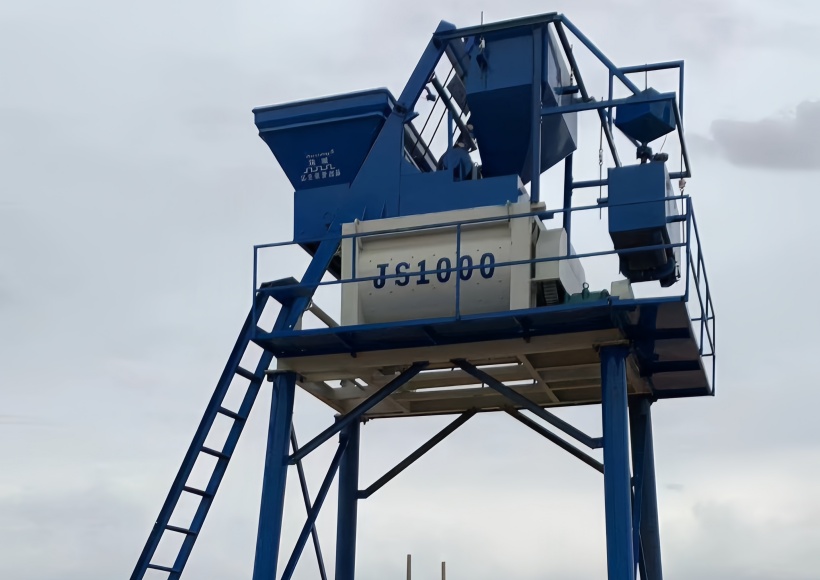
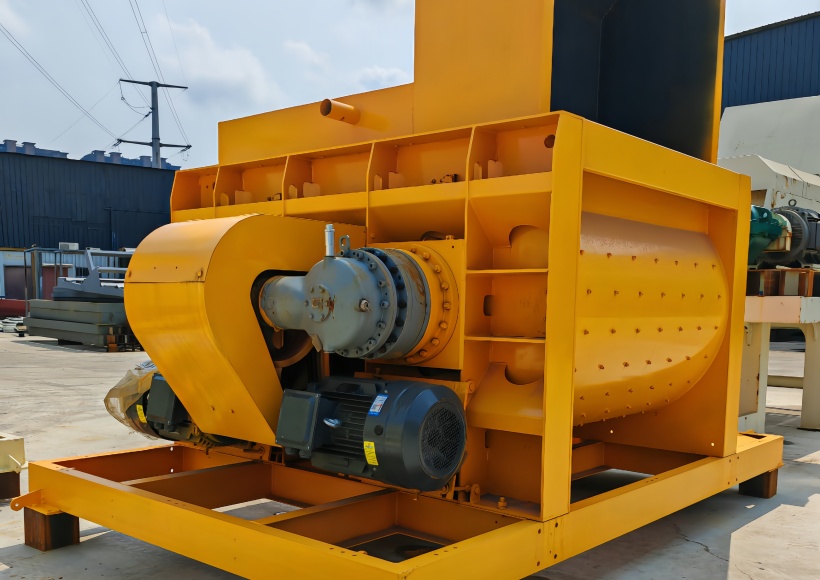
1.1 Mixing Unit
– Model: JS3000 Twin-Shaft Forced Action Mixer
– Nominal Capacity: 3,000 liters (3 m³)
– Theoretical Peak Output: 180 m³/h
– Drive Motors: 2 × 75 kW
– Mixing Shaft Speed: 33–37 RPM
– Blade Tip Speed: 1.8–2.2 m/s
– Liner Material: High-Chromium Alloy Cast Iron, Hardness ≥ 58 HRC
1.2 Weighing & Batching System
| Batching Item | Measurement Range | Static Accuracy | Dynamic Deviation | Sensor Type |
| Aggregate Weighing | 0-4000 kg | ±0.5% FS | ±2% | Impact-Resistant Weighing Module |
| Cement Batching | 0-1500 kg | ±0.2% FS | ±1% | Precision Weighing Sensor |
| Mineral Admixture | 0-800 kg | ±0.2% FS | ±1% | Precision Weighing Sensor |
| Water Batching System | 0-600 kg | ±0.5% FS | ±1% | Weighing & Flow Dual-Mode |
| Additive Batching | 0-50 kg | ±0.1% FS | ±1% | Micro-Precision Weighing System |
1.3 Material Handling Systems
– Aggregate Storage: Total 100 m³ (4 × 25 m³ compartments)
– Horizontal Belt Conveyor: 1,000 mm wide, 1.6 m/s, 15 kW drive
– Inclined Belt Conveyor: 1,000 mm wide, 2.5 m/s, 45 kW drive, 18° incline
– Peak Conveying Capacity: 900 t/h
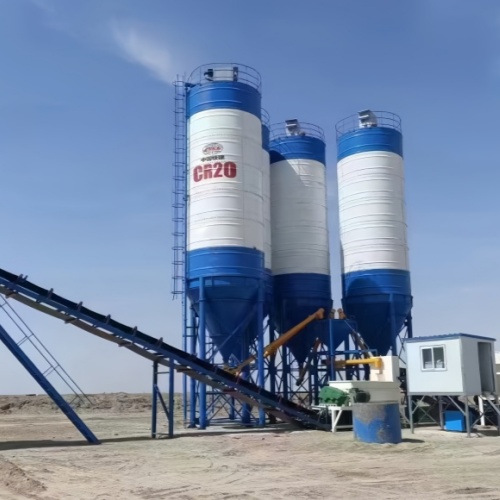
– Cement Silos: 4 × 100 t capacity (standard)
– Screw Conveyor: Ø325 mm × 9 m, 90 t/h, 18.5 kW motor
– Anti-Bridging System: Pneumatic vibrators, 0.6–0.8 MPa operating pressure
—
2. Frequently Asked Questions
Q1: What is the real-world production rate of the HZS180 plant? Why is it lower than the 180 m³/h specification?
A: Under typical operating conditions, the sustainable output ranges between 120–130 m³/h. The reduction from the theoretical maximum is due to:
1. Effective Mixer Discharge Volume: Approximately 90% of the nominal 3 m³ capacity.
2. Extended Cycle Time: Actual batching-mixing-discharge cycles average 70–75 seconds, about 20% longer than the ideal 60-second cycle.
3. Operational Delays: Time allocated for material handling, truck scheduling, and other logistical factors accounts for roughly 15% of total production time.
Q2: How is weighing accuracy maintained, and what long-term calibration practices are recommended?
A: Accuracy is ensured through a multi-layered approach:
– Hardware: High-resolution load cells (1:3,000), three-point suspended weigh hoppers, and fast-acting pneumatic valves (<0.3 sec response).
– Software: Automatic zero-tare before each batch, real-time drop compensation algorithms.
– Maintenance: Quarterly calibration checks, protection of sensors from moisture and vibration, and scheduled lubrication of mechanical parts.
Q3: What environmental protections are integrated into the plant?
A: The plant meets stringent environmental standards:
– Dust Control: Fully enclosed structure, dust leakage <0.5%; pulse-jet bag filters with >99.5% efficiency; dust emissions <20 mg/m³ (beats the 30 mg/m³ national limit).
– Noise Control: Acoustic enclosures on mixer (≤75 dB(A) at 1 m); overall site noise: ≤65 dB(A) day, ≤55 dB(A) night; vibration-damping foundations reduce transmission by 60%.
– Water Management: Sand/gravel separator handles 30–40 m³/h; process water recovery rate >85%; designed for zero liquid discharge.
Q4: What are the site requirements for installation?
A:
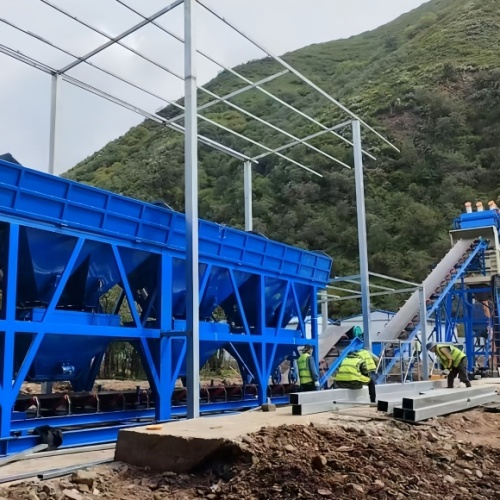
– Space: Minimum 50 m (L) × 20 m (W) level area.
– Foundation: Reinforced concrete, grade C30, minimum 500 mm thick, designed for ≥15 t/m² load.
– Embedded Parts: Level tolerance ≤3 mm, elevation tolerance ≤2 mm.
– Drainage: Minimum 1% slope, trenches ≥400 mm deep.
– Utilities: with 400 kVA transformer; water supply at 0.2–0.4 MPa, flow ≥10 m³/h; compressed air at 0.7–0.8 MPa, ≥1.2 m³/min flow.
Q5: What is the power consumption, and what energy-saving features are included?
A:
– Total Installed Power: 280 kW.
– Typical Operating Load: 180–220 kW, depending on production intensity.
– Energy-Saving Features: Smart stop/start of auxiliary equipment based on production schedules; high-efficiency IE3 class motors (≥93% efficiency).
Q6: What does the maintenance schedule involve?
A:
– Daily (per shift): Check mixer lubrication points (10), drain air system moisture, clean sensors.
– Weekly: Check/adjust conveyor belt tension, verify liner clearance (3–5 mm), inspect bolts.
– Monthly: Calibrate weighing system, check hydraulic oil quality, inspect electrical connections.
– Annually: Inspect/replace main shaft bearings, check wear on liners and blades, full control system diagnostic.
Q7: What is the expected service life and key component replacement intervals?
A:
– Overall Design Life: >15 years.
– Mixing Blades: 80,000–120,000 batches (depends on concrete abrasiveness).
– Liners: 60,000–100,000 batches.
– Main Shaft Bearings: ≥5 years or 10,000 operating hours.
– Conveyor Belts: 2–3 years (usage dependent).
– Core Electrical Components (PLC, etc.): ≥10 years.
Q8: How is consistent concrete quality achieved?
A: Through automated process control and data tracking:
– Process: Automatic compensation for raw material variations; mixing time controlled within ±1 second.
– Data: Every batch record stored permanently; automated quality reporting; trend analysis with early warnings for deviation.
Q9: What are the key advantages over comparable batching plants?
A:
1. Mixing Quality: Patented blade geometry ensures a mix uniformity coefficient of variation ≤0.75%.
2. Batching Precision: Three-stage weighing process improves accuracy by 30% vs. standard systems.
3. Energy Efficiency: Consumes 15–20% less power than industry average.
4. Smart Features: Remote monitoring, predictive maintenance alerts, and full digital integration.
5. Service Network: Local 24/7 technical support, OEM spare parts availability, and comprehensive training programs.
—
3. Support & Services
3.1 Documentation
– Complete engineering drawings (PDF & CAD)
– Electrical and hydraulic schematics
– Operation & maintenance video library
– OEM spare parts catalog
3.2 Technical Support
– Dedicated engineer consultation
– On-site installation supervision
– Hands-on operator training
– 24/7 emergency service hotline
3.3 Value-Added Services
– Remote Monitoring: Real-time plant performance dashboards.
– Preventive Maintenance Plans: Customized schedules based on your production.
– Upgrade Programs: Software updates and hardware retrofit options.
– Genuine Parts Supply: Guaranteed fast delivery of OEM components.
—
Contact Us for a Detailed Quote or Technical Consultation
[Your Company Contact Information]