

Picking the wrong storage silo can derail a project before the first foundation pad is poured. The debate of bolted vs welded cement silos looks like a technical argument about steel plates and shop tolerances. It is really an argument about freight permits, crane rental fees, and whether a crew spends three weeks tightening bolts in freezing rain on a site with no shelter.
This page breaks that decision into the four costs that actually move on a budget, which are the vessel, the transport, the assembly labor, and the ten year maintenance bill. Each one behaves differently depending on the structure you pick, and each one is easy to misjudge when a quote only lists the shell.
Why Your Bulk Material Storage Choice Actually Matters
A cement silo is not a steel bucket sitting in the dirt behind a mixer. It is a pressurized vessel managing cement, fly ash, and slag through constant fill and discharge cycles, and the shell, cone, and seals all work as one system. One weak point shows up as blocked flow within a single season of production.
What Goes Wrong With the Wrong Silo Type
Moisture is the first failure mode, and it rarely announces itself. A compromised seam lets humid air into the head space, powder hydrates against the wall, and the discharge cone slowly plugs until the screw conveyor runs empty. A 100 ton cement silo can become a single block of set cement that no vibrator will ever move again.
The second failure mode is structural rather than chemical. Bulk cement pushes outward with real pressure during pneumatic filling, and a shell designed for a lighter powder, or a leg set sized for a smaller load, will show movement at the anchor bolts long before it shows a visible crack in the plate.
Three Costs That Decide the Choice
Purchase price is the easiest number to compare and the least useful of the four. Freight, assembly labor, and maintenance dominate the ten year total, and those three swing hard between the two structures. A unit that looks cheap at the factory gate can end up the expensive option once it lands on your pad.
Start from the site rather than the price list. Road access, crane capacity, crew skill, and the number of relocations expected in the next five years decide most of the answer before any quote is opened. A reliable cement silo selection begins with those four facts written on a single page.
Welded Steel Silos: Bulletproof but a Nightmare to Move
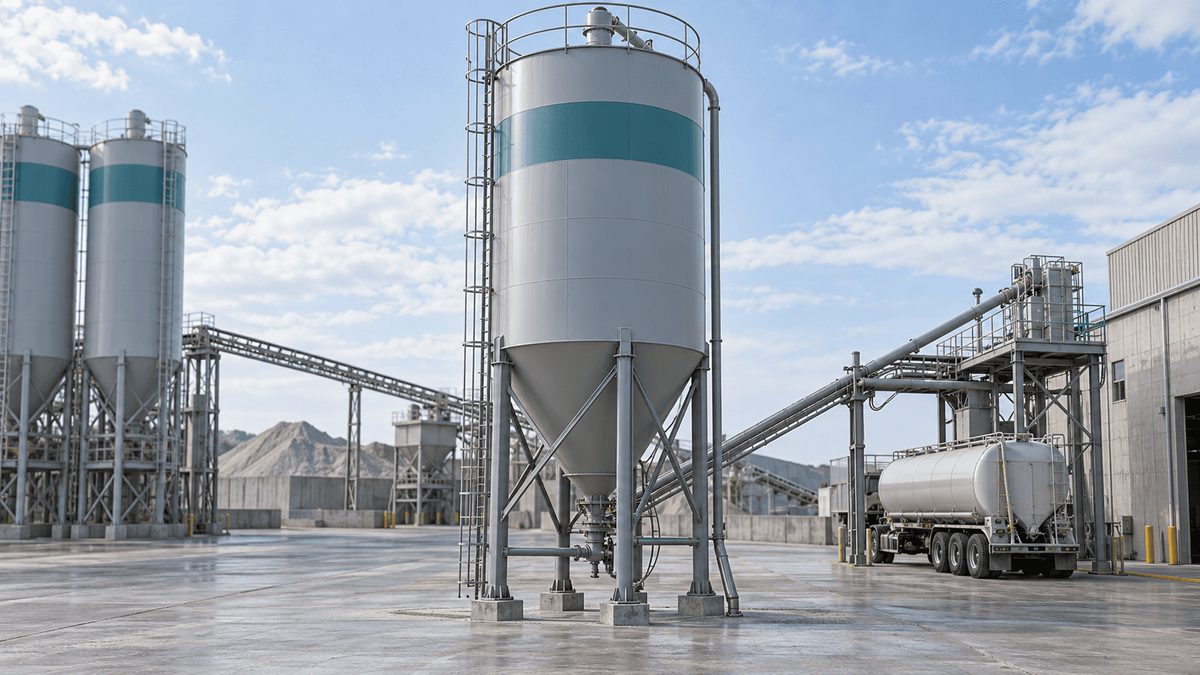
A welded unit arrives as one finished cylinder. The shell is joined in a controlled shop, the coating is applied before shipping, and the unit is pressure tested as a complete vessel. On a permanent site with wide roads and a crane available, this is the simplest object to commission and the fastest to put into service.
Sealing and Structural Strength
There are no gasket lines on a welded shell, so there is no gasket to age, shrink, or work loose under vibration. Airtightness becomes a property of the steel rather than a property of a crew’s discipline, which matters in monsoon climates and in plants running two shifts with almost no inspection time between them.
Rigidity is the second gain, and it shows up in wind load rather than in daily operation. A continuous shell distributes pressure across the full circumference, and the leg set is fixed at the shop instead of assembled on site. The unit behaves the same on day one and on day one thousand, provided the coating holds up.
The Transport Reality Check
The bill arrives at the port. A 150 ton welded cement silo does not fit a standard container, so it moves as break bulk cargo or rolls onto a RoRo deck as an oversized package. Port handling, permits, pilot cars, and route surveys all attach to that single lift before the shell reaches your gate.
In late 2021 we watched a welded unit bound for a remote hydroelectric site sit at a hairpin turn on a logging road for three days. The hauling fleet idled, the pour schedule slipped, and the freight premium quietly passed the price of the shell itself, which nobody had budgeted for.
A short domestic run changes that math completely. If the factory sits two hours from the site and the route carries no low bridges, the heavy haul surcharge stays small and the welded unit keeps its advantage over a bolted build that needs four days of labor to stand up.
When On-Site Welding Makes Sense
Field welding is the third option and by far the riskiest. Crews bring flat plate to the site, weld vertical seams in the open air, and coat the shell afterwards. Rain, wind, and dust all attack the weld pool, and a single cold lap becomes a leak path that appears months after the crew has left.
It stays on the table for one case only, which is storage beyond roughly 500 tons where no road legal shape exists. Even then the schedule should carry weather contingency, coating repair, and a certified welding crew rather than a general steel gang borrowed from the civil contractor.
The Bolted Cement Silo: The Modular Lifesaver
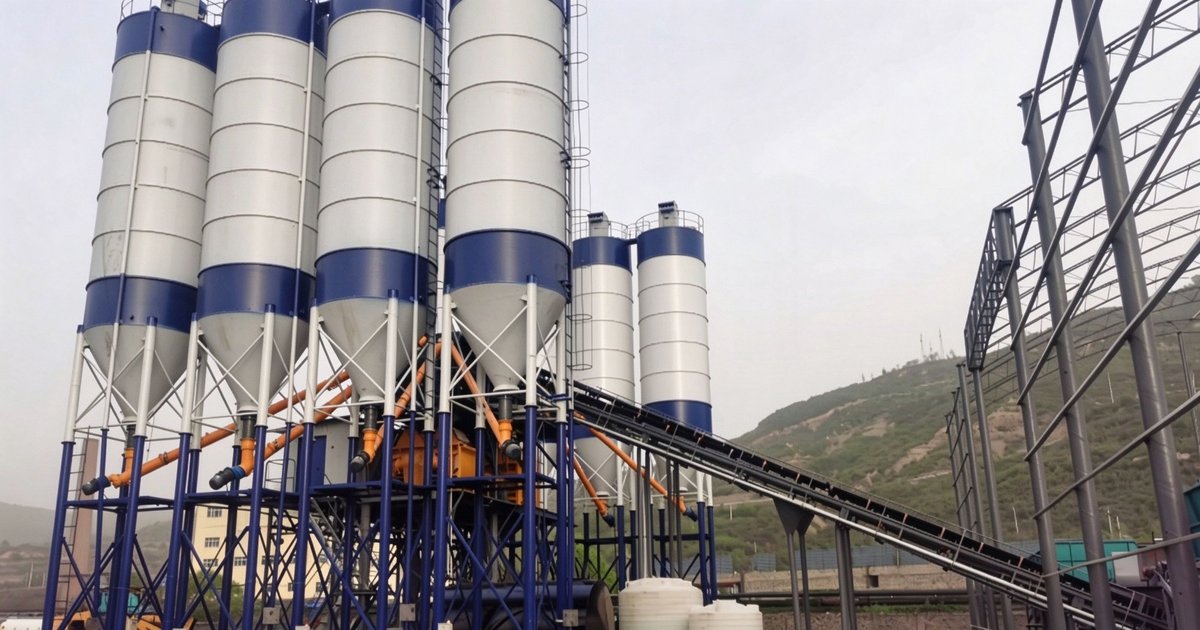
A bolted cement silo ships as curved panels, flanges, sealant, and boxes of hardware. The stack fits a standard flatbed or a 40 foot container, which removes permits, escorts, and route surveys from the plan entirely and turns an oversized cargo problem into ordinary freight.
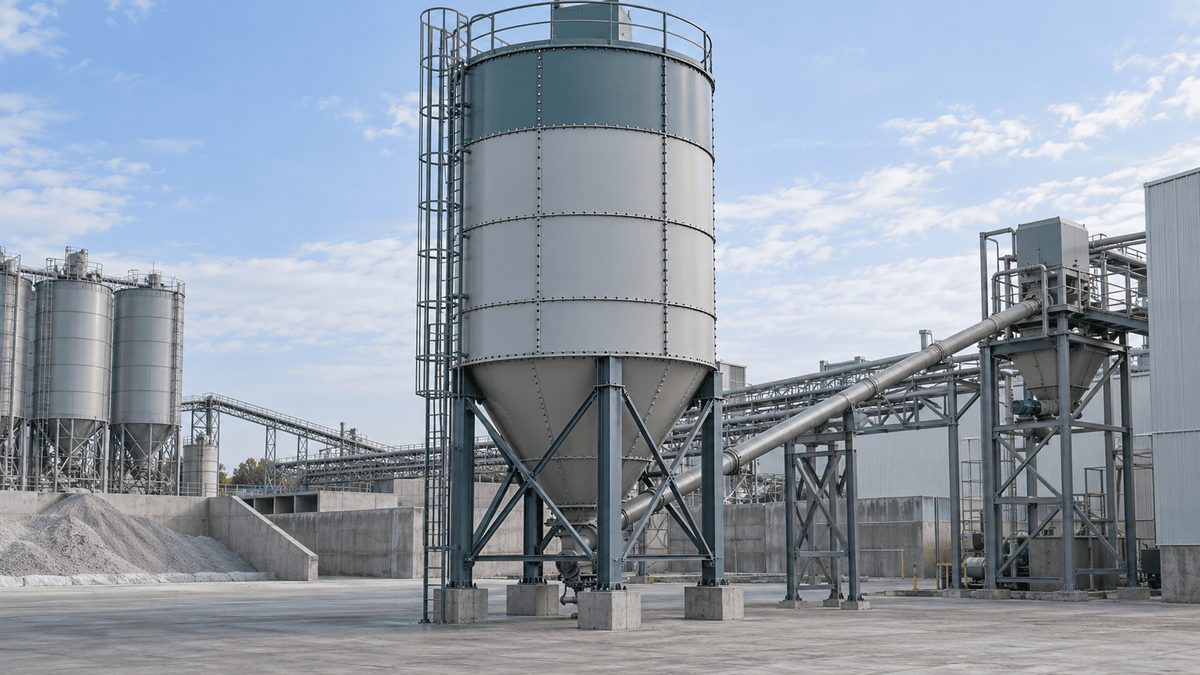
Offload takes a forklift rather than a crawler crane. For a city site with a narrow gate, or a mountain plant at the end of a dirt track, this is often the only shape that reaches the foundation at all. The panels can be staged on pallets beside the pad while the foundation cures.
Assembly on Site
Assembly runs ring by ring. The crew lays panels flat, applies sealant strips, bolts the first ring, then lifts and stacks the next with a crane on standby. A 100 ton unit typically takes a trained four man crew three to four days from the first plate to the final torque check.
The labor line is higher than a welded drop, and that is the trade being made. Money saved on freight moves into wages, scaffolding, and impact wrenches, so the installed total often lands close to the welded figure on a domestic order where freight was never the problem.
The Sealing Discipline
Every bolt hole and panel overlap is a potential leak path, and there are thousands of them on a tall unit. Sealant must be continuous around each ring, and torque must be verified with a wrench rather than estimated by feel. A missed middle flange stays invisible until the first heavy rain arrives.
Built strictly to the drawing, a bolted shell holds moisture out as well as a welded one, and the powder inside stays free flowing through a wet season. Built at the end of a long shift by a tired crew, it does not, and that difference lives in supervision rather than in the steel specification.
What the Modular Design Adds Later
Extending capacity is the quiet advantage that rarely appears in a comparison table. Many bolted designs accept additional rings on the same footprint, so a plant growing from 100 to 150 tons buys panels instead of a second cement silo, a second foundation, and a second set of permits at a second address.
Repair follows the same logic. A loader backs into a leg, or a crane swings a bundle of rebar into the cone. With a bolted shell the damaged panel is unbolted and replaced from stock, and production resumes inside a week rather than waiting for a fabrication crew and a field welding permit.
Coating survives assembly because no field welding burns it off. Panels are shot blasted and coated in a controlled shop, then bolted without heat, so the galvanized or painted layer stays intact at every seam. Welded shells need coating repair wherever the field work touched bare steel.
Interior geometry also favors flow. Steep cone angles and smooth walls promote mass flow, and the shell accepts aeration pads and external vibrators without modification. Feed weight stays stable for the batching controller, which keeps every load inside its cement tolerance instead of chasing short weights.
Maintenance Rhythm
Bolted shells need a calendar rather than a repair budget. Torque checks after the first month, then twice a year, catch the loosening that plant vibration causes long before a seam opens. Sealant inspection belongs on the same visit, along with a look at the collector and the relief valve.
Welded shells need coating inspection instead. Rust starts at the skirt and at the leg connections, where water sits after rain. A five minute walk around the base during each shutdown finds it while the damage is still cosmetic and a patch costs almost nothing to apply.
Capacity Bands and Container Math
Capacity decides the shipping method more than any other variable on the specification sheet. The bands below reflect what actually moves by container, by flatbed, and by heavy haul, and they set the practical ceiling for each structure before an engineer ever sizes the shell plate.
What Fits in a 40 Foot Container
Curved panels for a 100 ton bolted cement silo pack into a single 40 foot container along with the flanges and hardware. Two or three complete units can share one booking at smaller capacities, which spreads the ocean freight across the whole order instead of loading it onto one unit.
| Capacity band | Bolted panels | Welded shell |
|---|---|---|
| 50 to 100 tons | One 40 foot container | Flatbed with permit |
| 150 to 200 tons | One container plus one flatbed | Heavy haul, route survey |
| 300 to 500 tons | Multiple containers, on site assembly | Break bulk or field welded |
| Above 500 tons | Field assembly only | Field welded only |
Where Welded Tonnage Stops Working
Road legal width and height cap a finished welded shell somewhere near 100 to 150 tons on most routes. Beyond that the unit needs permits few highways grant and bridge clearances few routes offer, which is why transport quotes escalate faster than steel prices at the upper end.
That ceiling is a transport limit rather than a steel limit, and it explains why export orders above 200 tons almost always arrive as panels. The plant gains storage capacity without gaining a hauling problem, and the site keeps its access road exactly as it was before the order.
Height Limits and Horizontal Silos
Zoning rules and overhead power lines sometimes rule out a vertical column entirely, especially on urban lots and on sites beside rail corridors. A horizontal silo solves the height problem at the cost of usable volume per square meter, and it suits small plants working inside a tight boundary.
Shell diameters, pad sizes, and anchor layouts for each band are listed in the cement silo dimensions and foundation requirements. The structural engineer needs that sheet before the pad is poured, because leg spacing changes the rebar layout and the concrete volume.
Site Conditions Dictate the Silo Type
Selection is not a matter of personal preference, and it is not settled by whoever argues loudest in the site trailer. It is a reading of four facts: access road width, crane availability, lease length, and the number of relocations planned. Those four decide the structure before the specification does.
Permanent Sites With Wide Access
A fixed plant with a wide gate, a paved approach, and a 200 ton crane already on site should take the welded unit. The heavy haul is paid once at the start, the assembly is measured in hours, and the shell is airtight from the first pour instead of from the first torque audit.
Temporary and Urban Sites
A bridge job in a city center, or a plant that moves every eighteen months, needs the bolted unit for reasons that have nothing to do with steel quality. Unbolt the rings, stack the panels, and reload onto ordinary trailers, then rebuild at the next site with the same hardware and half the crew.
Foundation and Load Bearing
Cement is heavy and the pad carries all of it, so soil bearing capacity must be tested rather than assumed from a neighboring site. Pad thickness follows the leg loads on the drawing, and a bolted shell spreads that load across more anchor points at a slightly lower elevation.
Neither structure tolerates a rushed pour. Settlement under one leg tilts the whole shell, and a tilted shell loads the cone unevenly, which later shows up as a discharge complaint rather than as a foundation complaint and costs far more to correct after production starts.
Four Components Every Silo Needs Either Way
The structure decides transport and assembly. The accessories decide whether the cement silo actually works in daily operation. These four items are specified the same way on both structures, and they are the most common source of complaints from plants that bought a shell and forgot the rest.
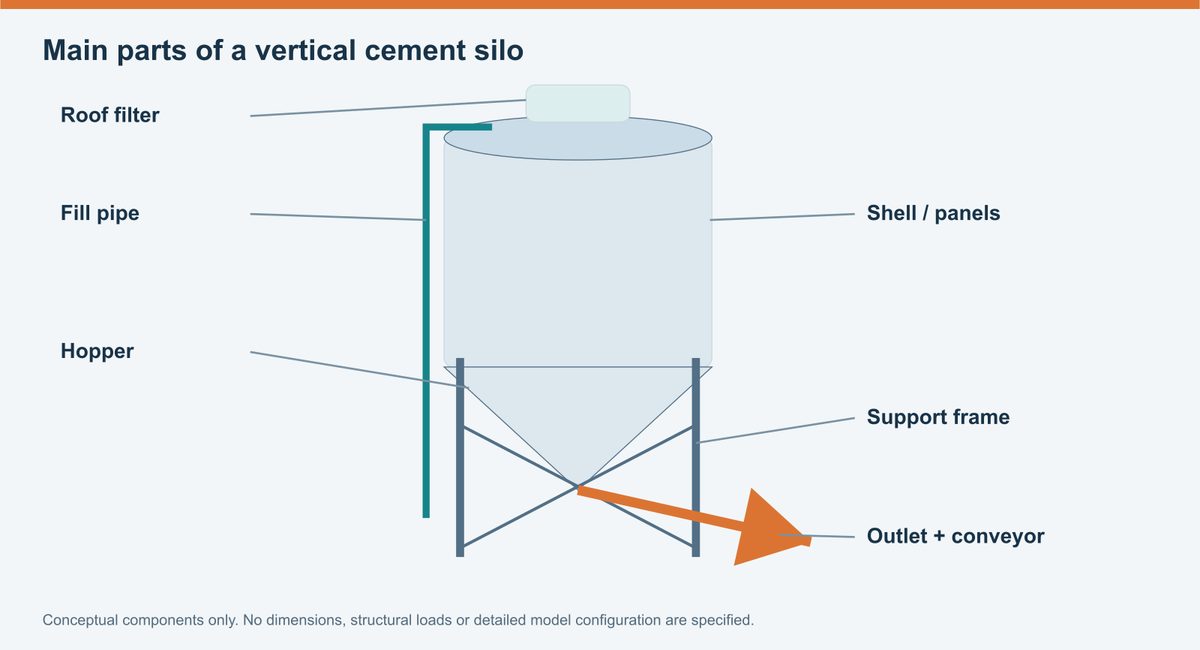
Dust Collector
Pneumatic filling displaces air at high volume, and that displaced air carries fines out of the top of the vessel. A top mounted collector vents the air and drops the dust back into the pile, which keeps the site inside emissions limits and keeps neighboring businesses from filing complaints.
Level Indicator
Overfilling damages the collector and blocks the inlet with compacted powder. A level indicator, paddle type or radar, gives the operator a fill state and stops the tanker before the head space disappears. It pays for itself the first time it prevents an overflow on a Friday afternoon.
Aeration Pads
Cement compacts under its own weight and bridges over the outlet after a few days without draw. Low pressure air through aeration pads fluidizes the powder at the cone, and flow returns to a steady stream instead of a surge. Blinded pads and supply faults are covered in the cement silo aeration system guide.
Pressure Relief Valve
A tanker blower can pressurize a sealed shell past its design limit within seconds of a driver opening the valve too early. The relief valve is the last line of defense, and it must be sized to the blower, checked each season, and never capped by a crew trying to stop dust.
Construction Costs and Labor Costs
Run the total installed cost rather than the invoice total, because the two structures trade the same money back and forth between freight and wages. The winner changes with transport distance, local crew rates, and how easily a crane reaches the pad on the day the unit arrives.
Freight Versus Assembly Labor
A bolted unit is far cheaper to move and far more expensive to erect, while a welded unit reverses both lines almost exactly. On a domestic order inside 300 km, welded usually wins on total cost. On an export order, bolted usually wins by a wide and repeatable margin.
Landed cost at each storage band, freight included, is broken down in the cement silo price guide. Use that range as a starting point, then add the local crane rate and the crew day rate to reach a number that can actually be compared.
The Ten Year Maintenance Bill
Welded shells spend on coating repair and occasional shell inspection after a hailstorm or a loader impact. Bolted shells spend on torque checks, sealant renewal, and panel replacement after the same kind of impact. Both lines stay modest, and both are avoidable with a calendar rather than a checkbook.
Moving, Dust and Feed Quality in Daily Use
A modular silo earns part of its price back on the move. Contractors who follow the paving season across provinces can unbolt the sections, load them on standard trailers and rebuild the unit at the next site, which keeps one storage asset working on three contracts.
Dust control at the fill point sits on the same list. A pulse collector on the silo roof keeps fines out of the air and out of the product, and a sealed fill pipe stops the pressure surge that blows powder out of the hatch during a bulk delivery.
Feed quality closes the loop. A steady discharge from a properly vented cone keeps the batching scale from chasing a starved screw, so the mix ratio holds through the last ton in the silo rather than drifting as the level drops.
A Short Checklist Before You Order
Answer the questions below in writing before a purchase order is issued. Each one changes either the structure, the freight method, or the assembly plan, and every one of them costs far less to answer now than after the panels are sitting on a trailer at the gate.
Site Access Questions
What is the narrowest point on the route, and what is the lowest bridge clearance on the way in. Can a crawler crane reach the pad, and is there room to lay panels flat beside it. How long is the lease, and where does the plant move when the contract ends.
Specification Questions
Which powders will be stored and at what bulk density, since that sets shell pressure and cone angle. What fill rate does the tanker deliver, and what hourly draw does the batching controller demand. Which accessories are included in the quote, and which are quietly priced separately.
A supplier that answers these without a site visit or a drawing review is guessing. Tongxin Machinery has built batching equipment since 2019, and the engineering team behind it carries two decades of plant experience across export orders and domestic retrofits.
Final Verdict on Bulk Material Storage
Buy the welded unit when the site is permanent, the road is wide, the crane is already on site, and the order stays inside one country. The heavy haul is paid once, the shell is airtight for a decade, and maintenance is limited to watching the coating.
Buy the bolted unit when the order crosses an ocean, the access road is narrow, the lease is short, or capacity may grow within two years. The panels move cheaply, the asset relocates with you, and the shell can be extended or repaired one panel at a time without a fabrication crew.
Either way, specify the four accessories, test the soil, and check the route before signing. For a wider view of types, sizing, and applications, the cement silo 101 guide covers the full range, and the modular storage range shows the bolted builds in production.
Frequently Asked Questions (FAQ)
Q1: Do bolted cement silos leak easily during heavy rain?
Not when the crew follows the drawing and the sealant schedule. Sealant must run continuous around each ring, and torque must be checked with a wrench rather than judged by eye. Built that way, a bolted shell keeps powder dry through a full monsoon season.
Q2: Is a welded cement silo cheaper to buy than a bolted one?
At the factory gate it often is, and that is the number most quotes show. Freight, permits, and escorts usually erase the gap on any export order, so the honest comparison is landed cost rather than list price at the shop door.
Q3: How long does it take to assemble a bolted cement silo on site?
A trained four man crew needs three to four days for a standard 100 ton unit, with a crane booked for the lifts. Weather and crew experience can add two days, and the sealant stage should never be compressed to recover schedule.
Q4: Can I move a welded cement silo to a new project site later?
Small units up to roughly 30 tons can be laid down and hauled on a flatbed. Large welded shells usually cost more to move than a new bolted unit costs to buy, which is why second hand welded tanks sell at a heavy discount.
Q5: How many bolted silos fit in one container?
Two or three complete 50 to 100 ton units can share a 40 foot container once the panels are nested and the flanges boxed. A single 150 to 200 ton unit needs one container plus a flatbed for the cone sections.
Q6: Can a bolted cement silo be expanded after installation?
Many bolted designs accept additional rings on the same footprint, so capacity can grow without a second foundation. Confirm at the original order that the legs and pad were sized for the final height you intend to reach.
Q7: Why do some sites still weld silos in the field?
Field welding appears when capacity passes 500 tons and no road legal shape exists for the finished shell. It demands certified welders, dry weather, and coating repair afterwards, so it should be managed as a construction project rather than a delivery.