
The figure on a proforma invoice and the amount finally paid are two different numbers. A ready-mix operator in Lagos signed for a 300 ton bolted cement silo at 28,000 USD FOB Shanghai, a cement silo price that looked impossible to beat. Six months later the landed total reached 61,400 USD, because no soils report had been run before mobilization and the dust collector was sized for grain rather than for cement.
That gap is the subject of this guide. Buyers working through silo selection and comparing cement silo price offers from Chinese suppliers usually see only the steel and the ocean freight, while the expensive items hide in foundation requirements by capacity, aeration layout and component sizing. The sections below follow the order in which those costs hit a project, starting at the pad and ending at the service contract.
Every range quoted here is a landed cost gathered from Chinese silo manufacturers across the past eighteen months, in USD, excluding foundation work and installation labor. Use the figures to build a budget. Do not use them to challenge a supplier on price, because the scope behind each number differs.
| Buyer question | What needs to be established | Why the answer matters |
|---|---|---|
| Which capacity band applies | Storage tonnage required at peak, not average | Below 100 tons and past 300 tons, the cost structure changes twice |
| Which fabrication method ships | Bolted plates, welded shell or spiral rolled section | Freight, crane cost and seam maintenance all follow from this |
| What the ground can carry | Soils report, bearing capacity, water table | Weak soil can add 18 to 35 percent to the project total |
| Which components are in scope | Aeration, dust collection, valves, sensors, safety access | A bare shell quote and a working silo quote differ by 30 percent |
| Which galvanize spec is written | Z275 or Z600 coating weight | Service life in salt air moves from 12 years to 25 years |
Start With the Landed Cost, Not the Quoted Figure
Separate the FOB Figure From the Delivered Figure
A cement silo price quoted FOB Shanghai covers the shell, the internal components and loading onto the vessel. It does not cover ocean freight, marine insurance, port handling, inland trucking, customs clearance or the crane that lifts plates onto the pad. On a 300 ton unit those items alone can reach 40 percent of the delivered total.
Ask for a cost breakdown in five lines: ex-works value, freight to port, ocean freight to destination port, inland delivery and site unloading. A supplier who cannot separate those lines cannot be compared with another supplier, because the a cement silo price that omits those lines will reappear later as variation orders.
Price the Pad Before You Price the Steel
Foundation design depends on the loaded weight, not the empty weight. A 500 ton silo filled with cement at a bulk density of 1.2 tons per cubic meter puts more than 600 tons onto the pad, concentrated at four or six support points. That load decides whether plain concrete footings will do.
Run the soils report first and let the geotechnical engineer set the foundation type. On soft coastal ground the answer is often driven piles or a raft, and the resulting cost can exceed the silo shell itself. Skipping this step to save a survey fee is how the Lagos project reached 61,400 USD.
Fix the Component Scope Before Comparing Vendors
Two quotations for the same 200 ton cement silo can carry a cement silo price gap of 10,000 USD while both look complete. One includes a baghouse sized to the pneumatic fill rate, aeration pads across the full hopper, a radar level sensor and a vacuum breaker. The other ships a shell, a hatch and a manual valve.
Write the component list into the request for quotation and require each supplier to answer line by line. Comparison then becomes arithmetic rather than interpretation, and the cement silo price discussion stays anchored to the same scope for every vendor on the shortlist.
Capacity Band Decides Where the Cost Sits
Under 100 Tons, Labor and Plate Set the Floor
Small silos carry fixed engineering overhead that cannot be spread. Drawing review, nozzle placement, ladder design and platform detailing cost roughly the same whether the body holds 50 tons or 500 tons. On a 50 ton unit that overhead lands on a small steel order, so the cost per ton of storage stays high.
A 50 ton bolted cement silo typically lands between 9,000 and 14,000 USD, which works out near 200 USD per ton of capacity on a storage tonnage basis. Buyers who need two small units often cut the cement silo price by taking one 100 ton silo instead, provided the plant layout allows a single discharge point.
Around 100 to 200 Tons, Bolted Wins on Freight
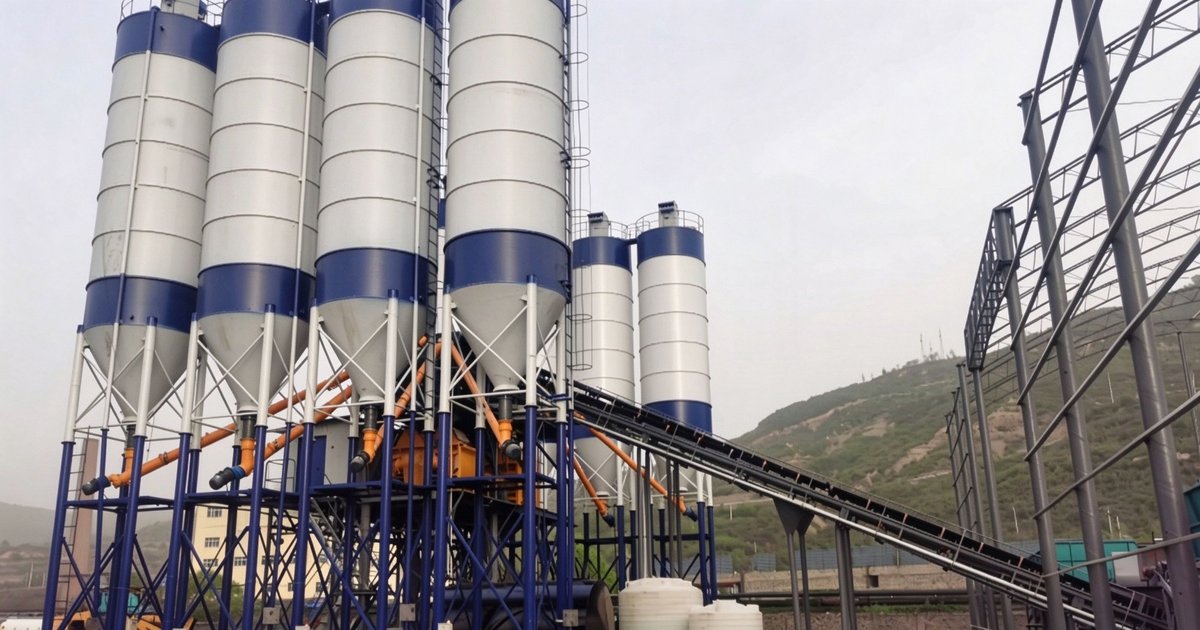
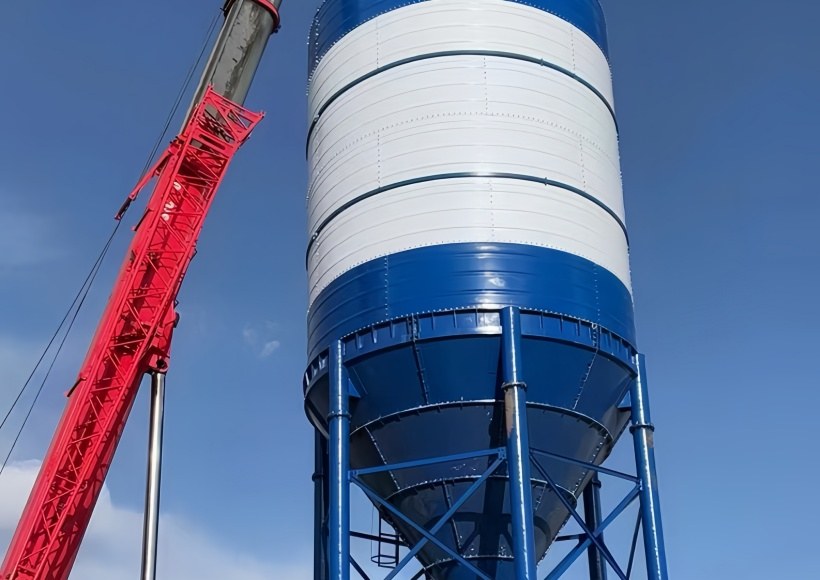
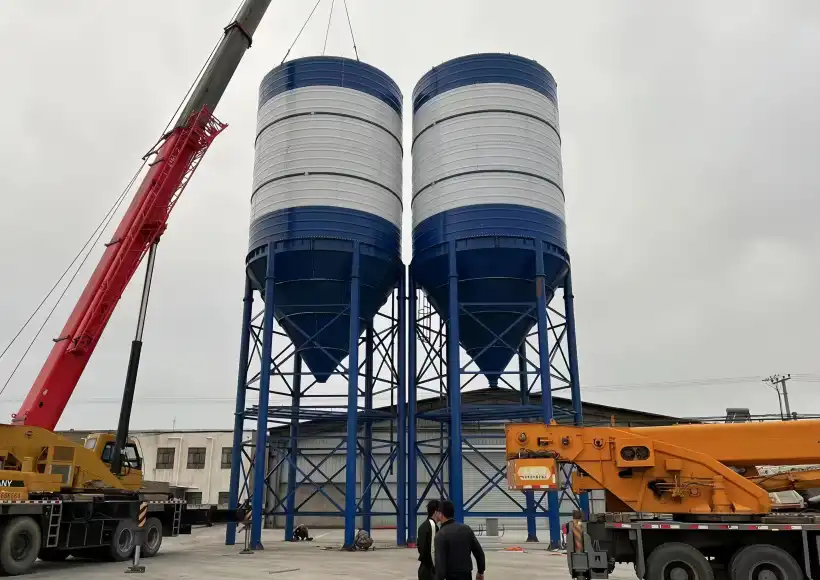
A bolted silo travels as galvanized plates inside 20 foot or 40 foot containers. Plates stack tight, several units can share a container, and no crane is needed on the water side. Freight per ton drops sharply in this band, and the delivered cement silo price follows the same curve.
A 100 ton bolted unit lands between 15,000 and 22,000 USD. A 200 ton welded unit, by contrast, lands between 32,000 and 48,000 USD, and that freight difference between bolted and welded shells explains most of the cement silo price gap at this capacity. Freight, not steel, explains most of the gap at this capacity.
Past 300 Tons, Foundation Work Takes Over
Above 300 tons the pad becomes the dominant line. Piled foundations, larger footing areas, seismic anchoring and wind load documentation all appear at once, and their cost scales faster than the shell. A 300 ton unit that quoted at 45,000 USD can double once the geotechnical report returns a low bearing capacity.
A 500 ton bolted steel silo normally lands between 70,000 and 110,000 USD before foundation, and that cement silo price climbs with wind load and plate thickness. and a 1000 ton store should read custom silo specifications from 100 to 5000 tons before assuming steel remains sensible, since concrete stave construction takes over with a different cost structure.
Fabrication Method: Bolted, Welded, Spiral Rolled
How a Bolted Silo Travels and Assembles
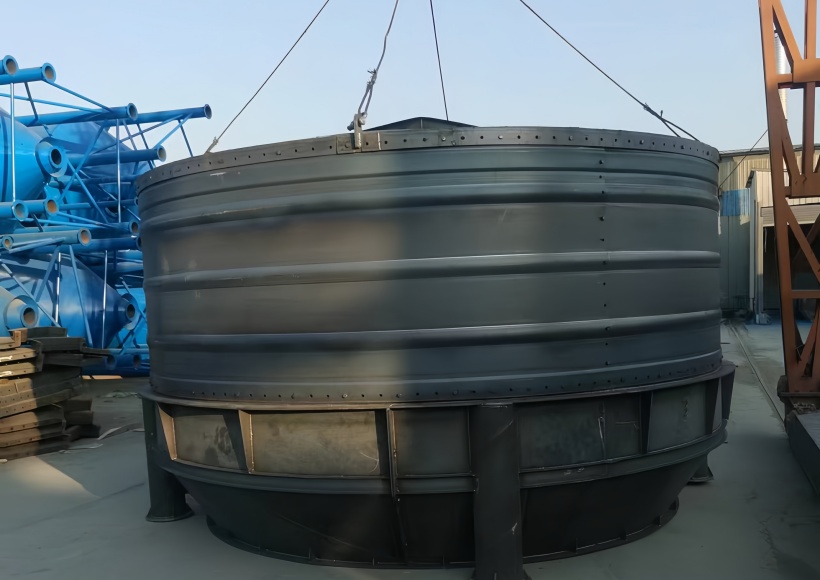
A flaky cement silo arrives as curved galvanized plates, flange bolts and a roll of sealer. The erection sequence runs ring by ring from a base plate, with each flange joint sealed as the crew climbs. Field labor is higher than shop labor, but freight stays low and the shipment can consolidate with mixers or batching equipment in one container load.
Expansion is the quiet advantage. Adding a second ring raises capacity without a new foundation, which suits plants whose storage demand is still climbing. The trade-off is seam maintenance, since every bolted joint is a place where moisture can enter and coating can degrade.
Why a Spiral Rolled Silo Costs More Up Front
A spiral rolled silo leaves the workshop as one continuous welded section, produced by winding plate through a forming mill and welding the seam in a single pass. The shell is airtight, the surface is unbroken, and there are no flange joints to re-seal. Transport requires a lowboy trailer and a crane at both ends.
Purchase cost sits higher than bolted, and the delivered cement silo price reflects that freight penalty. Maintenance cost runs near zero across a twenty year service life because nothing weeps and nothing needs retorquing. For fly ash and fine cement, that airtightness is the reason welded shells dominate.
Pick the Method From Access and Material
Access decides more often than price. Where a 40 foot trailer cannot turn into the plant, bolted plates in containers are the only practical option. Where the site has crane access and the material punishes any air leak, a welded or spiral shell saves money over the service life.
A working rule from roughly forty silo projects: bolted below 200 tons with tight site access, welded above 300 tons where airtightness is non-negotiable. Between those bands the decision rests on freight quotes and on how the plant plans to expand.
Ground Conditions Decide More Than Steel Price
Run the Soils Report Before Anything Is Drawn
Nothing else on a silo project carries as much cost risk as what sits under the pad. Weak soil forces piling, and piling brings a geotechnical engineer, a borehole program, driven or bored piles and a pile cap. That package routinely outweighs any saving negotiated on the shell.
On a 300 ton silo in the Mekong delta, foundation work reached 27 percent of the total project cost. A 400 ton spiral rolled unit quoted at a normal figure doubled after the report returned a CBR value under 4. Both projects had signed purchase orders before the ground was tested.
Access and Overhead Clearance Cost Money Quietly
Site access is a delivery problem that becomes a fabrication problem. If the largest single lift cannot reach the pad, the design changes to bolted plates, and the bolted design carries its own crew, scaffolding and torque requirements. Road widening, tree removal and permit work land on the buyer’s side of the invoice.
Overhead clearance matters just as much. Power lines, conveyor galleries and existing storage set the maximum erectable height, and a lower tower means a wider footprint to hold the same tonnage. Confirm the routing with the trucking contractor before the shell design is released.
Wind and Seismic Loads Change the Plate Thickness
A tall silo is a shell structure, so lateral loads drive plate thickness. In a seismic zone the design must account for material sloshing and hoop stress, which pushes wall thickness upward and raises cost per ton of storage. Wind exposure on a 500 ton unit can add 8 to 12 percent to the steel specification.
Ask for the load calculation rather than the conclusion. Buyers who receive a wind and seismic summary can check it against local code, and the resulting cement silo price reflects a design that a local engineer can stamp without rewriting the shell.
Every Component Inside the Silo Adds a Line
The Shell Is Only the First Line Item
A cement silo system is not a steel tube. The body uses 4 to 6 mm plate on small units and 8 to 10 mm on large ones, either galvanized or carbon steel with an epoxy lining. Everything above that shell is what turns stored powder into a working silo.
- Aeration pads or fluidization nozzles across the hopper, without which cement compacts and rat-holes form
- A dust collector sized to the pneumatic fill rate, either baghouse or cartridge type
- Level sensors, radar or capacitance, for inventory control rather than rotary paddle guessing
- A discharge valve, butterfly for cement and slide gate for fly ash
- A pressure relief vent and a vacuum breaker, both of which protect the shell during filling
- An access platform, ladder and roof manway, all required by code rather than optional
Each line moves the cement silo price, and each line can be silently dropped to make a quotation look cheaper. A correctly sized dust collection system on a 200 ton cement silo adds 4,000 to 7,000 USD. Skipping it brings air quality penalties, product loss and neighbour complaints.
Size the Dust Collector to the Fill Rate
The dust collector is sized from the volume of air displaced during pneumatic filling, not from the silo tonnage. Undersize it and pressure escapes through the relief vent with a cloud of cement dust. Oversize it and you pay for filter media and compressed air pulses that never earn their keep.
One plant audited after eighteen months of operation found that a 3,000 USD saving on dust collection had produced 40,000 USD in remediation, filter replacement and production stoppage. Ask for the fill rate in cubic meters per minute and the collector rating in the same units.
Match the Discharge Arrangement to the Material
Hopper bottom silos suit units under 300 tons because gravity does the unloading work. Flat bottom silos suit large stores where a front end loader sweeps the floor and a screw conveyor handles the remainder. Choosing the wrong arrangement costs the plant a permanent labor line.
Fly ash changes the answer. It is finer than cement, fluidizes more easily and finds any seam that was not gasketed correctly. That is why welded shells dominate fly ash service, and why a bolted silo quoted for fly ash needs its seal specification written out in the contract.
Do Not Cross-Shop Cement Silos With Grain Silos
Two Different Sets of Requirements
Grain storage needs ventilation, temperature and moisture monitoring and often insulation to prevent condensation. Cement storage needs aeration for discharge, dust collection during fill and zero moisture ingress, since cement hydrates on contact with water. The two designs share a shape and nothing else.
That divergence explains the price gap. A 500 ton grain silo often quotes below a 500 ton cement silo of the same capacity, because it carries neither the aeration package nor the heavier dust collection. Comparing the two figures tells you nothing about value.
Why a Converted Grain Silo Fails
A contractor once tried to store cement in a converted grain silo, reasoning that the shape was identical. Six weeks later the discharge cone held a solid block of hydrated concrete, and the cleanup plus replacement cone cost 90,000 USD. Grain silo geometry drains grain. It does not drain powder.
Two suppliers inside the same factory rarely share an engineering team for grain and modular silo design for batching plants. The aeration philosophy, discharge geometry and corrosion specification have diverged over the past decade. A vendor claiming the two are basically one product is telling you what the sales desk thinks, not what the drawing office knows.
Check Which Product Line the Drawing Comes From
Ask the supplier to name the product line behind the quotation and to send a general arrangement drawing from that line. Cement silo drawings show aeration nozzles in the hopper, a pressure relief vent on the roof and a dust collector flange at the top. Grain drawings show ventilation fans and temperature cables instead.
That single drawing settles the question faster than any conversation. Buyers who compare specifications line by line usually find that the cement silo price they were offered belongs to a shell designed for another material, with the aeration package added as an afterthought.
Realistic Price Ranges From 50 to 500 Tons
Landed Cost Table for Common Capacities
The figures below are direct factory landed costs from Chinese manufacturers over the past eighteen months, in USD, excluding foundation and installation labor. Each range assumes a complete working silo: aeration, dust collection, level sensing, discharge valve and safety access.
| Capacity and method | Landed range (USD) | What moves the number |
|---|---|---|
| 50 ton bolted | 9,000 to 14,000 | Fixed engineering overhead spread over a small steel order |
| 100 ton bolted | 15,000 to 22,000 | Container consolidation and galvanize grade |
| 200 ton welded | 32,000 to 48,000 | Oversize freight, lowboy trailer and crane at both ends |
| 300 ton spiral rolled | 45,000 to 68,000 | Single section transport plus airtight shell fabrication |
| 500 ton bolted | 70,000 to 110,000 | Plate thickness, wind load specification, number of rings |
Per ton, the cement silo price runs roughly 140 to 220 USD on bolted storage, welded and spiral storage 180 to 260 USD. Foundation and installation typically add 15 to 30 percent on top of the landed figure, and soft ground pushes that share higher.
What Moves a Quote Inside Its Range
Steel price volatility is the first variable. Check the hot rolled coil index before signing, because a mill increase between quotation and purchase order lands on the buyer. Galvanize specification is the second: Z600 coating costs more than Z275 and buys ten extra years in salt air.
Dust collection sizing and level sensor choice each move the cement silo price by a visible margin, and neither appears in a shell only quotation. Volume purchasing is the last variable, since a three unit order reaches a better steel plate tier and returns 8 to 12 percent against a single unit order.
Turnkey Scope Adds a Further Layer
A silo that receives cement by truck needs more than a shell. Truck loading automation, pneumatic conveying lines, level sensor integration and a control cabinet take a storage project from delivered equipment to working plant, and that layer adds 12 to 20 percent.
Be explicit about the boundary. Suppliers quote to the flange, to the control cabinet, or to commissioning, and each boundary produces a different total. A cement silo price that stops at the flange is valid, but nobody should discover that boundary during the first fill.
Separate a Manufacturer From a Trader
Three Tiers of Supplier
The silo supply market splits into three groups. The first is exporters with fifteen or more years in bolted and welded steel silos, English drawings and an in-house engineering department. The second is regional fabricators who build to specification but charge 40 to 70 percent more and take longer.
The third is trading companies that quote anything and subcontract to whoever is cheapest that week. That tier produces stories like the Lagos project, because no engineering bench is behind the drawing and nobody checks the soils report against the silo load.
Three Questions That Settle the Tier
- Can you send a shop tour video recorded this week, with a newspaper in frame for the date
- What is the aeration pad layout logic, and can you show the fluidization calculation for this capacity
- Who answers the phone at two in the morning on a pour night when the dust collector plugs
Silence on the third question ends the evaluation. Dust collectors plug, valves stick and level sensors drift, so every silo project eventually runs on the supplier’s engineering bench rather than on the purchase order.
Put Code Compliance in the Contract
Local code compliance, wind load certification and seismic anchoring are contract items, not conversation items. Write them into the technical annex with the required standard and the deliverable that proves compliance, such as a stamped calculation package.
A supplier who cannot produce a stamped package for a 500 ton unit is telling you the design was never reviewed. Buyers who accept that risk usually learn the lesson at port, when the shell arrives and the local authority asks for documentation.
Long Term Cost Sits Beyond the Quote
Seams and Coating Drive Ten Year Cost
A bolted shell that saves 8,000 USD up front can consume 25,000 USD across a ten year cost comparison in re-seaming, bolt retorquing and sealer replacement if the galvanize was thin. The saving is real. The maintenance bill arrives later and lands on a different budget year.
Spiral rolled and welded shells cost more at purchase and run near zero maintenance because no bolted joint degrades. For plants with a twenty year horizon, that calculation belongs in the original cement silo price comparison rather than in a later maintenance review.
Coating Life Depends on Location
A properly galvanized silo in a temperate inland climate returns twenty five or more years of service before recoating. In salt air service the figure drops to twelve to fifteen years on Z275, and Z600 extends it to twenty to twenty five years.
Where the plant sits within five kilometers of the coast, an epoxy topcoat belongs in scope from the start. Recoating a 300 ton silo in service means scaffolding, containment and a production pause, so the coating decision is cheaper at build time.
Aeration Air Is a Running Payment
Aeration blowers of the Roots type typically run at 0.5 to 0.8 bar, and power for that machine is a permanent operating line. Plants holding several large stores feel that cost at monthly scale rather than annually, because the blower runs whenever material is fluidized for discharge.
Variable frequency drives on the blower plus interlocked level sensors usually pay back inside eighteen months on a 300 ton silo. That payback belongs in the project justification, since it changes the operating cost of the plant rather than the purchase price of the equipment.
Questions Buyers Ask Before Signing
How Much Does a Cement Silo Cost Per Ton of Storage
From Chinese manufacturers, expect 140 to 220 USD per ton for bolted steel and 180 to 260 USD for welded or spiral construction. Foundation and installation add another 15 to 30 percent to the delivered figure.
Is There a Minimum Order for a Custom Silo
Most manufacturers will quote a single unit. Price flexibility appears at three units, where the steel plate order reaches a better mill tier and trims 8 to 12 percent from the cement silo price across the order.
How Long Does Galvanize Last in Salt Air
Z275 coating gives twelve to fifteen years in coastal service before recoating, and Z600 gives twenty to twenty five. Inland temperate sites see twenty five or more years on either specification.
Can Fly Ash Go Into a Cement Silo
Only into a welded shell with airtight seams and an aeration system sized for fly ash at roughly 0.7 tons per cubic meter against cement at 1.2. A bolted shell will release fines through the flange joints.
What Lead Time Applies to a 300 Ton Bolted Unit
Fabrication takes 35 to 45 days, delivery to port 7 to 10 days, ocean freight 18 to 35 days depending on destination, and customs 5 to 7 days. Door to site works out near 65 to 95 days.
That final figure is the point of the whole exercise. The cement silo price on a quotation covers a shell and a promise, while the budget that survives contact with a site covers soil, aeration, coating and the engineering bench behind the drawing. Establish those four before discussing discount.