

Nobody picks a drive system for a JS1000 mixer because it looks good on paper. You pick one because your concrete output, your shift pattern and your repair budget can live with it for the next five years. This guide walks through the three JS1000 mixer drive options fitted to our JS1000 mixer — single reducer, dual cycloid reducer and dual planetary reducer — and shows where each one pays for itself, and where it does not.
What the Drive System Does on a JS1000 Mixer
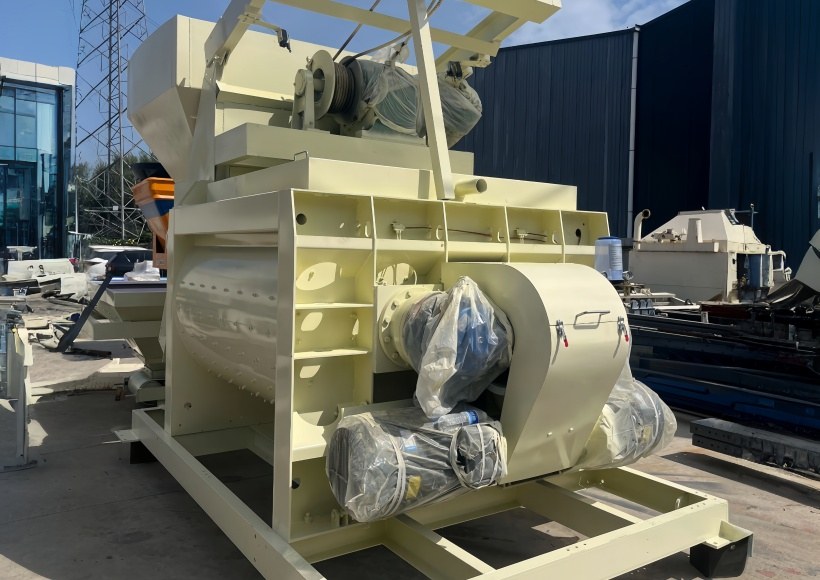
The JS1000 mixer drive sits between the motor and the two mixing shafts. It turns 37 kW of motor power into the torque that moves the mixing arms through wet concrete. That sounds simple, but the way torque is transferred decides three things on the job: how the machine handles a jammed load, how often parts need replacing, and how long the plant can run before a breakdown.
Every JS1000 mixer built in our workshop shares the same mixing geometry and the same batch capacity. The drive option is what changes between machines. Get it right and the mixer runs for years between overhauls. Get it wrong and you are swapping reducers in the middle of your peak production week.Choosing the right JS1000 mixer drive is a five-year decision, not a one-time purchase.
Three Drive Options at a Glance
| Transmission mode | Single reducer | Dual cycloid reducer | Dual planetary reducer |
|---|---|---|---|
| Components | 1 × ZQ gear reducer, 37 kW motor | 2 × cycloid reducers | 2 × planetary reducers + V-belt |
| Overload resistance | Weak — shock load hits the gearbox directly | Moderate — cycloid disc can crack under sudden shock | Strong — V-belt slips before damage reaches the gears |
| Maintenance cost over 3 years | Highest — whole reducer replacement | Medium-high — swap the damaged unit | Lowest — belts and gear parts replace on site |
| Best fit | Low-intensity, intermittent mixing | Stable light-to-medium loads | High-intensity continuous production |
That table is the short version. The three sections below explain what each row means on a real site, with the numbers our engineers quote when they configure a mixer.Each JS1000 mixer drive option is built around the same 37 kW motor — what changes is how the torque survives the load.
Single Reducer Drive — Lowest Entry Cost, Highest Repair Bill
Structure and how it works
The single reducer drive is the most basic layout: one ZQ gear reducer takes the full mixing load straight from a 37 kW motor. No intermediate stage, no belt, no second gearbox. That keeps the first purchase price down and the footprint small, which is why it still appears on price-led quotes for small sites.
Where it falls short is under shock. The entire mixing torque goes through one set of gears. When the batch turns dry, a big aggregate chunk wedges, or the operator dumps material too fast, that shock lands directly on the reducer. Gear teeth wear, backlash grows, and the reducer reaches the point where it has to be replaced rather than repaired. A single-reducer JS1000 mixer drive is workable for short, light shifts — it is not a machine for ten-hour continuous runs.
Put the cost picture together and the entry price is the only advantage that survives the first year. On a single-reducer layout the whole gearbox carries every overload event, so after a season of hard batching the repair quotes usually land on full reducer replacement, not adjustment.
Buyers who run one shift a day, five days a week, often keep a single-reducer JS1000 mixer drive for years without drama. Push a single-reducer JS1000 mixer drive beyond eight hours with wet aggregate, and the pricing conversation starts on a dual-layout machine by month six.
Dual Cycloid Reducer Drive — The Middle Ground
Structure and how it works
Two cycloid reducers split the load between the two mixing shafts. Each reducer carries roughly half the torque, which lowers the stress on any single unit compared with the single-reducer layout.
Cycloid reducers are compact and quiet at steady load. They suit sites where the mix design stays constant and the plant runs at a predictable pace. Their weak point is sudden shock: a jam in the drum or a hard aggregate chunk can crack the cycloid disc, and a cracked disc means replacing that reducer unit.For steady light-to-medium loads, the dual cycloid JS1000 mixer drive is a fair middle ground.
Maintenance on a JS1000 mixer drive sits between the two extremes — higher than a planetary setup, lower than a single reducer — because you can keep one unit running while the damaged one is swapped out.

Dual Planetary Reducer Drive — Built for Continuous Production
Structure and how it works
A dual planetary JS1000 mixer drive uses two planetary reducers, each driven through a V-belt, sharing the load across both shafts. The planetary gear set spreads contact across more teeth than a cycloid disc, which gives it better shock resistance and a longer service life under continuous load.
The dual planetary JS1000 mixer drive is the option our engineers recommend for continuous production.The V-belt is the detail most buyers overlook, and it is the reason this drive survives what kills the other two. The belt is the deliberate weak link: if the load spikes, the belt slips instead of letting the shock travel into the gearbox. That single design choice protects the reducers and keeps the machine running — you replace a belt in twenty minutes, not a gearbox in a day.
Planetary reducers are also more repairable. Seals, bearings and gear sets can be sourced and swapped without replacing the whole unit, which is why the long-term maintenance cost lands lowest of the three options.
How to Pick the Right Drive for Your JS1000 Mixer
Match the JS1000 mixer drive by budget, shift pattern and repair capability — in that order. Two real cases from our order records show why the workload forecast, not the brochure, decides the right drive.
A township precast yard runs two short shifts, about three hours of mixing a day, and bought a single-reducer JS1000 — the lowest quote won the order, and after two years the machine is still on its original reducer. A ready-mix operator on the other side runs ten-hour days with wet aggregate from three suppliers; his first dual-cycloid machine lost a reducer disc in month four, and the replacement dual-planetary machine has now run eighteen months without a single drive failure.
Budget-based selection
Tight first budget with low output: a single reducer gets you started at the lowest initial cost. If you are budgeting for running costs too, the dual planetary drive usually wins on total cost of ownership — the maintenance bill over three years is smaller than the first-price gap.
Production-pattern selection
Less than four hours of mixing a day, intermittent: single reducer can cope. Steady four-to-eight-hour shifts with a known mix design: dual cycloid is a fair match. More than eight hours, high intensity, or raw materials that change supplier: dual planetary, without much debate.
Maintenance-capability selection
If the choice still feels close, our engineers can walk you through the JS1000 mixer drive options side by side, with your shift hours and aggregate quality on the table.
Remote site with no local mechanic: dual planetary, because belts and gear parts are replaceable on site. A site with a full maintenance team has more freedom, but the planetary option still costs less in parts over the life of the machine.Budget, shift pattern and repair access decide the JS1000 mixer drive — in that order.
Quick Selection Table
| Your situation | Recommended drive | Why |
|---|---|---|
| Tight first budget, under 4 h/day mixing | Single reducer | Lowest purchase price |
| Steady mix, 4–8 h/day, known formula | Dual cycloid | Quiet, compact, balanced cost |
| 8+ h/day or variable raw materials | Dual planetary | Best shock resistance, lowest long-term cost |
| Remote site, limited repair access | Dual planetary | On-site replaceable belts and gear parts |
Daily Checks That Keep Any JS1000 Drive Running
Drive choice changes the economics, but the daily routine is the same three checks, and they catch most developing failures before they cost you a day of production.
No JS1000 mixer drive survives on oil that was never checked and a belt that was never tightened.
- Belt tension on planetary models — a loose belt slips under load, an over-tight belt loads the bearings
- Reducer oil level and temperature — top up to spec, and investigate any climb above normal running temperature
- Noise and vibration — gear knock or an unusual shake means stop and inspect before the next batch
Fifteen minutes a day on these three checks prevents most drive failures. On a dual planetary layout, plan the belt inspection around the same interval as the reducer oil service — roughly every 250 operating hours on a busy plant — so a worn belt is caught at the same stop that keeps oil fresh. Our service engineers see more JS1000 concrete mixers killed by ignored oil levels than by any drive design.
Common Misconceptions About JS1000 Mixer Drive Selection
Match the JS1000 mixer drive to your workload forecast, not to the lowest first quote.Three mistakes show up again and again when buyers pick a drive for a JS1000 mixer. First, judging the drive by installed power alone — all three options run the same 37 kW motor, so the motor size tells you nothing about shock resistance.
Second, assuming that two reducers are automatically twice as reliable as one. A dual cycloid layout still fails fast on sudden shock because the disc cracks.
Third, ignoring parts availability until the machine is down. For remote sites, the drive that can be repaired with a belt and a service kit is worth more than the drive with a slightly lower first price. Ask the supplier for the spare parts lead time before you sign the order, not after the first breakdown.
FAQ: JS1000 Mixer Drive Options
Which JS1000 mixer drive option lasts the longest?
In continuous production, the dual planetary reducer drive. The planetary gears share the load across more contact surfaces and the V-belt absorbs shock spikes, so the reducers avoid the sudden damage that cracks cycloid discs or wears single-reducer gears.
Can a single-reducer JS1000 be upgraded to a dual planetary drive later?
Technically yes, but it rarely makes financial sense. You would replace the base frame, both reducers, the belt system and the shaft couplings — the bill typically lands above 60 percent of a new dual-planetary machine. Choose the drive for your expected workload at purchase time instead.
What is the difference between cycloid and planetary reducers on a JS1000?
A cycloid reducer is compact and quiet at steady loads but vulnerable to sudden shock. A planetary reducer spreads the load across more teeth, survives shock better, and its parts — belts, seals, bearings, gears — are easier to source and replace on site.
How do maintenance costs compare between the three drives?
Single reducer: highest over time, because one gearbox absorbs all the shock and often needs full replacement. Dual cycloid: medium-high, damaged units are swapped out. Dual planetary: lowest, because the belt protects the gearbox and the wear parts are inexpensive and quick to change.
What daily checks protect a JS1000 mixer drive?
Belt tension, reducer oil level and temperature, and any new noise or vibration. Fifteen minutes of checks before the shift catches most developing failures before they stop production.
Conclusion
Choose by workload first, budget second and repair access third. Single reducer fits light, intermittent mixing on a tight budget. Dual cycloid suits steady light-to-medium runs. Dual planetary is the durable choice for continuous production, and its lower maintenance bill usually pays back the price difference within a couple of years. All three configurations are built to the same GB/T 10171—2016 standard that governs weighing and mixing plant safety and performance.
If you are still deciding, send your daily output, shift hours and site location to our engineers. We will recommend a drive configuration for the JS1000 — or for the whole concrete batching plant — and quote the options side by side. Concrete batching plant buyers usually pair the drive choice with the mixer model, so we work through both together.
Manufacturing reference: GB/T 10171—2016 Concrete Batching Plant Standard.