
An HZS120 batching plant is a shopping list before it is a machine. Buyers who ask for a quote without knowing what sits inside the package tend to pay for what they do not need, or discover the missing piece after the concrete starts flowing. This guide lists the HZS120 batching plant equipment — mixer, aggregate batching system, powder storage and conveying — with the selection logic our engineers use when they configure one for a commercial ready-mix station.
The equipment list matters more than the total price, because every line item on the list explains where the money goes. Two quotations for the same nominal model can differ by more than ten percent for one reason only: the equipment inside. Mixer brand, batcher weighing mode, silo count, belt width, control functions — each one changes what the plant can actually produce on your site. Read the equipment list line by line before you compare prices, and this guide gives you the exact lines to check.
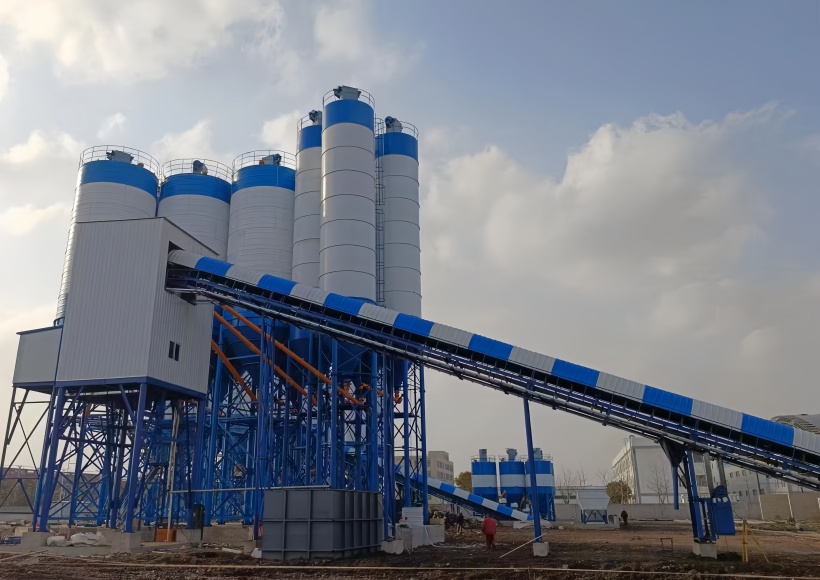
Core HZS120 Batching Plant Equipment Configuration
Mixer System
Standard on the HZS120 is the JS2000 twin-shaft forced mixer, driven by two 37 kW motors. Each batch produces 2 m³ of concrete and the cycle completes in about 60 seconds, which is where the 120 m³/h theoretical output comes from. The twin-shaft design mixes from two counter-rotating shafts, which is why it holds a short cycle time even with a stiff dry mix and large aggregate.
Wear parts matter as much as the mixer frame. The blades are high-chromium alloy castings hardened to HRC58–62, and the liners typically survive 80,000 to 100,000 mixing cycles before replacement. The discharge door is pneumatically operated, with a quick-access inspection hatch so the blade clearance can be checked before a shift without opening the full drum.

Aggregate Batching System
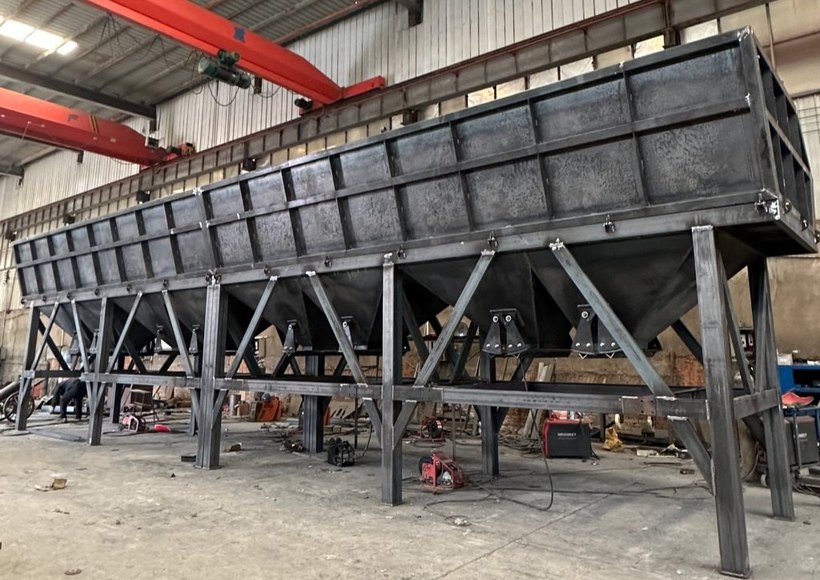
The standard unit is the PLD3200 four-hopper batching machine: metering range 0–4,000 kg, weighing accuracy ±2%, and aggregate storage of 4 × 20 m³. Four hoppers mean four separate aggregate grades can be weighed and charged independently — the layout commercial mix designs rely on. Each hopper sits on its own load cell, so changing the mix design from one grade combination to another does not require re-rigging the scale.
Powder Storage System
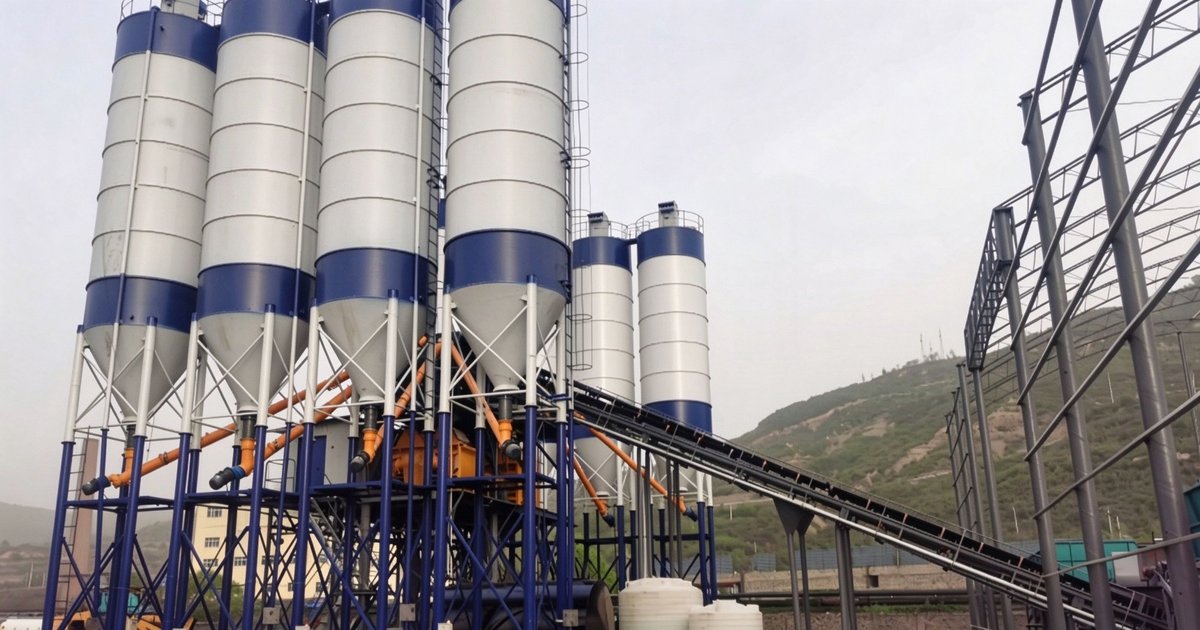
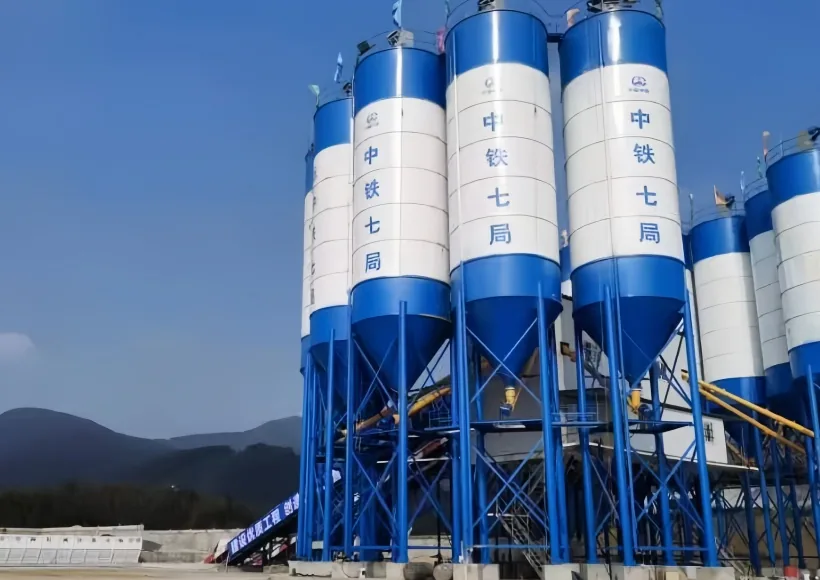
The standard powder train on the HZS120 batching plant equipment is 4 × 100 t cement silos at 3 m diameter, feeding through Φ273 mm and Φ219 mm screw conveyors. For commercial stations we fit anti-arching devices and a pulse jet dust collection system that keeps dust concentration below 20 mg/m³. The silo discharge is arranged so the cement, fly ash and mineral powder each have a dedicated screw line into the weigh hopper, which prevents cross-contamination between powders in the same hopper cycle.
Aggregate Conveying System
An 800–1,000 mm belt with a 37 kW motorized drum carries aggregate up to the batcher, with belt cleaning and tensioning devices fitted as standard. The belt speed and the hopper opening are matched so the batcher is refilled inside the mixer cycle; if the belt is too slow or the transfer point too narrow, the mixer waits and the theoretical output drops. That is why conveyor width is a configuration decision, not a spare-part choice.
Electrical and Control System Equipment
Modern HZS120 batching plant equipment is controlled from a single console. The PLD3200 feeds each hopper weight to the PLC, the control software locks the batching sequence to the mix design, and the mixer cycle starts automatically once the aggregate and powder targets are reached. For commercial stations we fit a printer and data logger, so every batch leaves a record — useful when a customer questions the mix.
The plant runs on around 230 kW of installed power. The control cabinet is specified for ±5% voltage fluctuation, with overload protection on the mixer motors and screw conveyors. Remote sites with weak grids usually add a voltage stabilizer; we quote it as an option rather than assuming the local grid is clean. The console also supports manual override per station, which keeps the plant running through a single-sensor fault while the maintenance crew works on the rest of the HZS120 batching plant equipment.
Technical Guide for Equipment Selection
Mixer Selection
Temporary projects: the domestic JS2000 keeps the cost down. Commercial stations: the SICOMA MAO2000/3000 is the usual upgrade, with a lower failure rate and longer durability on continuous runs. Projects feeding large-diameter aggregate need a mixer built for that feed size — check the mixer opening and blade clearance before you sign. If the project runs two shifts or more, the payback on the premium mixer usually lands inside the first two years of operation.
Batching System Selection
| Configuration Type | Applicable Scenario | Price Range (RMB 10,000) |
|---|---|---|
| Four-hopper independent weighing | Engineering projects | 13–15 |
| Five-hopper independent weighing | Commercial stations | 17–19 |
| Four-hopper cumulative weighing | General projects | 9–10 |
Independent weighing holds each aggregate grade on its own load cell; cumulative weighing chains them onto one cell to cut cost. If your mix design changes grades mid-project, the independent options are worth the premium. A five-hopper layout adds a grade slot for sand replacements or a second coarse aggregate — the configuration most commercial stations order.
Powder System Configuration
Basic projects run three silos — PO32.5 cement, fly ash and mineral powder. Commercial stations add a fourth for PO42.5 cement. Screw conveyor sizing follows a standard rule: Φ273 mm for cement, Φ219 mm for fly ash and mineral powder. Match the silo count to the mix schedule, not to the cement price; the cost of running out of powder mid-pour is far higher than the cost of a fourth silo.
Conveyor Recommendations
Commercial stations: 1,000 mm belt — longer life and no spillage at the transfer point. Engineering projects: 800 mm belt at lower cost. Match the belt to the biggest aggregate you actually use, not the brochure maximum. If the site handles washed sand with high moisture, add a stronger belt scraper at the discharge end — wet fines stick to the return side and build up quickly.
Options and Upgrades Worth Quoting
Beyond the standard list, three upgrades come up most often in quotations. A fifth aggregate hopper converts the batcher to five-hopper independent weighing — the layout for stations that run four grades plus a fifth for sand replacements. The 1,000 mm belt replaces the 800 mm option where transfer-point spillage is a problem. For winter operation, we fit heated silo outlets and insulated screw conveyors to keep powder flowing at low temperature.
Two more options appear on export and cold-region quotes. A complete dust-collection package upgrades the standard pulse-jet filters to a higher filtration class when local environmental inspection is strict. And a remote monitoring module puts the plant console data — batch counts, weigh errors, motor load — on the owner’s phone, which matters when the plant runs with a small crew. None of these change the mixer; they change how reliably the HZS120 batching plant equipment reaches its rated output.
Equipment Layout and Installation Requirements
Basic Layout Schemes
Linear layout: 55 m × 20 m, smooth logistics and the easiest maintenance access. L-shaped layout: 48 m × 35 m, saves space on constrained sites. Most operators let the site shape decide — both layouts keep the mixer at the center of the flow, with the belt feeding the batcher on one side and the concrete discharge point on the other.
Key Installation Parameters
Foundation bearing capacity ≥ 150 kPa. Embedded part flatness ≤ 3 mm/m. Total installed power around 230 kW, and the control system should tolerate ±5% voltage fluctuation — a figure worth checking against your local grid before installation. Give the contractor the anchor drawings before pouring; re-drilling embedded plates on a finished foundation is expensive and delays the whole installation window.
Equipment Maintenance Guidelines
Mixer
Check blade clearance, 3–5 mm, before the shift and clean the drum after every shift. A blade that drags on the liner wears both parts faster. Grease the shaft seals on the schedule in the manual — a dry seal on a twin-shaft mixer is the quickest way to turn a routine service into a seal replacement.
Batching System
Check cylinder seals weekly. A leaking cylinder on a load cell gives you a false weight reading long before it drips oil. Zero the scales each morning before the first batch, and log the reading — a drifting zero is the earliest sign of a damaged load cell or a jammed hopper gate.
Powder System
Inspect the anti-arching devices and the screw intakes weekly. A blocked screw is the most common cause of lost production time on silo-fed plants. Check the dust collector filter bags monthly and clean the pulse-jet nozzles; a filter that clogs raises silo pressure and slows the tanker discharge.
Wear Parts Replacement Cycle
| Part Name | Service Life | Replacement Cost (RMB) |
|---|---|---|
| Mixer blades | 60,000–80,000 cycles | 5,000 per set |
| Liners | 80,000–100,000 cycles | 12,000 per set |
| Screw conveyor | 3–5 years | 9,000 per unit |
These figures assume normal aggregate. River gravel and crushed stone at the same spec wear blades at different rates — keep a spare set on site if you run abrasive aggregate. Every line on the equipment list shows up on the quotation, and the line items explain price differences between suppliers. A quote with four silos, a five-hopper independent batcher and a 1,000 mm belt costs more than a three-silo, four-hopper cumulative package — and the difference is the equipment, not the margin.
When two quotations for an HZS120 batching plant diverge by more than ten percent, compare the HZS120 batching plant equipment list line by line before asking anyone to move on price.
Common Configuration Mistakes on HZS120 Batching Plants
Three configuration errors come up in almost every request we review.
First, matching the mixer to the theoretical output and ignoring the batching cycle — the JS2000 only reaches 120 m³/h if the batcher and belt keep up, so an undersized PLD keeps the mixer waiting. Second, sizing the silos to the cement price instead of the mix schedule; running out of powder mid-pour costs more than the fourth silo. Third, treating the conveyor width as a minor option; an 800 mm belt that spills on a high-output line creates more downtime than the 1,000 mm upgrade costs.
Read the whole HZS120 batching plant equipment list as one system, not four separate parts, and most of these problems disappear before the foundation is poured.
HZS120 vs HZS90: Where the Equipment Differs
The HZS120 and HZS90 share the same batching philosophy but differ on three equipment lines. The HZS120 runs the JS2000 mixer against the HZS90’s JS1500, so the single-batch discharge rises from 1.5 m³ to 2 m³. The batcher steps from PLD2400 to PLD3200, adding a fourth aggregate hopper as standard. And the powder train moves from three 100 t silos to four.
If your daily demand sits below 600 m³, the HZS90’s smaller equipment package keeps the fixed cost down; above that, the HZS120 earns the extra silo and the bigger mixer. Our engineers run this comparison on every mid-size enquiry, and the crossover point is usually around a ten-hour shift with four trucks in rotation.
From Theoretical Output to Real Throughput
This section covers the equipment side only — which components decide how much of the rated 120 m3/h actually reaches the truck. The operational side (the six factors that pull output down over a working month and the five ways to recover it) is worked through in our HZS120 concrete mixing plant capacity analysis.
The 120 m³/h figure is a theoretical output, and the difference between theory and what leaves your yard matters when you size the rest of the HZS120 batching plant equipment. With trucks waiting, the JS2000 holds its 60-second cycle and the batcher keeps up — but every minute spent clearing a jammed belt or resetting a scale drops real throughput to 90–100 m³/h.
That is still the number we use for fleet planning: an HZS120 comfortably feeds a four-truck rotation on a ten-hour shift. If your project plan assumes the full 120 m³/h every hour, size the silos and truck fleet around 95 m³/h instead, and you will not find yourself short on a pour day.
FAQ: HZS120 Batching Plant Equipment
What is the standard mixer on an HZS120 batching plant?
The JS2000 twin-shaft forced mixer, driven by two 37 kW motors, producing 2 m³ per batch on a 60-second cycle. Commercial stations often upgrade to a SICOMA MAO2000/3000 for a lower failure rate on continuous runs.
How many cement silos does an HZS120 batching plant need?
Basic projects run three 100 t silos — PO32.5 cement, fly ash and mineral powder. Commercial stations add a fourth silo for PO42.5 cement, which is the standard HZS120 batching plant equipment layout for ready-mix production.
What is the total installed power of an HZS120 batching plant?
Around 230 kW including the mixer, batcher, screw conveyors, belt and dust collection. The control system is specified to tolerate ±5% voltage fluctuation.
How often do mixer blades need replacing?
The high-chromium blades last 60,000–80,000 mixing cycles under normal aggregate. Abrasive crushed stone shortens that, so we recommend keeping a spare set on site for continuous-run stations.
Can an HZS120 batching plant run with three aggregate hoppers instead of four?
The PLD3200 four-hopper batcher is standard. A three-hopper layout is possible for simple mix designs, but you lose the ability to switch aggregate grades independently — a real limitation for commercial concrete.
What spare parts should be stocked for an HZS120?
For a continuous-run station we recommend one set of mixer blades, a set of liners, two screw conveyor seals, belt joint material and a spare load cell. That covers the failures that actually stop production; everything else can wait for a scheduled service.
Conclusion
Read the equipment list before you read the price list. The JS2000 mixer, the PLD3200 batcher, the silo arrangement and the belt width are what determine whether an HZS120 batching plant earns its keep on your site. The selection logic above is the same one our engineers apply when quoting, and every configuration is manufactured to the GB/T 10171—2016 standard that governs concrete batching plant weighing and mixing performance.
If you want the HZS120 batching plant equipment matched to your annual output and site shape, send the details to our engineers — we will draw the layout, list the equipment and quote the right silos, batcher and belt for your job. The HZS120 concrete batching plant product page shows the standard package.
Manufacturing reference: GB/T 10171—2016 Concrete Batching Plant Standard.
Related reading: HZS120 concrete batching plant price breakdown · HZS120 vs HZS90: which one fits your project
Three follow up checks decide whether an HZS120 line fits a program. The HZS120 Concrete Batching Plant Price page covers budgeting, the HZS120 concrete mixing plant actual capacity analysis covers output under a real mix, and the Concrete Batching Plant Manufacturer page covers factory vetting.