
Introduction: Why Equipment Selection Decides Project Outcomes
Every large-scale infrastructure job starts with the same hard question: which concrete batching plant can actually carry the load for the next three to four years? Pick the wrong size and you either choke on pour deadlines or burn money on a machine that idles half the week. This is not a purchasing problem — it is a project-planning problem, and it deserves the same discipline as structural design.
This guide walks through a real HZS120 concrete batching plant selection case: a cross-sea bridge project that needed 250,000 m³ of concrete over 40 months. We cover the full specification sheet, the capacity calculation method, the lifecycle cost comparison, the supplier audit, and the mistakes that sink most equipment selections. By the end you will have a repeatable selection framework you can apply to your own project, whether you are building a bridge, a dam, or a ready-mix yard.
HZS120 Concrete Batching Plant: Full Specification Table
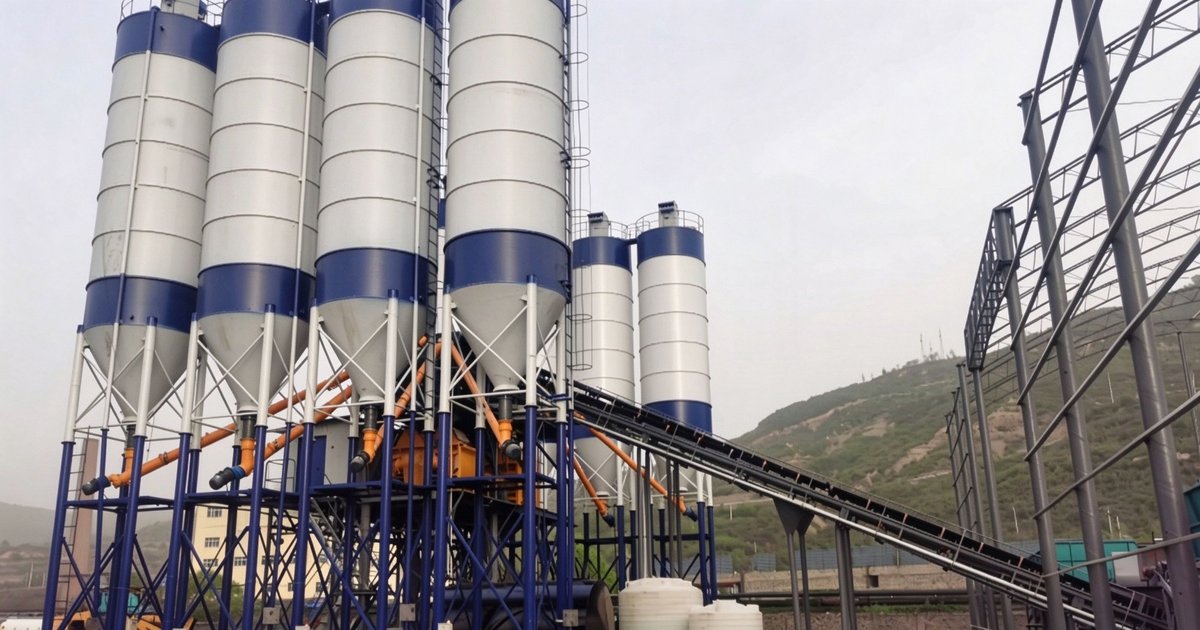
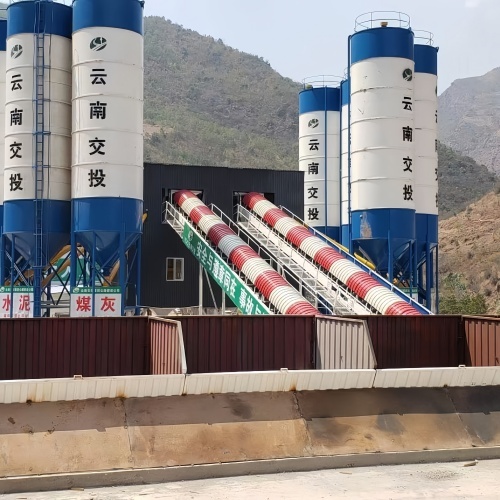
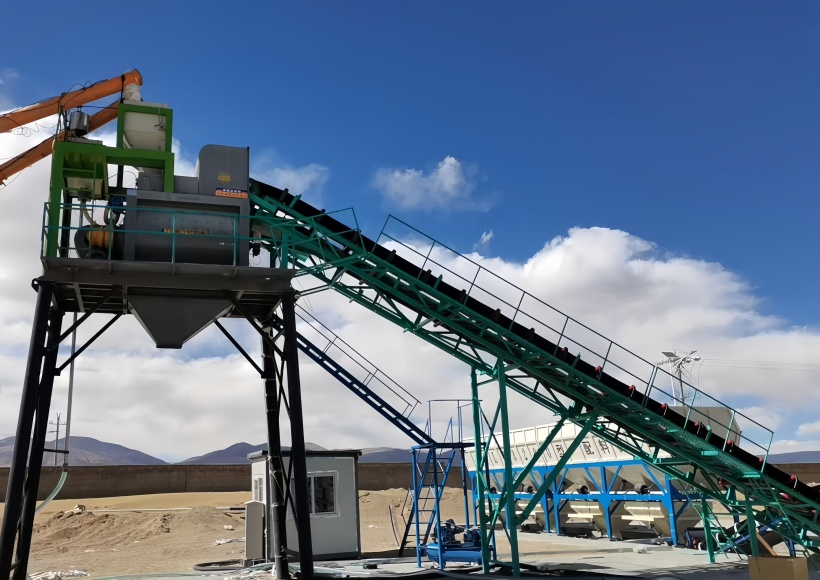
Before comparing options, you need the baseline. The HZS120 concrete batching plant is a medium-to-large stationary plant built around the JS2000 twin-shaft forced mixer. The table below lists the standard configuration per GB/T 10171—2016:
| Item | HZS120 Concrete Batching Plant Specification |
|---|---|
| Theoretical Output | 120 m³/h |
| Typical Real Output | 90–100 m³/h at 75–85% load factor |
| Mixer | JS2000 twin-shaft forced mixer |
| Single Batch Discharge | 2.0 m³ |
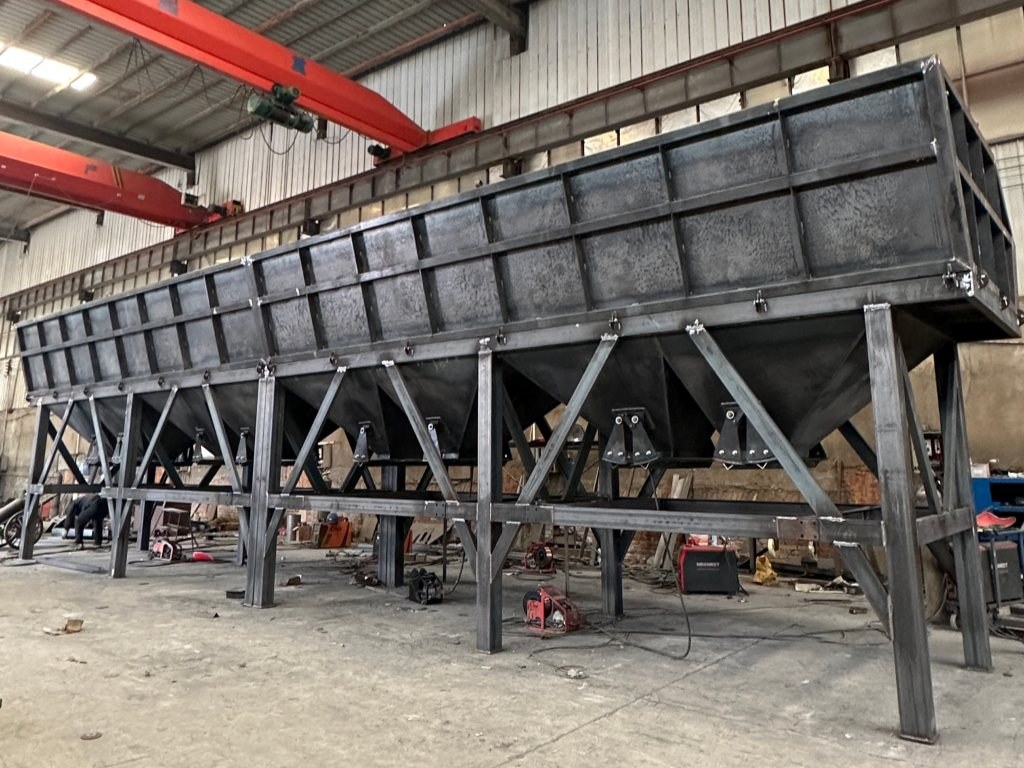
| Aggregate Batcher | 3200L, four independent hoppers |
| Aggregate Storage | 4 × 20 m³ |
| Powder (Cement) Storage | 4 × 100 t silos |
| Control System | Fully automated microcomputer control |
| Dust Emission | ≤ 20 mg/m³ (pulse dust removal) |
| Standard Footprint | 1,600–1,900 m² |
| Installed Power | 190–210 kW |
Two details in this table matter more than the headline “120 m³/h” number. First, real output is always lower than theoretical output — every plant loses time to truck waiting, mixer cleaning, and material loading. Second, the four independent aggregate hoppers are the reason this model suits commercial and large-site work: you can batch four separate aggregate grades without cross-contamination.
Core Technology on the HZS120 Concrete Batching Plant
The HZS120 concrete batching plant is not just a bigger version of a small station. Four technical features decide its long-term behaviour on site.
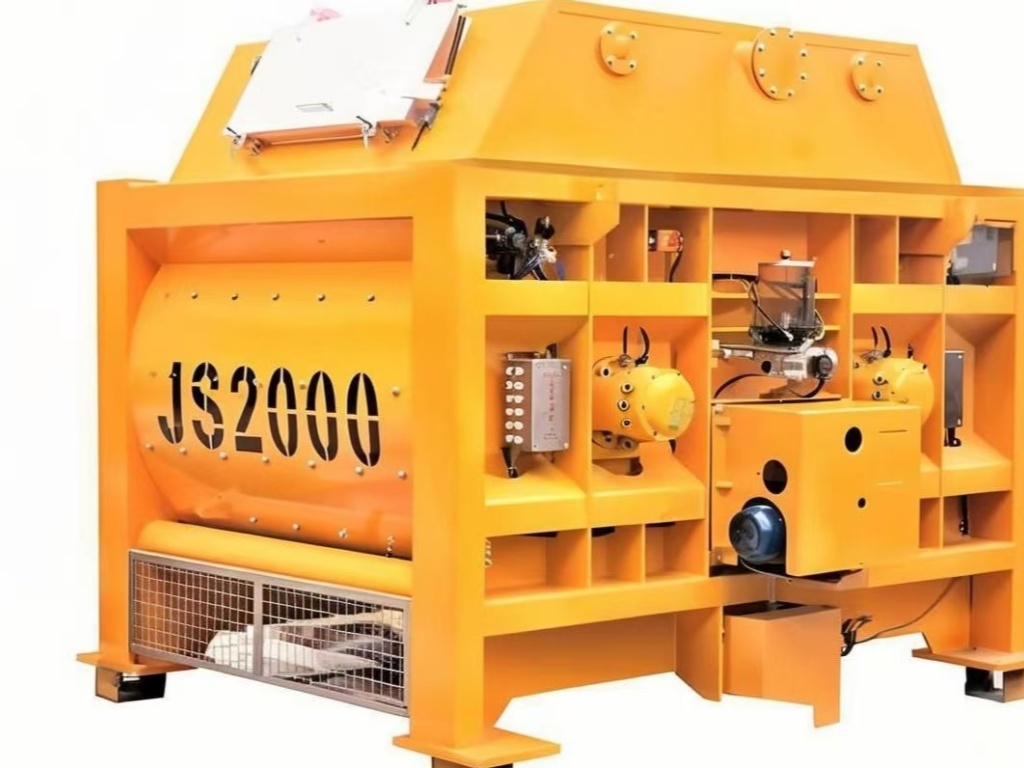
Dual-spiral mixing blades
The JS2000 mixer uses a dual-spiral blade design that cuts mixing time by roughly 15% compared with single-spiral layouts. Shorter mixing cycles mean more batches per shift, which is exactly what a project running peak pours needs.
Enclosed structure with pulse dust removal
The plant is fully enclosed, and dust emissions stay at or below 20 mg/m³. That matters because most large projects sit near residential areas or protected zones, and local environmental inspectors do measure.
Intelligent control with ERP integration
The control cabinet supports remote monitoring, fault diagnostics, production data tracking, and ERP integration. On a 40-month project you want to see output per shift, cement consumption, and downtime reasons without walking to the control room.
Wear-resistant key components
The mixer liners, blades, and discharge chutes use special wear-resistant materials, which typically extends service life by about 30%. On a project pouring 250,000 m³, wear parts replacement is a real line item in the budget.
Capacity Calculation: Matching Plant Size to Real Demand
This section works backwards from project demand to the plant size you need. Once the machine is running, the day-to-day question — why a rated 120 m3/h plant delivers 80 to 100 m3/h, and what to do about it — belongs to our HZS120 actual capacity analysis.
The single most common mistake in equipment selection is ordering on theoretical output. The correct approach is to work backwards from project demand.
Daily concrete requirement = Total project volume ÷ working days
Required hourly output = Daily requirement ÷ daily operating hours × 1.15
Take the bridge case: 250,000 m³ over 40 months. Assuming 26 working days per month, that is about 1,040 working days. Daily demand = 250,000 ÷ 1,040 ≈ 240 m³/day on average. But peak days reached 1,500 m³ — so the average is not what you design for.
At peak, with an 8-hour shift: hourly requirement = 1,500 ÷ 8 × 1.15 ≈ 216 m³/h. That would suggest two plants, not one. In practice the project ran two HZS120 concrete batching plants (one active, one standby) — combined capacity above the peak, plus a spare unit for scheduled maintenance. This is the standard pattern for large infrastructure: never run a single plant with zero backup.
Lifecycle Cost Comparison: HZS120 vs Smaller and Larger Options
Upfront price is the wrong yardstick. Over a 3-year operating window, the real comparison looks like this:
| Cost Item | Smaller Combo (2 × HZS60) | HZS120 Concrete Batching Plant | Larger Alternative (HZS180) |
|---|---|---|---|
| Initial Investment | Lower (2 units, simpler foundation) | Medium | 25–35% higher than HZS120 |
| Installed Power | 2 × ~75 kW | 190–210 kW | 280–320 kW |
| Labour Required | 2 control operators | 1 control operator | 1 control operator |
| Footprint | ~2,400 m² for two units | 1,600–1,900 m² | 2,200–2,600 m² |
| Real Output | 2 × 65 m³/h | 90–100 m³/h | 120–140 m³/h |
| 3-Year Lifecycle Cost | Baseline | ~18% lower | ~10–15% higher |
The HZS120 concrete batching plant came out with roughly 18% lower total cost over three years than the two-unit smaller combination, and about 35% lower initial investment than the HZS180 alternative. The smaller combo needed two operators and two control systems; the larger plant was simply more capacity than the project could use.
Transport, Foundation and Installation Timeline
Many selection decisions ignore the gap between signing the order and pouring the first cubic metre. For the bridge site, the HZS120 concrete batching plant was shipped in containerised form and the timeline ran like this:
- Sea freight and customs clearance: 4–6 weeks from the factory to the site port, depending on the route and port congestion.
- Foundation works: about 3 weeks on site — reinforced concrete base slabs, anchor bolts, cable trenches, and drainage. The foundation drawing should be agreed with the manufacturer before shipping, not after.
- Assembly and commissioning: 10–14 days with an installation crew of six to eight, including mechanical assembly, electrical wiring, calibration of the scales, and a trial batch.
- Full acceptance run: 2–3 days of continuous batching at 80%+ load before handover to the project team.
Total elapsed time from order to first commercial batch was about 9–11 weeks. If your project has a fixed pour date, order the plant early enough that this window does not eat into the schedule — and ask the supplier for a written installation plan with dates.
Site Infrastructure Checklist
A batching plant does not run on concrete alone. Before the machine arrives, the site has to be ready. Based on the bridge project’s experience, these items caused the most delays when missing:
- Power supply: 380 V / 50 Hz three-phase, with a transformer sized for 190–210 kW installed power plus a 20% margin. A single-phase site will not run a JS2000 mixer.
- Water supply: mixing water plus wash-down water, typically 3–5 m³/h. A booster pump is worth having when the site tank is far from the plant.
- Hardened aggregate yard: a level, drained yard large enough for a 7–10 day buffer of aggregates at peak consumption. Mud and standing water stop the loader and contaminate batches.
- Truck access: the mixer-truck turnaround needs a radius of roughly 18 m in front of the discharge point. A cul-de-sac that is too tight slows every pour.
- Lighting and fencing: for night pours and site security — often required by the local authority before the plant is allowed to operate.
Check these against your own site before you finalise the order, because retrofitting power or yard drainage mid-project is expensive and slow.
Preventive Maintenance Plan: Keeping the Plant at 92%
The 92% utilisation figure in the bridge case did not come from the machine alone. It came from a maintenance routine that was agreed before commissioning. A practical plan for an HZS120 concrete batching plant looks like this:
| Interval | Checks and Tasks |
|---|---|
| Daily (start of shift) | Inspect mixer blades and liners for wear; check oil level; verify scale zero point; drain air filters; record first batch quality |
| Weekly | Grease all lubrication points; check belt alignment and tension; inspect dust collector bags; verify silo level sensors |
| Monthly | Torque-check mixer and drive bolts; inspect discharge chute; test emergency stop and control backup; review output and downtime logs |
| Quarterly | Replace wear liners if needed; calibrate all weighing systems against test weights; check electrical cabinet and terminals; clean silo filters |
Spare parts that should be stocked on site from day one: a set of mixer blades, liner plates, two dust collector bags, a complete set of hydraulic seals, and a spare control relay board. Waiting for a replacement part to ship from abroad can stop production for a week at the worst possible moment.
Environmental Compliance on Site
Large projects increasingly face hard environmental targets. The HZS120 concrete batching plant is designed to help, but only if the supporting measures are in place:
- Dust: the enclosed structure and pulse dust removal keep emissions at or below 20 mg/m³, but only when the dust collector is maintained. A choked filter turns a compliant plant into a violation overnight.
- Noise: the compressor and mixer are the main sources. Locating the plant behind an earth berm or acoustic screen is common where sensitive receptors sit within 200 m.
- Wastewater: wash-down water contains cement slurry and must go to a settling tank, not the site drain. A simple two-stage settlement pit is enough for most sites.
- Documentation: keep batch records and emission logs. Inspectors ask for them, and they also feed the ERP reports the owner wants.
Plan these items at the same time as the foundation — retrofitting an acoustic screen or a settling tank after commissioning is always more expensive.
Common Selection Mistakes and How to Avoid Them
Four errors show up again and again in large-project equipment selection:
- The “bigger is better” fallacy. Oversizing pushes the plant into part-load operation, where per-cubic-metre power cost rises and the payback window stretches. Match capacity to peak demand plus a buffer, not to ego.
- Price-only decisions. The lowest quote often hides higher power draw, thinner wear parts, and a weaker service network. Lifecycle cost is the only fair comparison.
- Over-configuration. Adding every optional feature inflates the purchase price. Buy what the project phase actually needs; add modules later if demand grows.
- Ignoring environmental requirements. A plant that fails local dust and noise limits gets fined or shut down mid-project. Retrofitting dust collection after the fact costs far more than buying it at order time.For readers who want the engineering baseline behind these numbers, the open Concrete plant overview on Wikipedia explains how stationary and mobile batching systems differ in layout and control.
A Systematic Selection Process You Can Reuse
Follow five steps in order, and document each one:
- Quantify demand per project phase. Break the schedule into phases; peak-phase demand sets the plant size, average demand sets the daily target.
- Shortlist 3–5 configurations. Vary plant size, mixer type, and silo arrangement; never evaluate a single option.
- Run the lifecycle cost model. Include purchase, transport, installation, power, wear parts, labour, maintenance, and residual value.
- Audit the supplier. Check factory scale, quality control, service response time, spare parts availability, and past projects of similar scale.
- Get an expert review. Bring in technical, economic, and construction specialists before signing.
FAQ: HZS120 Concrete Batching Plant Selection
Is one HZS120 concrete batching plant enough for a large project?
It depends on peak daily demand and the cost of downtime. For average days, one unit at 90–100 m³/h covers a lot of ground. But if a single day of lost pouring creates schedule or quality problems, run two units — one active, one standby. Most bridge and dam contractors choose the dual-unit setup.
How much space does an HZS120 concrete batching plant need?
A standard bucket-fed layout runs 1,600–1,900 m², including the four-bin aggregate batcher, four cement silos, and truck loading lanes. Tight sites should compare the HZS90 footprint (1,200–1,400 m²) before committing.
What is the real power consumption of an HZS120?
Installed power is 190–210 kW. At high load, the per-cubic-metre figure lands near 1.8–2.0 kWh. The key is load factor — the plant is most efficient when it runs close to its design output.
Can the HZS120 mix high-strength and special concrete?
Yes. The JS2000 twin-shaft forced mixer handles high-strength mixes, and the four-bin batcher keeps aggregate grades separate. For special mixes like fiber-reinforced or roller-compacted concrete, confirm the mixer configuration with the manufacturer before ordering.
How do I verify a supplier before purchase?
Ask for factory audit results, GB/T 10171—2016 compliance documents, spare parts stock levels, service response times, and references from projects of similar scale. A supplier with on-site installation teams and a regional service network reduces long-term risk.
What is the payback period for an HZS120 concrete batching plant?
For a project pouring 80,000 m³/year or more, the energy savings and single-operator design typically offset the purchase cost within 12–18 months. Lower volumes extend the window; below 50,000 m³/year, an HZS90 may deliver a better balance.
How long does delivery and installation take?
From order to the first commercial batch, plan for 9–11 weeks: 4–6 weeks sea freight and customs, about 3 weeks for foundations, and 10–14 days for assembly and commissioning. Confirm the installation timeline in writing with the supplier before signing.
Conclusion: Scientific Selection Creates Project Value
The HZS120 concrete batching plant case study shows what disciplined selection looks like: capacity matched to real peak demand, lifecycle cost compared across three configurations, a supplier audited on substance, and environmental and reliability features priced in from day one. The bridge project delivered 100% strength compliance and 15% cost savings on equipment because the selection was treated as engineering, not shopping.
If you are sizing a plant for a large-scale project, work through the five-step process above with your actual volumes and site constraints. Our engineers provide free site layout drawings, capacity calculations, and configuration comparisons for the HZS120 concrete batching plant — no obligation, just the numbers you need to decide.
HZS120 vs HZS90: which one fits your project · Foundation-free mixing plants for quick site setup
Two companion reads for this case: the HZS120 concrete batching plant price breakdown for budgeting, and the HZS120 plant actual capacity analysis for output planning.