

Two Names, One Machine: What the JS1000 and HZS50 Labels Really Mean
If you have been collecting quotes for a small commercial mixing plant, you have probably seen both “JS1000 Concrete Batching Plant” and “HZS50 Concrete Batching Plant” used for what looks like the same machine. In most cases, they are the same machine. The two names describe one piece of equipment from different angles: HZS50 refers to its rated hourly output, while JS1000 refers to the mixer model that powers it. This guide explains the naming, the standard configuration, the real output you can expect on site, and the buying factors that matter more than the name printed on a quotation.
How the HZS50 and JS1000 Names Came About
HZS is the Chinese industry code for a horizontal automatic mixing station with a forced horizontal-shaft mixer, and the “50” stands for the theoretical capacity of 50 cubic metres of concrete per hour. That makes the HZS50 concrete batching plant a common entry-level model for small and medium projects.
The JS1000 label comes from the core equipment instead. A JS1000 mixer is a twin-shaft forced mixer with a nominal discharge of one cubic metre (1000 litres) per batch, which is exactly the mixer used in a standard HZS50. Because the mixer is the heart of the plant, many suppliers simply call the whole system a JS1000 concrete batching plant.

| Item | HZS50 Concrete Batching Plant | JS1000 Concrete Batching Plant |
|---|---|---|
| Name basis | Rated output: 50 m³/h | Main mixer: JS1000, 1 m³ per batch |
| Main mixer | JS1000 twin-shaft forced mixer | JS1000 twin-shaft forced mixer |
| Single batch discharge | 1 m³ | 1 m³ |
| Theoretical output | 50 m³/h | 50 m³/h |
| Typical actual output | 30–40 m³/h | 30–40 m³/h |
| Same machine? | Yes — two names for one plant | Yes — two names for one plant |
When a quotation says “HZS50 concrete batching plant” and another says “JS1000 concrete batching plant,” compare the mixer model, the batcher, and the weighing system first. If all three match, you are comparing the same machine under two names.
Standard Configuration of an HZS50 (JS1000) Plant
| Component | Specification / role |
|---|---|
| Main mixer | JS1000 twin-shaft forced mixer, 1 m³ per batch, roughly 50 cycles per hour |
| Aggregate batcher | PLD1600, three or four bins, automatic weighing of sand and aggregate |
| Weighing system | Cement, water and admixture weighing, following the accuracy classes in GB/T 10171—2016 |
| Screw conveyor | Cement and fly ash conveying from silo to weighing hopper |
| Control system | Fully automatic or semi-automatic control with manual backup |
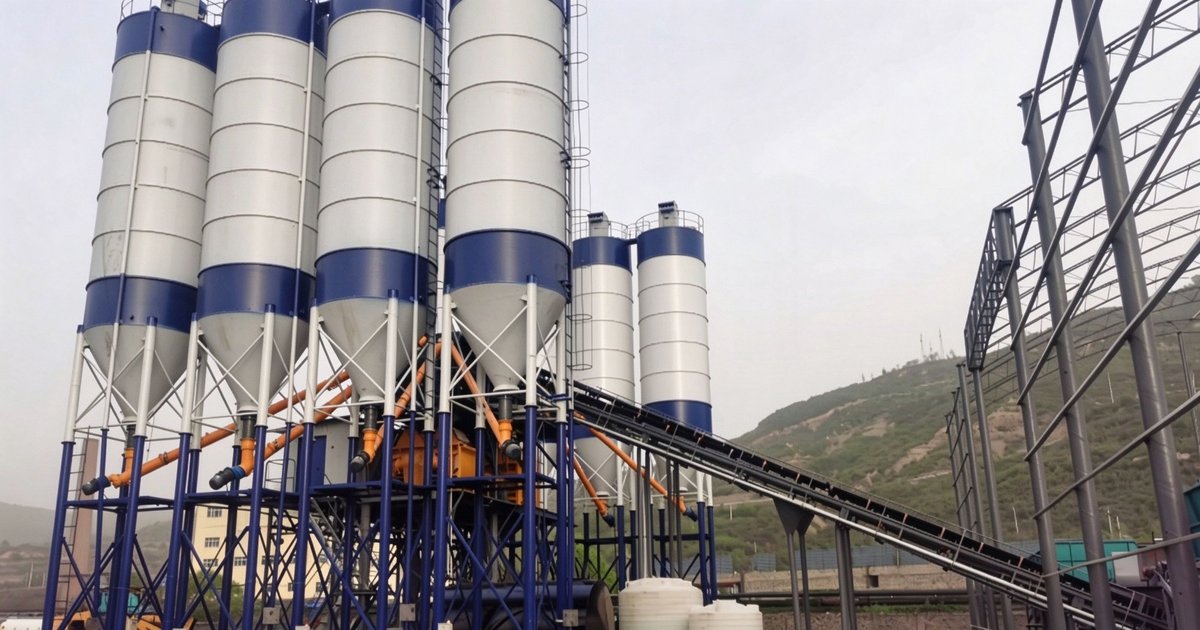
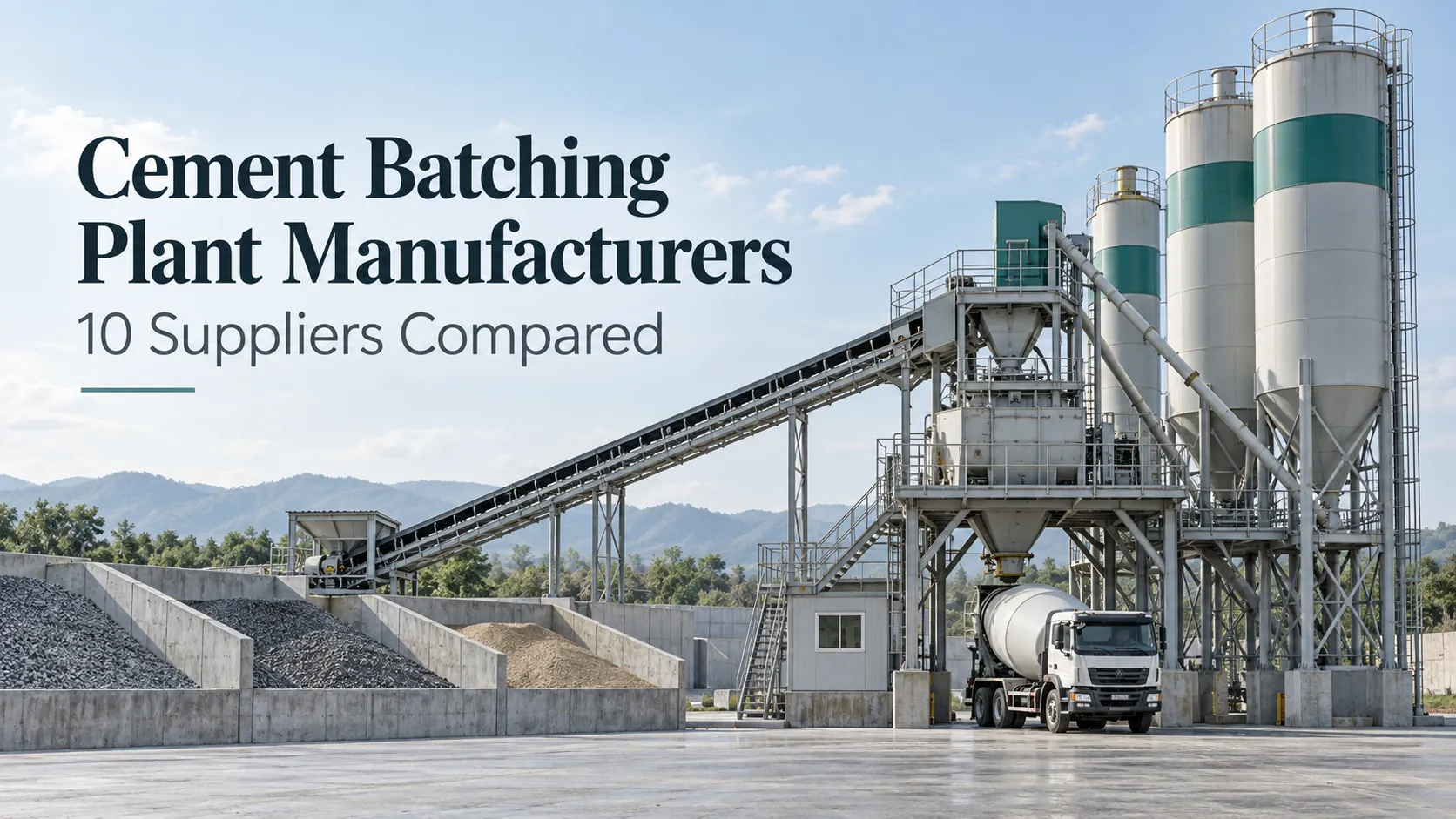
| Auxiliary equipment | Belt conveyor, pneumatic system, dust collector, control room |
This is the configuration our engineers quote for most township and small ready-mix orders. The four-bin PLD1600 option matters if your mix designs call for four separate aggregate grades; the three-bin version keeps the footprint tighter.
Theoretical Output vs Real Output: What You Actually Get
The 50 m³/h figure assumes non-stop mixing with a truck always waiting. On a real site, three factors cut into that number. First, tanker truck turnaround takes two to three minutes per load, so the mixer idles between discharges. Second, the plant is rarely run at full throttle for a whole shift, because continuous overload accelerates wear on the mixer blades and liners. Third, raw material supply and manual operation add small breaks throughout the day.
In practice, a well-run JS1000 concrete batching plant delivers 30–40 m³ of finished concrete per hour. That range is normal and it matches the demand profile of most small ready-mix yards and site-mix projects. If your peak daily demand is above 300 m³ across an eight-hour shift, the plant will be stretched, and it is worth stepping up to an HZS60 or HZS75 instead of forcing a smaller machine to run flat out.
Where an HZS50 Concrete Batching Plant Fits Best
The HZS50 is the workhorse for moderate, intermittent concrete demand. It suits small commercial ready-mix yards serving township and rural construction, highway and bridge works with modest daily pours, precast component plants and pipe pile factories, and temporary project sites where the plant may be leased or relocated. Its compact footprint and simple service requirements make it a realistic first plant for operators with limited capital.

Sizing the Plant Against Your Daily Demand
The fastest way to check whether this class of plant fits is to divide your daily concrete demand by your working hours, then add a 15% buffer. A township road project calling for 120 m³ per day across an eight-hour shift needs roughly 17 m³/h, which a JS1000 concrete batching plant handles with plenty of margin. A ready-mix yard with steady 400 m³ daily orders needs about 58 m³/h, which pushes the plant to its ceiling and points you toward the HZS60 or HZS75 instead.
That calculation sounds simple, but it is the one our engineers see skipped most often. Buyers order on the 50 m³/h label, then discover the plant idles while trucks queue or, the opposite, runs flat out all week to keep up. Match the plant to your sustained demand, not the peak hour.
Running Cost and Payback: What to Budget For
A complete JS1000 concrete batching plant package normally includes the mixer, PLD1600 batcher, one or two cement silos, screw conveyor, control room and dust collection. Typical total installed power sits around 100–120 kW depending on options, which works out to roughly 1.8–2.2 kWh per cubic metre of finished concrete at normal load.
Wear parts are the largest running cost after power. Mixer blades and liners on a JS1000 usually need attention after 30,000–50,000 m³ of production, depending on aggregate quality. Budgeting for blades, liners, belts and seals in advance avoids an unplanned stop mid-project. For an owner producing 6,000–10,000 m³ a year, a well-managed HZS50 typically pays back within 18–30 months, with the exact figure depending on local concrete prices and utilisation.
Common Pricing Traps on JS1000 and HZS50 Quotes
The biggest gap between quotes for the same nominal machine usually sits in what is left out. One supplier quotes a bare plant, another includes silos, wiring, an air compressor and commissioning support. Before comparing prices, ask for the same scope in writing: bin count, silo capacity, conveyor length, automation level, and how many days of on-site commissioning are included. A stripped HZS50 quote can look 20–30% cheaper and end up costing more after you add the missing items locally.
Buying Checklist: Judge the Machine, Not the Label
Because HZS50 and JS1000 are interchangeable names, use this checklist when comparing quotations:
- Confirm the mixer model is a genuine JS1000 twin-shaft forced mixer with a 1 m³ discharge, not a smaller or older unit.
- Check the batcher: PLD1600 with the bin count your mix designs need.
- Agree the cement silo capacity — one 50–100 t silo is typical for a first plant.
- Specify the automation level and ask for the weighing accuracy class in writing.
- Ask for the after-sales scope: on-site commissioning days, spare parts availability, and response time for your region.
- Request factory inspection photos and, if possible, a live video call to the production floor.
Frequently Asked Questions
Why can’t an HZS50 concrete batching plant reach 50 m³/h in practice?
Because the rated figure assumes continuous mixing with trucks always waiting. Tanker turnaround of two to three minutes per load, short maintenance stops, raw material supply and operator rhythm bring real output to 30–40 m³/h, which is the normal operating range for this class of plant.
What is the difference between the HZS50 and HZS60 concrete batching plants?
Both use the JS1000 mixer family, but the HZS60 is configured for a higher cycle rate and slightly larger supporting equipment, giving a theoretical output of 60 m³/h with a bigger footprint and installed power. The HZS50 suits smaller and more intermittent demand; the HZS60 suits operators expecting steadier daily volumes.
How much electricity does an HZS50 use?
Typical total installed power is around 100–120 kW depending on options. At normal load this works out to roughly 1.8–2.2 kWh per cubic metre of finished concrete, which is competitive for a plant of this class.
What site area does an HZS50 need?
A standard layout needs roughly 700–900 m², plus space for truck circulation and aggregate storage. The exact figure depends on silo capacity, bin count and whether the plant uses a belt or skip hoist.
Can an HZS50 be upgraded later?
Yes, within limits. You can add silo capacity, upgrade the batcher or raise the automation level. Moving to a larger output class means replacing the mixer itself, which rarely makes financial sense compared with buying the right model from the start.
Summary and Next Step
An HZS50 concrete batching plant and a JS1000 concrete batching plant are the same machine described two ways: one by rated output, the other by its mixer. The core package is the JS1000 mixer plus PLD1600 batcher plus an automatic weighing system, with theoretical output of 50 m³/h and realistic output of 30–40 m³/h. It suits small ready-mix yards, rural infrastructure and precast plants, and it remains one of the most cost-effective first plants for new operators.
Need a configuration matched to your site conditions? Send us your daily concrete demand and available site area, and our engineers will recommend the right setup between the HZS50 concrete batching plant, the JS1000 mixer and the rest of the concrete batching plant range.