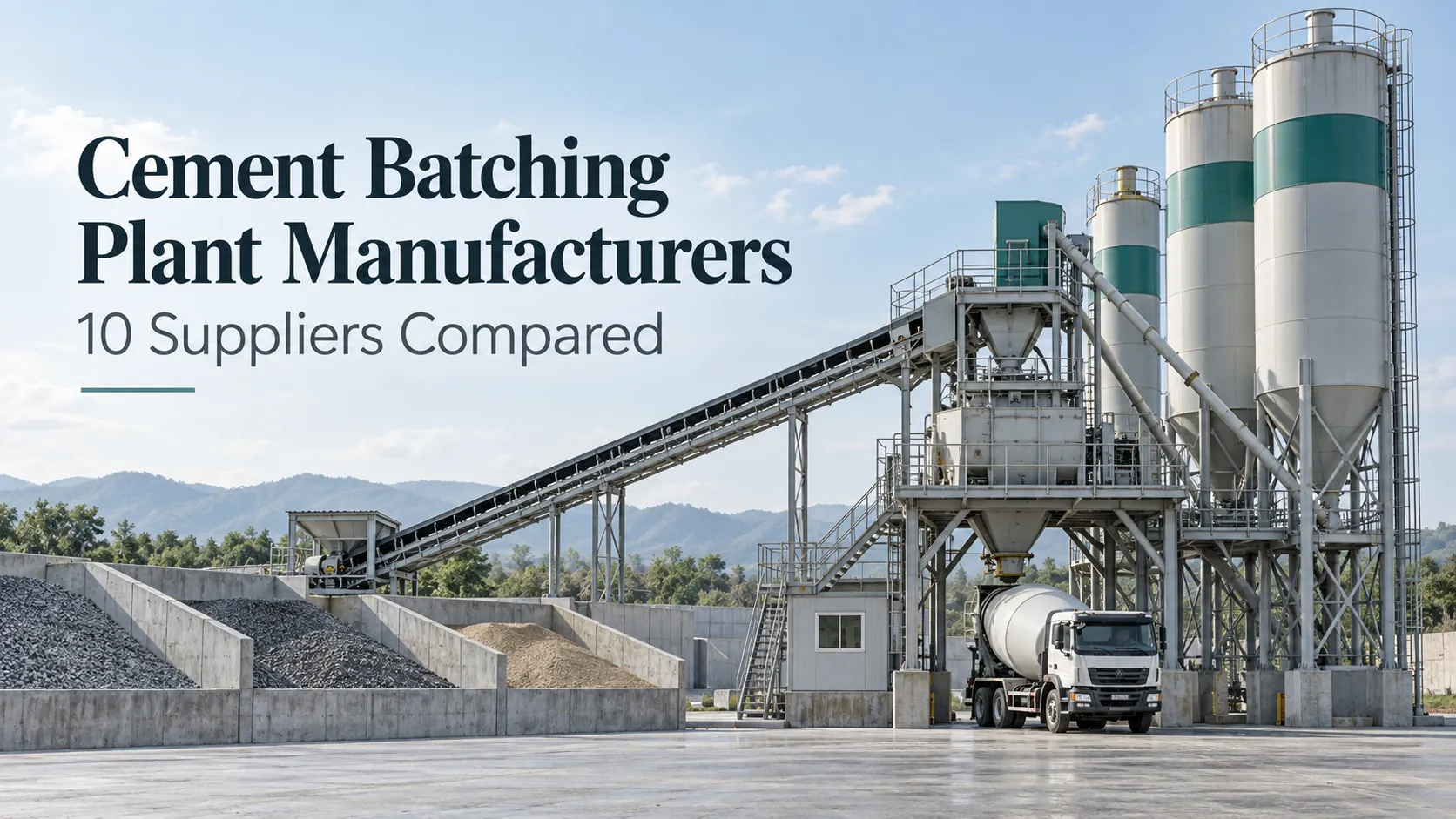


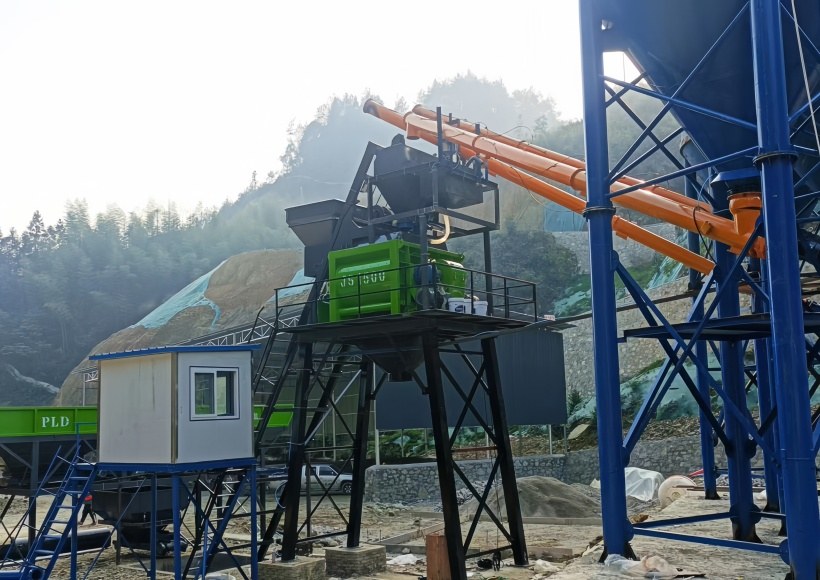
The HZS75 concrete batching plant is a core model for medium-sized concrete production. It is widely used in building construction, road and bridge works, and commercial concrete supply because of its stable output and proven twin-shaft mixing technology.
This guide walks through the complete technical parameters, real performance, working principle, application fields and purchase considerations of the HZS75 plant—the same data sheet our engineers use when quoting a project. All specifications below are engineered against GB/T 10171—2016, the Chinese national standard for concrete mixing plants.
Core Technical Parameters
Basic Performance Parameters
| Parameter | Value |
|---|---|
| Theoretical Production Rate | 75 m³/h |
| Maximum Discharge Capacity | 1,500 L |
| Mixing Host Power | 2 × 30 kW |
| Total Power Consumption | Approx. 130–160 kW |
| Discharge Height | 3.8 m |
| Weighing Accuracy – Aggregate | ±2% |
| Weighing Accuracy – Cement / Water / Additive | ±1% |
Structural Parameters
| Component | Specification |
|---|---|
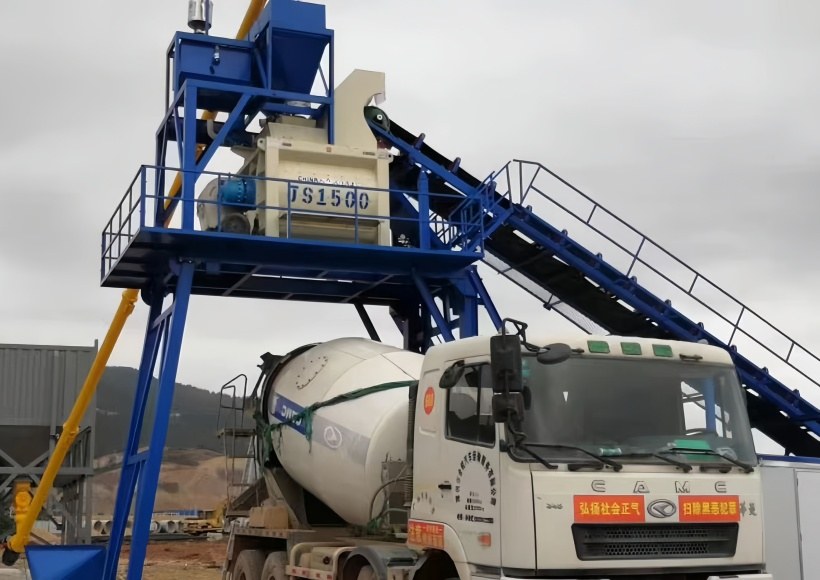
| Mixing Host | JS1500 twin-shaft forced mixer |
| Batching Machine | PLD2400 type, four compartments |
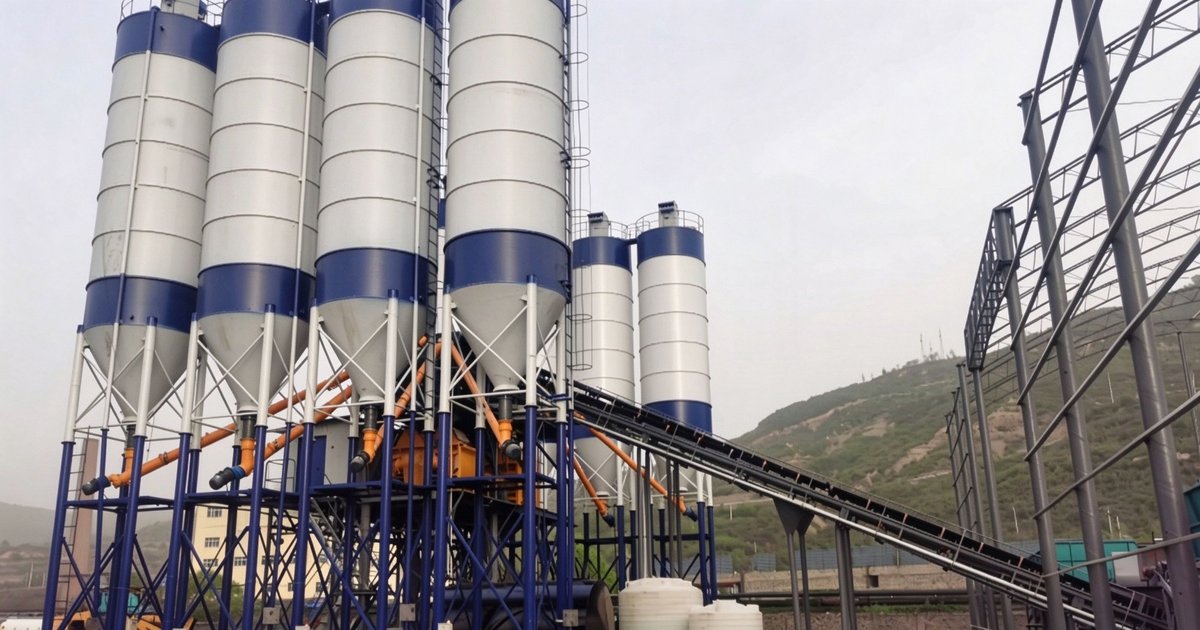
| Cement Silo Capacity | 100 t (optional 50 t / 150 t) |
| Screw Conveyor | Φ273 mm, 60 t/h conveying capacity |
| Belt Conveyor | 800 mm bandwidth, 1.6 m/s |
Electrical Parameters
| Parameter | Value |
|---|---|
| Control Voltage | AC220V ±10% |
| Operating Voltage | AC380V ±10% |
| Control Method | Microcomputer automatic control |
| Ambient Temperature | -10°C to +40°C |
| Relative Humidity | ≤90% |
Outstanding Performance Features
High Production Efficiency
The twin-shaft forced mixing technology keeps each mixing cycle to only 60 seconds. In normal operation, the plant delivers a real working output of 50–60 m³/h—more than 10% above the industry average for this class.
For buyers comparing hzs75 concrete batching plant options, cycle time is often the deciding factor between meeting or missing a pour deadline.
Precise Weighing System
Four independent weighing systems keep mix accuracy stable batch after batch. The aggregate scale uses 3 mm steel plate for durability, and the powder scale is fully sealed against dust and moisture.
The water scale uses a 2.2 kW booster pump for fast discharge, while the additive scale is stainless steel for corrosion resistance.
Intelligent Control System
- PLC + industrial computer dual-core control for stable operation
- Touchscreen interface with easy formula management
- Formula storage for up to 999 mix designs
- Automatic production data recording with USB export
- Remote monitoring for near-unattended operation
Eco-Friendly and Energy-Saving Design
- Fully enclosed structure to suppress dust
- Pulse dust removal system with 99.5% efficiency
- Wastewater recycling system with zero discharge
- Low-noise operation below 75 dB
Modular Structure
Containerized modular design shortens installation time and keeps relocation practical. Minimal foundation work cuts civil costs, and the plant can be dismantled and moved within 7–10 days. Configurations can also be expanded as demand grows.
Detailed Working Principles
Batching Process
- Aggregate batching: PLD2400 batching machine proportions materials as set
- Powder conveying: screw conveyor feeds cement to the weighing hopper
- Liquid metering: water and additive pumps measure liquids accurately
Mixing Process
The mixing host operates on twin-shaft counter-rotation. Materials undergo convective mixing under the mixing blades, strong shearing from the counter-rotating shafts, and diffusion for uniform distribution—together producing homogeneous concrete in a short cycle.
This combined action is what gives the HZS75 plant its uniform batches batch after batch, even with large aggregate sizes and high-strength mix designs.
Control System Workflow
- Startup detection: system checks component status automatically
- Automatic batching: materials weighed against the stored formula
- Feeding and mixing: materials enter the mixer in sequence
- Discharge and transport: automatic discharge after mixing completes
Safety Protection Mechanisms
- Motor overload protection with automatic current detection
- Material level alarm with real-time silo monitoring
- Door limit protection for safe operation
- One-key emergency stop
Technical Advantages Analysis
Production Efficiency Advantages
- 20% shorter mixing time versus similar models
- 15% lower energy consumption
- 30% reduced maintenance costs
- 5-year longer service life
Quality Control Advantages
- 50% higher weighing accuracy
- 98% concrete homogeneity
- 100% strength assurance rate
- ±10 mm slump control
Operation and Maintenance Advantages
- High automation reduces operators by 50%
- Fault self-diagnosis cuts repair time by 70%
- Modular design simplifies part replacement
- Remote maintenance with timely technical support
Application Fields
- Construction engineering: building and municipal projects with large concrete volumes and peak demand
- Roads and bridges: highways, railways and bridge works that need stable supply quality
- Commercial concrete: ready-mix producers handling diverse, high-volume orders
- Special projects: configurable for waterproof or acid-resistant concrete
Purchasing Recommendations
Configuration Selection
- Basic configuration: general construction needs
- Standard configuration: commercial concrete production
- Premium configuration: special project requirements
Installation Site Requirements
- Site area: at least 15 m × 15 m
- Power: transformer above 200 kVA
- Water supply: 10 t/h
- Drainage: well-designed drainage facilities
Investment Return Analysis
| Item | Typical Value |
|---|---|
| Equipment Investment | ¥300,000 – 500,000 |
| Daily Output | 500–600 m³ |
| Investment Payback Period | 6–8 months |
The HZS75 concrete batching plant combines advanced technical parameters, dependable performance and reliable working principles, making it a leading choice for medium-sized concrete production.
FAQ: HZS75 Concrete Batching Plant
Q1: What is the actual output of an HZS75 concrete batching plant?
Theoretical output is 75 m³/h; real working output typically ranges from 50–60 m³/h depending on truck cycle time, mix design and site logistics.
Q2: How much power does an HZS75 batching plant consume?
Total installed power is approximately 130–160 kW, driven mainly by the 2×30 kW JS1500 twin-shaft mixer. A transformer above 200 kVA is recommended.
Q3: What is the price range of an HZS75 batching plant?
A standard configuration usually costs between ¥300,000 and ¥500,000, with daily output of 500–600 m³ giving a typical payback period of 6–8 months.
Q4: How long does installation take?
With its modular structure, the HZS75 plant requires minimal foundation work and can typically be erected and commissioned within days, and relocated within 7–10 days.
Conclusion
Choosing the HZS75 plant means adopting an efficient, energy-saving and eco-friendly production method. If you need more technical details or a customized configuration for your site, contact Tongxin Machinery—our engineers provide free site layout drawings, capacity calculations and equipment selection support.