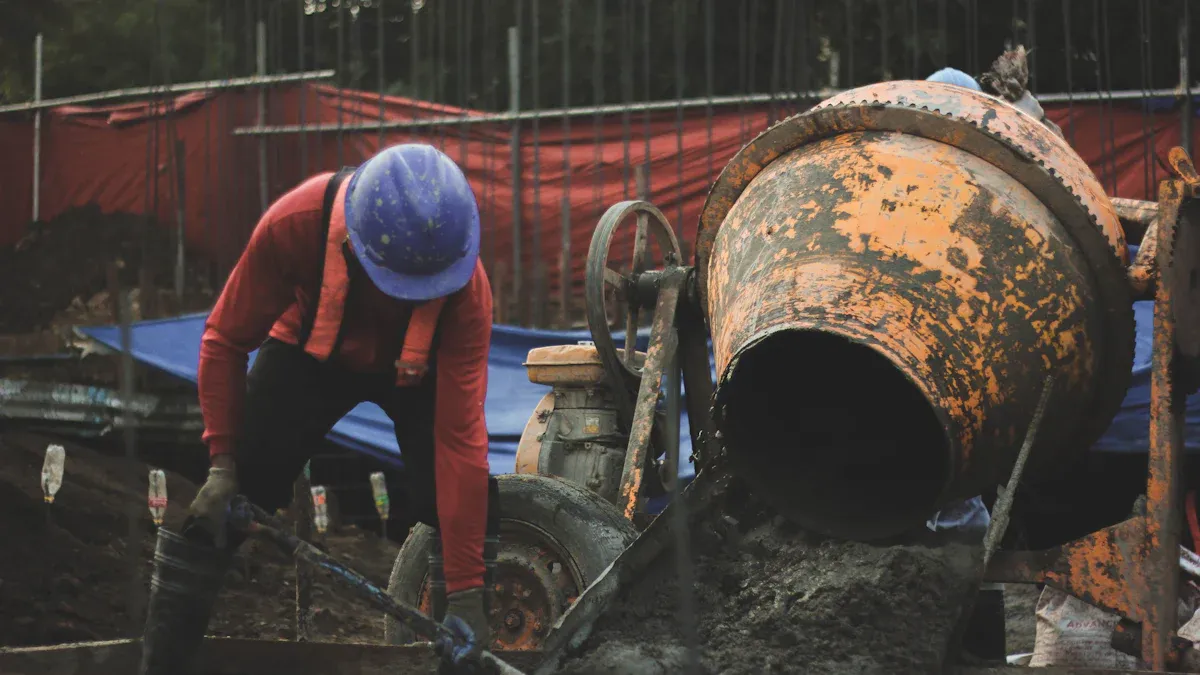

In high-speed railway construction, every cubic meter of concrete must satisfy quality requirements that go far beyond ordinary commercial production. Track slabs, prestressed box girders, bridge piers and tunnel linings are all designed for service lives of one hundred years, and the concrete that fills them carries the load, the climate exposure and the fatigue cycles of high-speed rail operations.
These requirements build on established specification frameworks such as China’s national standard for concrete batching plants (GB/T 10171), which forms the basis of many rail project procurement documents.
This is why a high-speed railway concrete mixing plant is not simply a scaled-up version of a commercial batching plant: it is a precision production system governed by its own technical standards. This article breaks down the four core standards that define a compliant high-speed railway concrete mixing plant — mixing uniformity, dynamic metering precision, full-process digitalization, and raw material stability — and explains the engineering solutions behind each one.
The stakes are unusually high. Rail concrete is exposed to repeated fatigue loading from passing trains, temperature stress across seasons, and aggressive chloride environments in coastal and underground sections. A single undetected weakness in mixing, metering or material handling can show up not as a visible defect at delivery, but as premature deterioration years into operation. For this reason, rail specifications treat the mixing plant itself as a quality control system, and auditable process standards matter as much as the final compressive strength number.
Ultimate Uniformity in High-Speed Railway Concrete Mixing Plants
Core Technical Indicators
- Minimum Mixing Time: ≥120 seconds
- Homogeneity Requirements: Strength Coefficient of Variation ≤5%
- Workability Maintenance: Slump Loss ≤20mm/h
In-Depth Technical Analysis
The concrete mix designs used in critical high-speed railway components — CRTS III track slabs, prestressed box girders, bridge piers and tunnel segments — are deliberately complex. They combine low water-cement ratios with high-efficiency water reducers and fine mineral admixtures, and the uniform dispersion of these materials is what actually determines long-term durability.
A 120-second mixing time is not an arbitrary figure; it is the minimum limit verified through fluid dynamics simulations and batch-by-batch production trials. Inside the mixer of a high-speed railway concrete mixing plant, this duration ensures four distinct processes run to completion:
- Full wetting of cement particles and a balanced hydration reaction
- Uniform distribution of water-reducing agent molecules throughout the system
- Stable formation of a controlled microbubble system for frost and chloride resistance
- Complete elimination of segregation and bleeding at the discharge stage
When any of these steps is cut short, the finished concrete can show local strength variation that passes a single sample test yet fails the structure years later. That is why the strength coefficient of variation is capped at 5% and slump loss at 20mm/h: both are field-verifiable proxies for whether the plant is actually delivering uniform concrete under continuous production, not just in a laboratory batch.
In practice, most compliant plants achieve these numbers with twin-shaft forced mixers rather than gravity or single-shaft designs. The twin-shaft layout creates opposing blade trajectories that shear the mix in multiple directions, which is precisely what is needed to break up clumps of fine admixtures and water-reducing agent concentrate within the 120-second window.
The uniformity standard therefore constrains not only the mixing duration but the mixer geometry itself, and both must be specified together when a high-speed railway concrete mixing plant is selected for a project.
Precision Metering System: The Engineering Behind Dynamic Accuracy
Accuracy Standard Comparison
| Material Category | High-Speed Rail Standard (Dynamic Error) | General Commercial Standard (Static Error) | Technical Challenge |
|---|---|---|---|
| Sand and Gravel Aggregates | ≤±2% | ≤±2% | Large material flowability variations make dynamic control difficult |
| Cementitious Materials | ≤±1% | ≤±1% | Powder adhesion, residue, and inertia affect dynamic accuracy |
| Mixing Water | ≤±1% | ≤±1% | Pipeline pressure fluctuations affect dynamic accuracy |
| Chemical Admixtures | ≤±1% | ≤±1% | High viscosity and small dosage make dynamic control difficult |
Key Points on Dynamic Precision Technology
Dynamic precision control is the clearest indicator of a high-speed railway concrete mixing plant’s technical level. Unlike static accuracy, which is verified when the scale is idle, dynamic accuracy reflects what actually happens during continuous production: the stability of the feeding system, the response speed of the sensors (sampling frequency ≥100Hz), the quality of the control algorithms (adaptive PID control), and the anti-interference design of the mechanical structure.
In practice, meeting these tolerances requires specific engineering solutions for each material family:
- Aggregates (≤±2%): high-precision pneumatic control with proximity switches on the bin-door cylinders. When a large quantity is discharged, both doors open together for speed; as the target weight approaches, one door closes automatically and the operator adjusts the other door’s opening angle against real-time metering data. This eliminates the metering errors caused by material inertia and mechanical response delay.
- Cementitious materials (≤±1%): a twin-screw conveying system where the mother screw handles more than 90% of the rapid conveying work and a daughter screw takes over for fine feeding once 90-95% of the target value is reached. The intelligent control system switches between the two automatically, balancing speed and accuracy so powder metering error stays within 1%.
- Mixing water (≤±1%): a dual-pump coarse and fine weighing design in parallel. The high-flow pump feeds water rapidly during the coarse phase; the system then switches to a small-diameter trickle supply, predicts the moment to stop the pumps, and uses the residual water in the pipe to complete final metering — achieving milliliter-level control.
- Chemical admixtures (≤±1%): a crystallization-resistant, corrosion-resistant precision conveying device designed specifically for small dosages of high-viscosity liquids, keeping the smallest addition errors inside the 1% band.
Full-Process Digitalization: Quality Traceability and Intelligent Early Warning
Data Interconnection Architecture
Digitalization turns a high-speed railway concrete mixing plant into a transparent, auditable production unit. The architecture works in three layers:
Real-Time Data Acquisition Layer
- Complete production data for every concrete batch
- Equipment operating status monitoring
- Environmental condition monitoring (temperature, humidity)
Cloud Processing Layer
- Big data analysis and trend prediction
- Intelligent identification of abnormal patterns
- Multi-dimensional quality report generation
Application Interaction Layer
- Real-time display in the owner’s monitoring center
- Mobile warning information push
- Data sharing with supervision units
Intelligent Early Warning Mechanism
- Level 1 Warning (Parameter Deviation): Audible and visual alarms, continuous monitoring
- Level 2 Warning (Trend Abnormality): SMS notification, manual intervention
- Level 3 Warning (Severe Exceedance): Automatic shutdown, quality traceability
Project-Level Precision Management
Beyond plant-level alarms, modern platforms such as the Tongxin Cloud IoT system link the mixing plant directly to the customer’s management center through a dedicated VPN and 5G network. Production tasks can be created by project, construction location, and strength grade — the owner can remotely track concrete like “128 cubic meters of C50 concrete poured today at Pier 3, Section 5,” with every batch record, consumption statistic and alarm log uploaded in real time and compiled into traceable reports.
This eliminates the possibility of cutting corners or falsifying data, because each cubic meter of concrete carries a complete digital record from weighing to delivery. For supervision units and acceptance engineers, the same data stream replaces manual logbooks and spot checks: batch records can be reconciled against the structural elements they were poured into, and alarm history shows exactly when a parameter drifted and how it was resolved.
Raw Material Stability: Controlling Quality From the Source
Cement Aging Technical Specifications
- Temperature Control: Inlet Temperature ≤60°C
- Aging Time: ≥72 hours
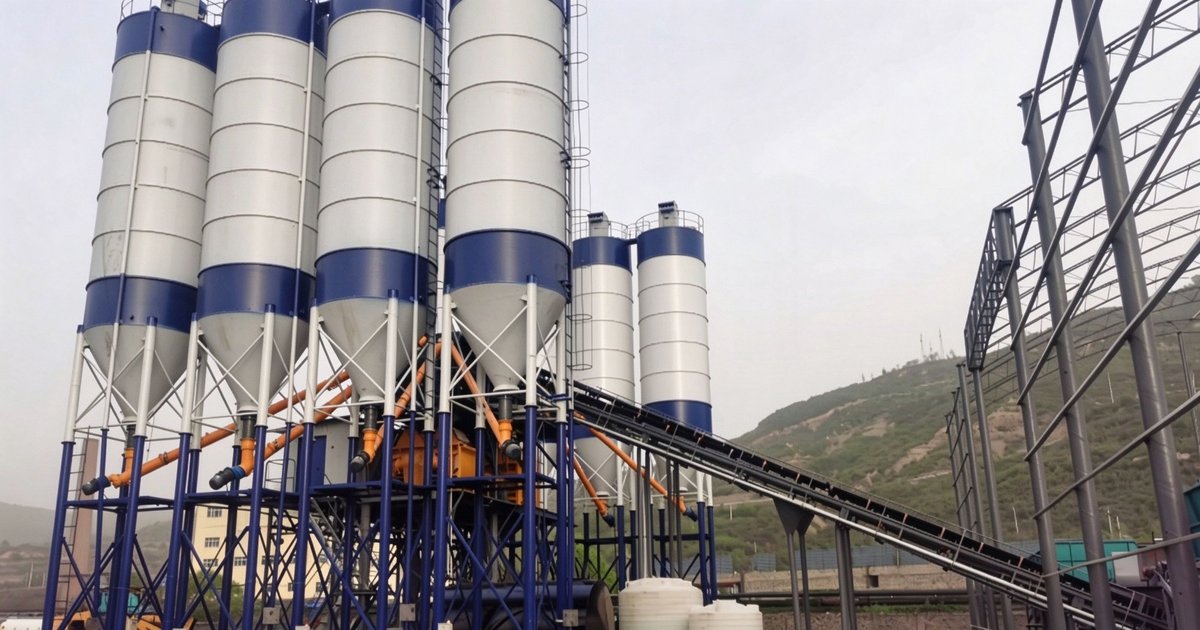
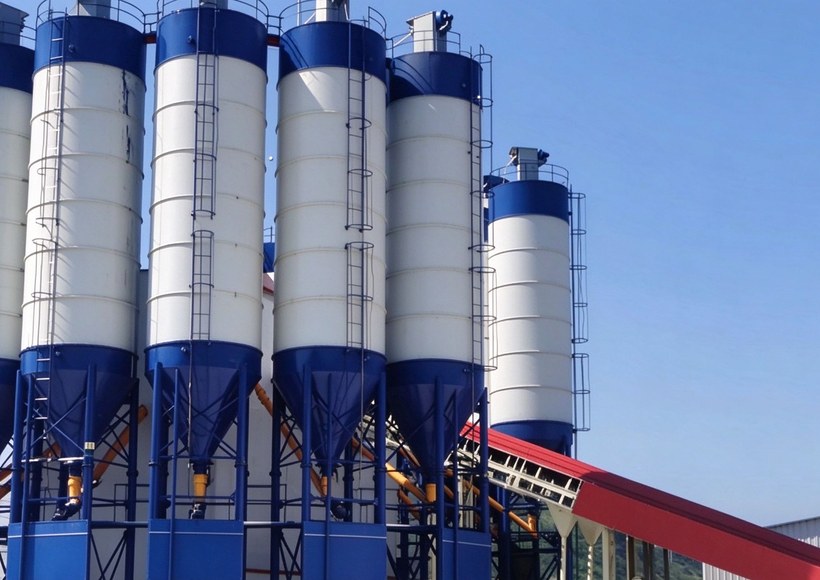
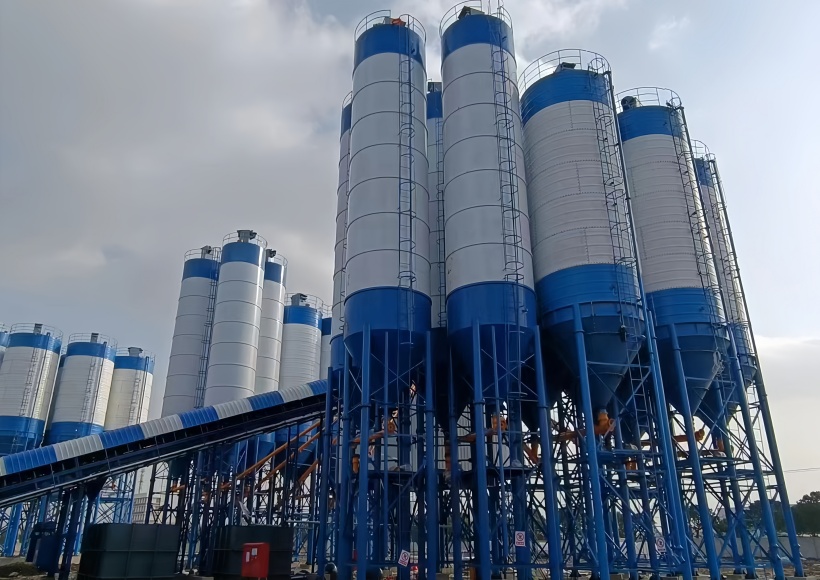
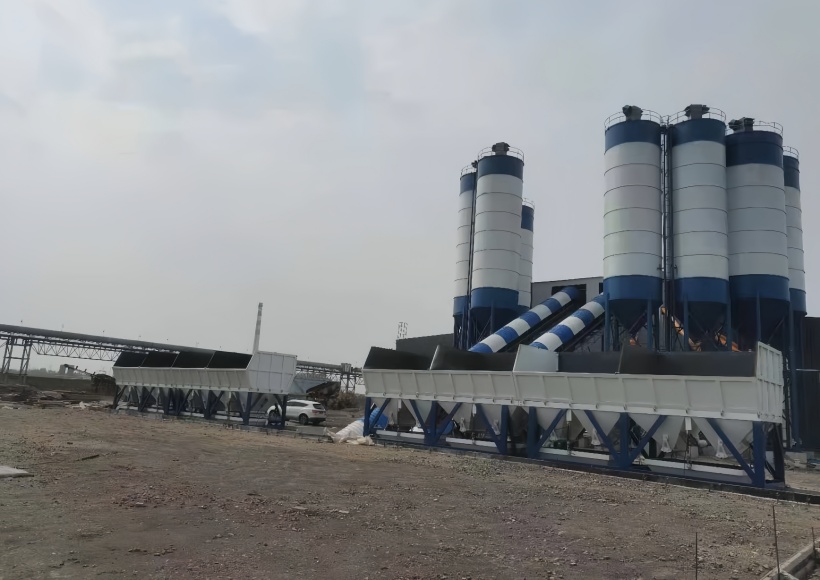
In a high-speed railway concrete mixing plant, cement is typically stored in a cluster of eight large silos, giving every batch at least three days of natural cooling before it enters the mixer. Hot cement straight from the mill disturbs the water-cement ratio and accelerates early hydration, which is precisely what aging prevents.
Performance Improvements From Proper Aging
- Peak hydration heat reduced by 15–20%
- Early shrinkage reduced by 25–30%
- Significantly improved compatibility with chemical admixtures
Sand and Gravel Aggregate Moisture Content Equalization
- Stacking Specifications: Zoned stacking, first-in, first-out
- Equalization Time: ≥72 hours
- Water Deduction Algorithm: Automatic compensation based on real-time moisture content
A common field upgrade in high-speed railway concrete mixing plants expands the traditional four-silo layout into twelve independent silos managed on a rotation principle: one silo in use, one in preparation, one in storage. Each incoming batch of sand and gravel undergoes at least 72 hours of natural equilibration, which stabilizes moisture content and removes a major source of batch-to-batch variation before mixing even begins.
Source control also covers aggregate quality itself. Rail specifications typically require strict limits on mud content and grading stability, because fines and gradation drift change the water demand of every batch even when the moisture reading is stable.
International practice applies the same logic: ASTM C94/C94M, the standard specification for ready-mixed concrete, requires cement, aggregates and admixtures to be measured by mass with documented batch control. The automatic water deduction algorithm works with these controls rather than instead of them: it compensates for residual moisture in real time, while the silo rotation and equilibration rules keep the incoming material consistent enough for that compensation to be meaningful.
Measured Technical Value
- Water-cement ratio control accuracy improved to ±0.01
- Standard deviation of concrete strength reduced to within 1.5 MPa
- Durability indicator (chloride ion diffusion coefficient) improved by 30%
Why These Standards Matter for Project Owners
Taken together, the four standards represent a fundamental shift in how rail concrete quality is managed: from post-process testing to process control, and from single indicators to system optimization.
A high-speed railway concrete mixing plant that holds mixing time, metering precision, digital traceability and raw material stability to the standards above does not merely produce compliant concrete — it produces a documented, repeatable quality process that inspectors can audit and owners can trust for the full service life of the structure. For contractors and rail operators, this is the difference between managing risk on paper and eliminating it at the source.
Through technological innovation, Tongxin Machinery designs and builds equipment that meets these stringent standards for global high-speed rail projects — from twin-screw powder feeding and dual-pump water metering to the Tongxin Cloud IoT platform and twelve-silo raw material systems. For a customized high-speed railway concrete mixing plant solution matched to your project’s strength grades and site conditions, contact our engineers directly.
FAQ
Why is a 120-second minimum mixing time required for high-speed railway concrete?
Longer mixing time ensures complete wetting of cement particles, uniform distribution of water-reducing agents, and a stable microbubble system. These factors directly control homogeneity (strength coefficient of variation ≤5%) and slump loss (≤20mm/h), which are the acceptance criteria for track slabs, box girders and bridge piers in rail projects.
What accuracy levels do high-speed railway concrete mixing plants need?
Dynamic metering accuracy for cementitious materials, mixing water and chemical admixtures must stay within ≤±1%, with aggregates at ≤±2%, during continuous production. This requires high-frequency sensors (≥100Hz sampling), adaptive PID control and anti-interference mechanical design rather than simple static tolerance checks.
How does a digital monitoring system support quality traceability in rail projects?
A full-process digital system records every batch’s production data, equipment status and environmental conditions, stores them in a cloud layer for trend analysis, and pushes three levels of warnings (parameter deviation, trend abnormality, severe exceedance). This gives owners and supervision units a complete, auditable quality record for each cubic meter of concrete.
What raw material controls prevent batch-to-batch variation?
Cement is aged at an inlet temperature ≤60°C for at least 72 hours (with eight-silo clusters allowing three days of natural cooling), and aggregates are stored in zoned, first-in-first-out silos for at least 72 hours of moisture equilibration. Automatic water deduction algorithms then compensate for remaining moisture in real time, keeping the water-cement ratio within ±0.01.