

Environmental inspectors do not schedule visits around your production plan, and a single failed dust or wastewater check can shut a mixing plant down for weeks. That is why an environmentally friendly concrete mixing station is no longer a premium option — it is the entry ticket for operating legally in most cities. This guide breaks down the configuration of a modern green plant into ten practical systems, with the standard values inspectors actually check, so you can spec the plant once and avoid retrofits later.
Tongxin Machinery builds environmentally friendly concrete mixing stations for projects across Asia and Africa, and the configuration logic is the same everywhere: control dust at the source, recycle every drop of water, monitor everything with sensors, and keep the records an inspector will ask for. Based on the latest industry standards and technology trends, this configuration scheme explains the standardized requirements for a modern concrete batching plant from five key aspects: environmental protection facilities, intelligent control systems, equipment functionality, plant layout, and operation and maintenance.
What Makes a Concrete Mixing Station Environmentally Friendly
An environmentally friendly concrete mixing station is judged on four emission streams: airborne dust, process water, waste oil, and solid waste. The standard that matters is not the brochure but the local environmental code, which in most markets follows the same pattern — particulate limits at the boundary, zero discharge of production wastewater, and documented disposal of sludge and waste oil. A plant that meets those four streams at source costs less to run than one that pays penalties, and it holds its resale value far better.
The practical rule: every tonne of material that enters the plant should either become concrete or be captured, recycled, or disposed of with a record. The systems below are the ones that make that possible in a working environmentally friendly concrete mixing station.
Environmental Protection Systems Every Station Needs
Three-Waste Treatment System
Modern concrete batching plants must be equipped with a comprehensive three-waste treatment system to keep pollutants under control during production. Dust is the first stream inspectors check. Pulse bag dust collectors are recommended on cement silos and the mixer, with a dust removal efficiency of 99% or better, effectively controlling dust emissions at the silo vents and the batching floor. Choose a collector with enough filter area for the number of silos — a 100-t capacity cement silo on an HZS120 plant typically needs a collector rated for the silo’s venting air volume.
Wastewater is the second stream. Physicochemical treatment processes — grating, sedimentation, and filtration — should be adopted so the plant recycles its wash water. A closed water loop not only satisfies the zero-discharge rule but also cuts fresh-water consumption noticeably on a plant that washes mixer trucks daily. Waste oil and waste solids make up the other two streams: dedicated collection containers and separation devices for classified recycling of waste oil, and clearly labeled four-category waste stations for recyclables, hazardous waste, kitchen waste, and other waste.
Residual Concrete Treatment
Leftover concrete from mixer trucks is where most plants fail an inspection. The residual concrete treatment system handles this stream: a vehicle washing platform with high-pressure cleaning equipment keeps transport vehicles clean before they leave the site; a sand-gravel separator with a processing capacity matched to the plant’s output — generally 20 m³/h or more on a mid-size plant — separates aggregate from slurry; a three-stage sedimentation tank gives the water enough retention time to meet discharge or reuse quality; and a sludge filter press reduces sludge moisture content to 30% or less so disposal is simple and cheap. Sized together, these four units close the residual-concrete loop without dumping anything.
| System | Typical Configuration | Standard Value to Check | What It Prevents |
| Dust removal | Pulse bag collector on each cement silo and the mixer vent | Removal efficiency ≥99% | Boundary dust complaints, silo vent bursts |
| Wastewater | Grating + sedimentation + filtration loop | Zero discharge of production water | Pollution fines, ground contamination |
| Sand-gravel separator | 20 m³/h minimum for mid-size plants | Capacity matched to output | Slurry overflow into drains |
| Sludge filter press | Plate-and-frame press on the slurry line | Sludge moisture ≤30% | High disposal cost, illegal dumping |
| Vehicle wash | High-pressure platform at the exit gate | Every truck washed before leaving | Mud and cement tracking on public roads |
The table above is the short version of the environmental scope for a typical environmentally friendly concrete mixing station. The full specification varies with local code, so confirm the boundary limits for your site before ordering.
Intelligent Control System for Concrete Batching Plants
Production Management System
An intelligent production management system turns a green plant into a profitable one, because every sensor reduces a manual check and every record reduces an argument with an inspector. In an environmentally friendly concrete mixing station these systems double as the environmental audit trail. The core components are:
- Cement silo sensors: patch-type level sensors with ±0.5% accuracy installed on every silo, feeding weight data to the control room and the mobile APP for live inventory.
- Access control for cement delivery: APP-controlled gate access on the filling pipes prevents misloading a cement tanker into the wrong silo — a costly and embarrassing error that happens more often than most plants admit.
- Online aggregate moisture detector: mounted on the aggregate bins so the batching computer adjusts the water dosage per batch instead of guessing from a morning sample.
- Additive tank mixer: keeps admixtures suspended without whipping in air bubbles that change the dosage reading.
- Unmanned weighbridge: automatically uploads incoming and outgoing weights to the control center, so ticket books and manual entry disappear.
- Automatic gates with monitoring: installed at the plant entrance, exit, and storage bin areas, linked to the weighbridge records.
- GPS tracking for concrete transport vehicles: real-time position and delivery status visible on the dispatch screen.
- ERP management system: integrates raw material procurement and consumption, production volumes and mix ratios, and vehicle and production scheduling through the APP — the record trail an audit actually wants.
Safety Monitoring System
A green plant is a safe plant, and the safety monitoring system is where the two overlap. Control room monitoring should cover all critical areas with video storage of 30 days or more. The mixer maintenance cover interlock prevents the mixer from running while the cover is open — the single most effective guard against injury on a batching plant. Belt conveyors need at least two pull-wire emergency switches so an operator can cut power from either end during maintenance, and emergency stop buttons must be tested on a schedule, not left to fail silently.
Equipment Configuration for Low-Cost Operation
Mixer System
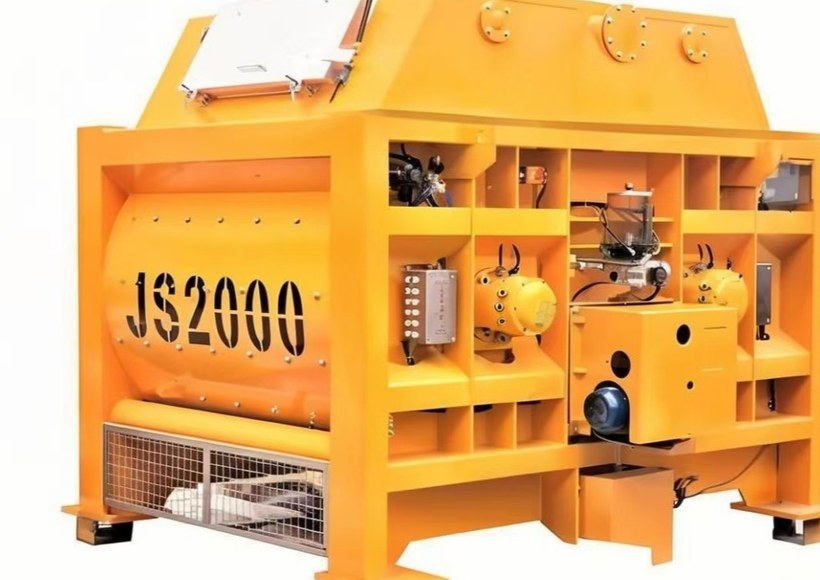
Two details on the mixer save real money over the life of the plant. The maintenance window power cutoff switch automatically cuts power and locks the control cabinet when the inspection window is opened, and requires a manual reset — this eliminates the “someone restarted the mixer while I was inside” scenario entirely. The oil temperature alarm on the reducer warns when lubricating oil needs replacement or the reducer is failing, turning an expensive gearbox rebuild into a scheduled oil change.
Cement Silos
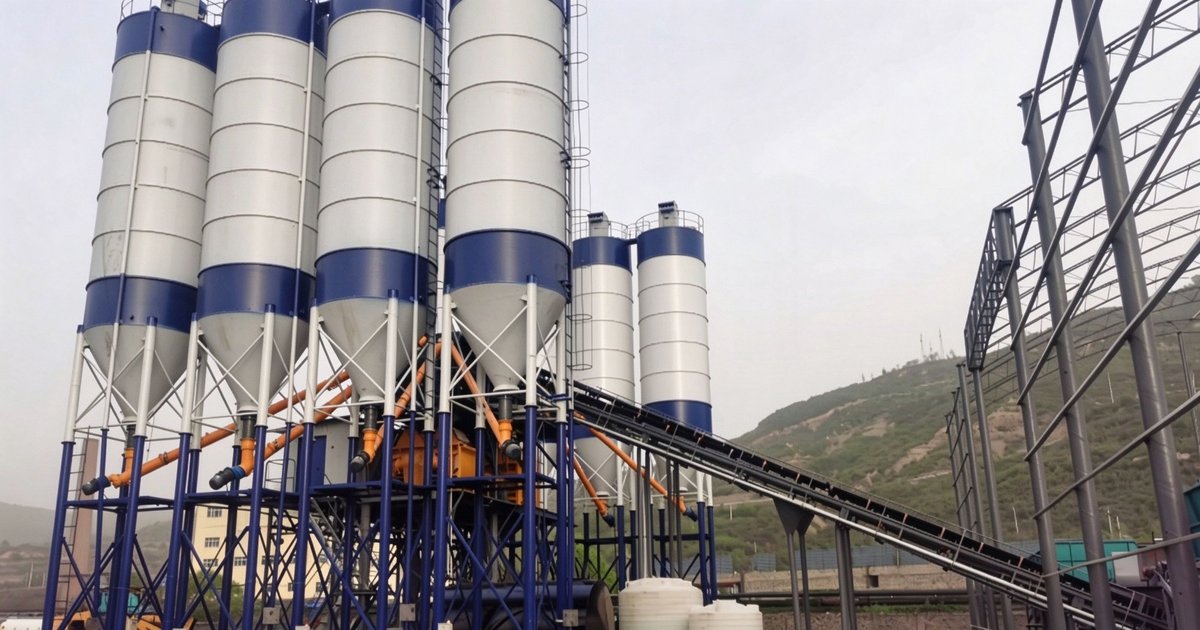
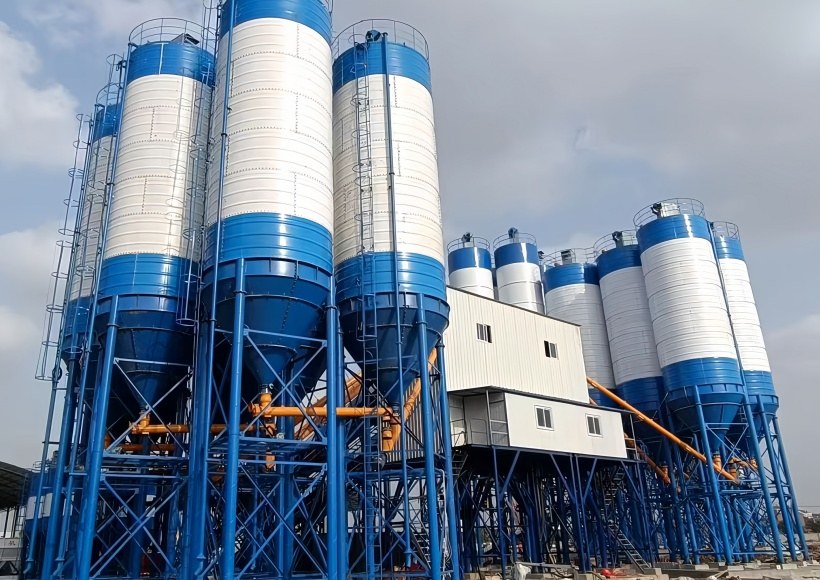
Patch-type sensors and display screens give real-time weight monitoring and transmit data to the APP for raw material inventory management, so the plant never runs out of cement at 6 a.m. And as in the delivery system above, APP-controlled access on the cement filling pipes prevents misloading — the same safeguard protects the silos themselves.
Batching Hoppers
A sand moisture detector mounted on the bin wall adjusts water dosage by moisture content automatically. On a plant producing 100 m³ of concrete a day, a 1% swing in sand moisture is enough to change the slump class if it is not corrected — the detector is a cheap insurance policy for mix quality.
Control Center
A multi-screen display monitors equipment and overall plant operations in real time, giving one operator a full picture of production, silo levels, vehicle positions and alarms. In an environmentally friendly concrete mixing station, the control center is also where the environmental records live — dust collector status, wastewater levels and disposal logs all visible on one wall. Complete equipment lists for each output band, and the factory options behind them, sit in the concrete batching plant manufacturer guide.
Plant Layout Planning for Efficiency and Safety
Functional Zoning
Reasonable functional zoning improves operational efficiency and keeps trucks, people, and equipment from crossing paths. The mixing operation area needs safety alert lines painted and enforced. The aggregate storage area should be binned by specification with clear labeling, so a loader operator cannot mix gravel and crushed stone. The testing area includes standard curing rooms for concrete specimens. The equipment maintenance area needs enough space for a full mixer reducer change, not just an oil top-up. Office and living areas sit at a safe distance from production zones, both for noise and for dust.
Safety Spacing
Clear zoning markers separate functional areas so drivers and operators always know which zone they are in. Vehicle turning radius must accommodate the longest truck that will serve the plant — a 12 m concrete mixer truck needs a very different turning circle than a small skip loader. Fire access routes are kept clear 24/7 with no-parking signs, because a blocked fire lane on inspection day is an immediate fail in most jurisdictions.
Operation and Maintenance Requirements
Daily Management
The maintenance system should keep detailed records of equipment parameters and maintenance actions — the paper trail is what an environmental audit reads first, and it is the operating backbone of any environmentally friendly concrete mixing station. Dust collector filter elements are replaced every six months or when the pressure drop rises above the collector’s specification, whichever comes first. Metering equipment (load cells, scales, water meters) is calibrated monthly, because an out-of-calibration weighbridge undermines every production record the plant produces.
Emergency Measures
Emergency plans must cover power outages, equipment failures, and environmental incidents — each with a named responsible person and a drill schedule. A backup generator should be sized for the mixer and the dust collectors at minimum, and tested monthly. A 24/7 on-duty system ensures prompt fault handling, so a small problem like a jammed screw conveyor does not become a full-day shutdown or a reportable environmental event.
Cost Reality: Green Configuration vs. Retrofit
The most common question from buyers is what all this adds to the equipment price. On a mid-size environmentally friendly concrete mixing station, the environmental and intelligent systems typically add 8–15% over a bare conventional plant. Retrofitting the same systems later costs 20–40% more, because the layout was not designed for the separator, the filter press, or the sensor wiring, and because the plant may have been idled by an enforcement action in the meantime. In markets with strict municipal environmental codes, the retrofit math is even worse — some cities require the full system before a plant can receive its operating permit at all.
The cheaper strategy is to spec the complete environmental and intelligent scope at the design stage, even if a few modules are commissioned later. That keeps the layout, the concrete foundations for the separator and press, and the control wiring ready, and it keeps the plant legal from day one. Compare suppliers on this basis using our guide on how to choose a concrete equipment manufacturer, which covers welding quality, quality control, documentation and lifecycle cost on the same terms.
Frequently Asked Questions
What dust collector efficiency do environmental inspectors require?
Most local codes follow a 99% or better removal efficiency for pulse bag collectors on cement silos and mixers. Check your municipality’s boundary particulate limit, because the required filter area depends on the silo venting volume and the local standard.
Is zero-discharge wastewater really achievable on a batching plant?
Yes. With a three-stage sedimentation tank, a sand-gravel separator, and a filter press, production water is recycled in a closed loop. What remains is a dry filter cake that can be disposed of as construction waste — this is standard practice on modern environmentally friendly concrete mixing station installations.
What is the payback time for the intelligent control systems?
Most plants recover the sensor and ERP investment within 12–18 months through reduced material waste, fewer calibration disputes, and lower overtime for manual inventory checks. The cement silo level sensors alone typically pay back in under a year by preventing out-of-stock shutdowns.
Do I need the sand-gravel separator on a small plant?
If the plant washes mixer trucks on site, yes. A separator rated at 20 m³/h suits mid-size output; a smaller HZS50 plant can downsize the unit, but the slurry should never bypass treatment — that is the fastest way to fail a wastewater inspection.
How often must monitoring records be kept?
Keep environmental monitoring records, calibration certificates, and waste disposal receipts for at least two years, and ideally for the life of the plant. Inspectors in most jurisdictions can request records from the previous operating period, and a missing paper trail is treated as a violation even when the plant is compliant.
Can an existing plant be upgraded to an environmentally friendly concrete mixing station?
Yes, in stages. Start with the highest-risk streams — silo dust collectors, wastewater treatment and the wash platform — then add the intelligent monitoring layer. Budget 20–40% above the cost of original fitment for retrofits, and check whether your local permit requires the full system before renewal.
Conclusion
An environmentally friendly concrete mixing station comes down to four closed loops — dust, water, oil, and waste — plus a monitoring layer that proves they stay closed. Spec the dust collectors at 99%, treat every litre of process water, size the separator to the output, keep the records, and add the sensors that automate the checks. The plant stays legal, the energy bill stays down, and the resale value stays up.
Tongxin Machinery’s solutions are tailored to specific project circumstances. We prioritize proven and reliable equipment and operator training, and we deliver the full environmental and intelligent configuration documentation with every plant. Contact our engineers with your site conditions and local code, and we will confirm the right configuration for your project.