

The HZS180 concrete batching plant is the workhorse of large commercial concrete and infrastructure projects: a 180 m³/h station built around a JS3000 twin-shaft mixer. It is the configuration our customers choose for ready-mix companies, high-speed railway segments, highway contracts and water conservancy works — projects where output cannot stop and quality tolerances are tight. This guide covers the full specification, the intelligent control system, the environmentally friendly performance package, real project results and the questions buyers ask before signing.
Three words separate the HZS180 from smaller stations: output, intelligence and environment. The concrete batching plant holds a theoretical 180 m³/h with a 3 m³ batch cycle, and the fifth-generation control software manages recipes and maintenance from one screen.
The environmental package meets the dust, water and noise limits that modern contracts now specify. If your project runs above 1,000 m³ per day, this guide tells you exactly what an HZS180 concrete batching plant configuration contains and how to select it. Every environmentally friendly measure on the list — dust capture, water recovery, noise containment — is engineered into the plant rather than bolted on afterwards, so the station passes a first-visit inspection without a retrofit round.
HZS180 Concrete Batching Plant: Key Specifications
The standard HZS180 configuration below is the one our engineers quote for commercial concrete and large infrastructure work. Individual items can be adjusted to site conditions and mix requirements.
| No | Component | Specification | Quantity |
|---|---|---|---|
| 1 | Model | HZS180 | 1 set |
| 2 | Theoretical output | 180 m³/h | 1 set |
| 3 | Mixer | JS3000 twin-shaft forced mixer | 1 unit |
| 4 | Batching machine | PLD4800, 4-hopper | 1 set |
| 5 | Conveyor belt | 1000 mm | 1 set |
| 6 | Main tower structure | 5 × 6 m | 1 set |
| 7 | Cement metering | 0–3000 kg | 1 set |
| 8 | Fly ash metering | 0–3000 kg | 1 set |
| 9 | Water metering | 0–1500 kg | 1 set |
| 10 | Additive metering | 0–50 kg | 1 set |
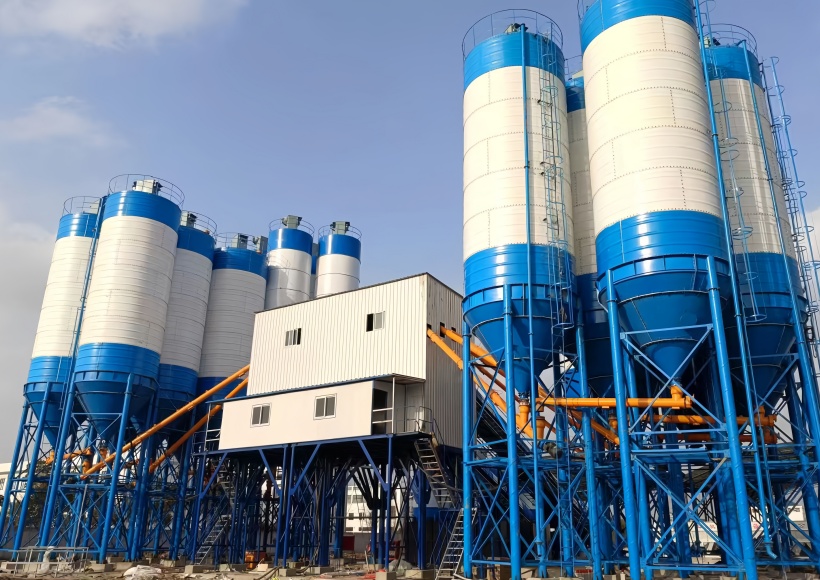
| 11 | Cement silo | 150 t | 4 units |
| 12 | Screw conveyor | Φ325 | 4 units |
| 13 | Control system | Boshuo 1200 | 1 set |
| 14 | Pneumatic system | 11 kW | 1 set |
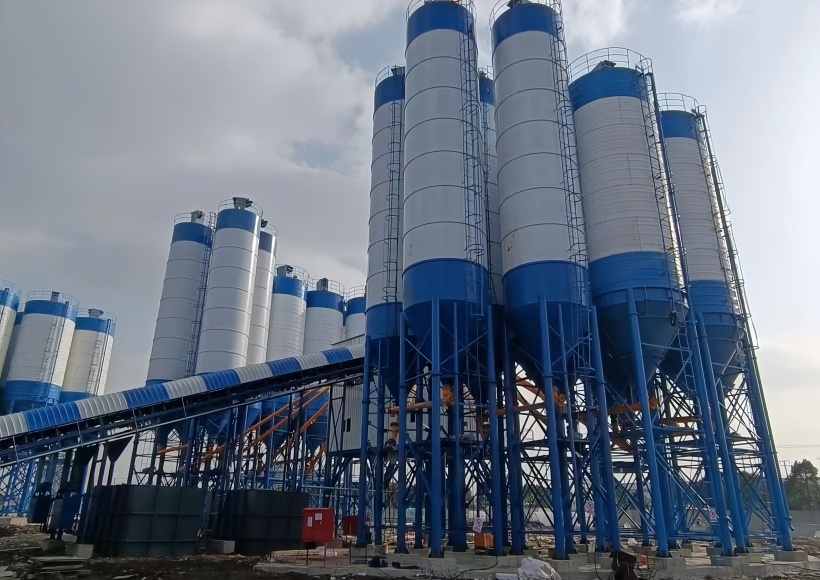
Two numbers set the HZS180 apart from smaller stations: the JS3000 mixer handles 3 m³ batches per cycle, and the 150 t silo array with four units supports long continuous pours without cement reloading delays
Mixer and Batching Line
The JS3000 twin-shaft forced mixer is the heart of the HZS180 concrete batching plant. Twin counter-rotating shafts keep the batch moving horizontally and vertically at the same time, which is why a 3 m³ batch reaches a uniform state in under 60 seconds even with a stiff mix and large aggregate. Paired with the PLD4800 four-hopper batching machine, the line can charge four aggregate grades independently and hold the mixer busy through continuous pours. For a concrete batching plant running ten hours a day, that pairing is what turns the rated 180 m³/h into delivered cubic metres on the truck.
Metering Systems
Cement and fly ash each weigh on a 0–3000 kg scale, water on a 0–1500 kg scale and the additive on a 0–50 kg scale. Every scale feeds its weight to the PLC before the mixer cycle starts, and automatic weighing compensation holds batching accuracy within ±0.5% — the tolerance that keeps a mix design stable when the plant runs ten hours straight.The whole station is designed and built to the requirements of the GB/T 10171—2016 Concrete Batching Plant Standard, which covers mixer performance, weighing accuracy and safety interlocks.
Powder Storage and Conveying
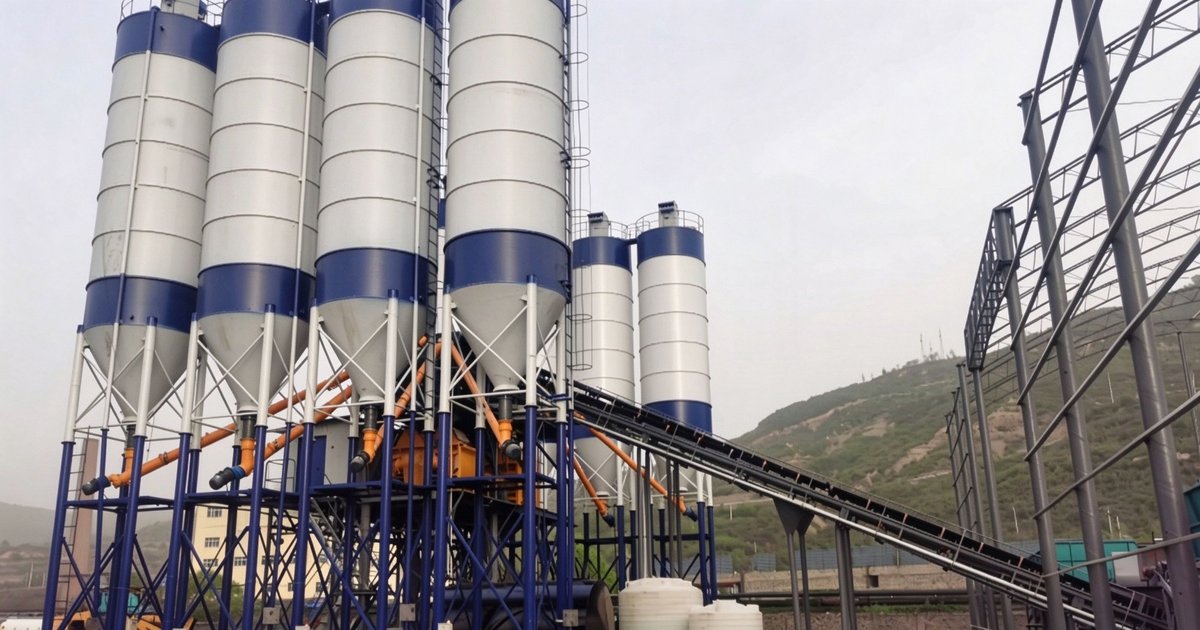
The standard powder train is four 150 t cement silos, each discharging through a Φ325 screw conveyor. Four 150 t silos hold enough binder for a full pour day without waiting on a tanker; for sites that store cement, fly ash and mineral powder separately, the same silo line can be split by binder type with dedicated screws for each.
Control Hardware
The plant is run by a Boshuo 1200 control system with an 11 kW pneumatic package. The console shows every scale reading, silo level and motor load in real time, and the pneumatic valves that open the hopper gates and the mixer discharge door are driven by the same controller — one interface for the whole station.
Intelligent Control System
Large plants run on software as much as on steel. The fifth-generation control system fitted to the HZS180 concrete batching plant manages production, recipes and maintenance from one interface, which is what makes the station intelligent rather than merely automated:
- Recipe database: stores over 300 mix designs, covering the full range of grades used on commercial and infrastructure jobs.
- Automatic weighing compensation: holds batching accuracy within ±0.5%, which keeps mix stability through high-volume pours.
- Optimised batching sequence: reorders aggregate and binder feeding dynamically, lifting overall production efficiency by up to 15%.
- Predictive diagnostics: the built-in diagnostic module identifies over 90% of common faults before they stop production.
- Remote access and cloud backup: plant status is visible from PC and mobile, and production records are backed up automatically for 365 days.
Recipe Database and Weighing
The 300-plus recipe library means the operator selects a grade instead of re-entering weights: concrete grade, slump target and aggregate batch are recalled in one tap, and the PLC locks the batching sequence to that recipe. For a ready-mix plant selling multiple grades a day, this removes the single largest source of operator error on a manual station.
Production Optimization
The optimised batching sequence is the intelligent part that owners feel in the output number. Instead of feeding every hopper in a fixed order, the software overlaps aggregate and binder feeding so the mixer never waits on the scale. On the HZS180 concrete batching plant this has measured production efficiency gains of up to 15%, which on a ten-hour shift is roughly one extra hour of output.
Predictive Diagnostics and Remote Access
The diagnostic module watches motor current, scale drift and pneumatic pressure continuously and flags the 90% of faults that give an early signal — a load cell drifting, a valve sticking, a belt tension dropping. Because plant status is also mirrored to PC and mobile with a 365-day cloud backup, an owner can check the shift from home and hand the maintenance crew a fault list before they walk the yard.
Environmentally Friendly Performance
Environmental compliance is a purchase condition on most modern contracts, and the HZS180 concrete batching plant is built to be environmentally friendly by design rather than by retrofit. The three-part package below covers the dust, water and noise requirements that inspectors actually check:
| Measure | Performance |
|---|---|
| Pulse dust removal | Working-environment dust concentration ≤5 mg/m³ |
| Wastewater recovery | Comprehensive water saving rate up to 10% |
| Fully enclosed main building | Operating noise ≤75 dB |
Dust Control
A pulse jet dust collector on the silo array and a bag filter at the mixer and belt transfer points hold working-environment dust concentration at or below 5 mg/m³ — comfortably inside the limits for urban and near-residential sites. The pulse cleaning cycles the filter bags automatically, so dust stays captured even during the loading peaks of a continuous pour.
Water Recovery
Wastewater from the mixer drum wash and the truck bay is routed back through a recovery system instead of leaving the site, saving up to 10% of total water use. On a plant producing 1,000 m³ a day, that recovery also removes the need for a discharge permit on wash water — one less compliance item on the inspection sheet. It is the part of the environmentally friendly package that pays back directly, because the water bill drops with the discharge paperwork.
Noise Containment
The main tower, mixer and air compressors sit inside a fully enclosed building, which holds operating noise at or below 75 dB at the site boundary. The enclosure also keeps the dust capture inside the building where it can be filtered, instead of letting fines escape with the airflow. That is the difference between a plant a local authority approves near a residential area and one that is restricted to daytime hours.
Where the HZS180 Concrete Batching Plant Is Used
The station earns its place on four kinds of projects:
- Commercial concrete plants: high continuous output for city ready-mix supply, plus ERP-based transformation of older lines.
- High-speed rail and highway: dedicated configurations for real-time data upload and high-precision aggregate metering.
- Water conservancy: large-volume pours for dams, channels and irrigation structures.
- Overseas projects: multilingual operating systems, local environmental compliance, and wide-voltage support from 380 V to 480 V.
If a smaller station fits your scale, our HZS50 concrete batching plant guide, the HZS75 guide and the HZS90 power configuration guide cover those configurations in detail. The full range is listed on the concrete batching plant overview page.
Project Results
Two recent cases show what the plant delivers in operation:
| Case | Configuration | Measured result |
|---|---|---|
| Large commercial plant ERP transformation | Intelligent ERP system fitted to an existing HZS180 line | Labour cost down 30%; energy consumption down 18%; production capacity up 12% |
| High-speed railway project | Broadband networking with coarse and fine aggregate metering | Continuous operation for 4 years with zero major failures |
Project support runs through 20 overseas service outlets with multilingual technical response, 24-hour emergency support, operator training and lifetime remote assistance. For an ERP transformation job, the intelligent control layer is retrofitted to the existing line, so the environmental and accuracy benefits land without buying a new plant. Both reference plants run the same environmentally friendly package, and the dust readings on the railway site have stayed inside the tender limit for four consecutive audits — the kind of record that shortens the approval cycle on the next bid.
Selection and Maintenance Checklist
Before placing an HZS180 concrete batching plant order, our engineers check the following items with every customer:
- Daily output target: 180 m³/h theoretical output means the plant comfortably covers 1,000+ m³ production days with one shift reserve.
- Mixer wear parts: JS3000 blades and liner plates are the main consumables; schedule inspection every 500 operating hours.
- Silo capacity: confirm the 150 t silo arrangement matches your cement logistics — four units support continuous large pours.
- Power supply: confirm grid capacity and whether reactive power compensation is needed to protect the 11 kW pneumatic system and mixer drives.
- Local compliance: dust, noise and wastewater limits vary by region; the standard environmental package covers most requirements.
Batching accuracy, recipe control and predictive diagnostics keep the plant predictable, but routine inspection of belts, screw conveyors and pneumatic valves is what protects uptime on a station producing this volume. The same daily routine also protects the environmentally friendly ratings: a clean filter bag and a sealed discharge chute are what keep the dust figure honest on inspection day.
FAQ: HZS180 Concrete Batching Plant
What is the output of an HZS180 concrete batching plant?
The theoretical output is 180 m³/h, driven by a JS3000 twin-shaft forced mixer handling 3 m³ batches per cycle. Real throughput depends on truck availability and batch continuity, as with any high-output station.
Which mixer does the HZS180 use?
A JS3000 twin-shaft forced mixer, paired with a PLD4800 four-hopper batching machine and a 1000 mm conveyor belt.
What is the batching accuracy?
Automatic weighing compensation holds accuracy within ±0.5%, which keeps mix design stable on long production runs.
How does the plant meet environmental requirements?
Pulse dust collection keeps dust concentration at or below 5 mg/m³, wastewater recovery saves up to 10% of water, and the enclosed main building holds noise at or below 75 dB.
Can the HZS180 work on overseas projects?
Yes. Multilingual operating systems, local environmental compliance support and wide-voltage options from 380 V to 480 V cover most export markets.
What after-sales support is included?
Installation and commissioning guidance, operator training, 24-hour technical response through 20 overseas service outlets, remote monitoring and expedited genuine wear parts.
What is the typical price range of an HZS180 concrete batching plant?
As a high-output station with four 150 t silos and a JS3000 mixer, the HZS180 sits well above mid-size models. The exact price depends on automation level, silo arrangement and environmental package — contact Tongxin Machinery for a configuration-based quotation.
What maintenance does a 180 m³/h plant need?
Scheduled checks on mixer blades and liner plates, belt tracking, screw conveyor seals and pneumatic valves, plus periodic calibration of the weighing system. Predictive diagnostics in the control software flags most faults in advance.
Final Takeaway
The HZS180 concrete batching plant combines the output and accuracy large projects need with the environmentally friendly performance modern contracts require, and the intelligent control layer keeps both predictable over a long service life. Send Tongxin Machinery your daily output target, mix programme and site conditions, and we will provide a full configuration proposal, layout drawing and quotation — the same technical basis our industry-standard engineering team uses for every reference project. Whether you are building a new station or upgrading an existing line, the configuration sheet — mixer, batcher, silos, control and environmental package — is where the right HZS180 concrete batching plant starts.